Slow cooker beef stew earns its place in the rotation because it gives you deep, rich broth and fork-tender beef with almost no hands-on work. The beef turns meltingly soft, the potatoes hold their shape, and the vegetables soak up all that savory flavor instead of tasting boiled flat. It’s the kind of dinner that tastes like it spent all day being watched, even though the crock pot handled the hard part.
What makes this version work is the layering. The vegetables go in first so they sit in the broth and soften without turning to mush, and the beef rests on top where it can braise gently as everything heats through. The red wine adds depth, but if you don’t have it, extra broth still gives you a sturdy base. Tomato paste and Worcestershire bring the kind of background savoriness that makes the stew taste finished, not just cooked.
Below, I’ve included the small details that matter most: how to keep the broth from tasting thin, when to add the thickener, and the easiest way to make this stew work with what you already have.
The beef turned out fall-apart tender and the broth thickened up perfectly after the cornstarch slurry. I loved that the potatoes held their shape and didn’t get mushy, which never happens in my slow cooker.
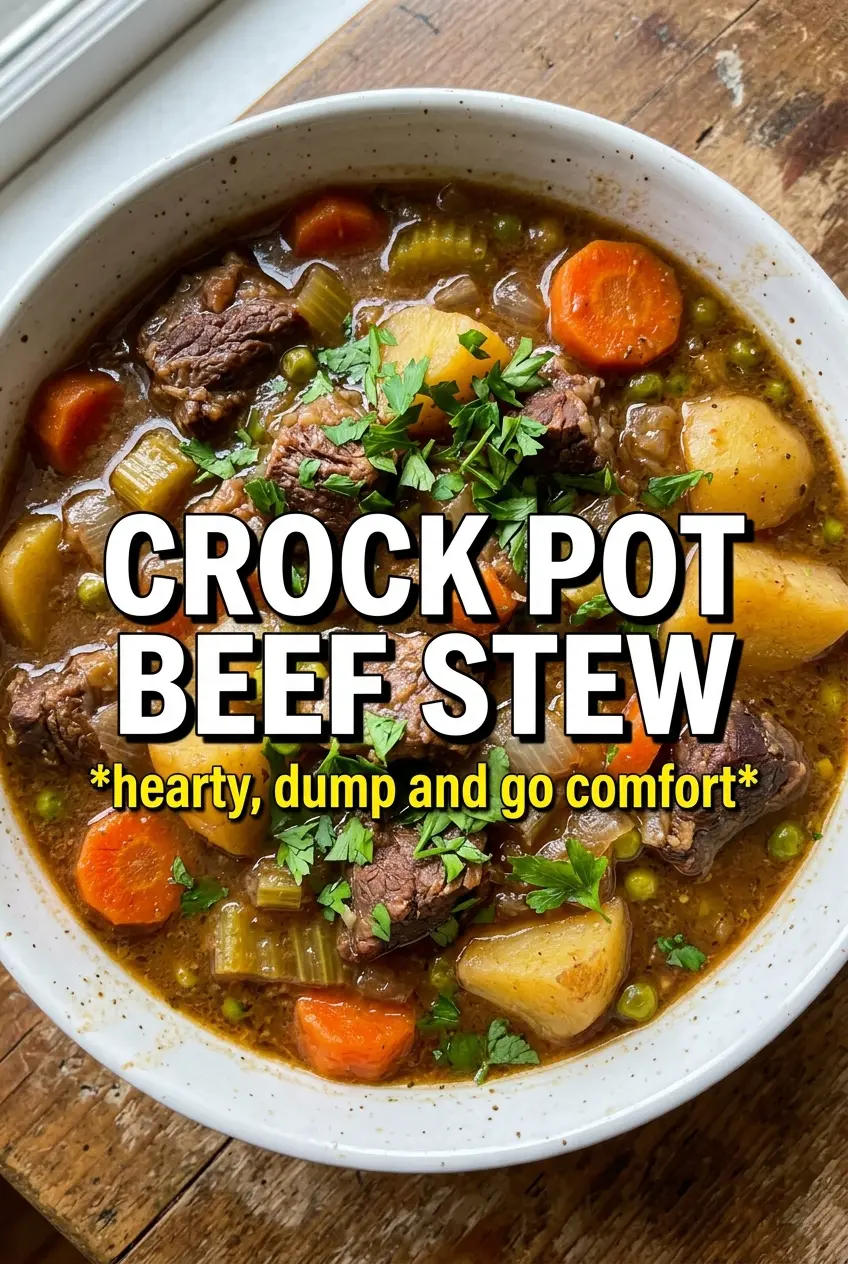
Save this Crock Pot Beef Stew for a hands-off dinner with tender beef, thick savory broth, and potatoes that stay intact.
The Reason the Beef Gets Tender Instead of Tough
Beef stew only works when the heat stays low enough for the collagen in the chuck to melt slowly. Rush that process and the meat can turn stringy before it has a chance to relax. Slow cooking gives you that soft, spoon-tender texture because the connective tissue breaks down over hours, not minutes.
The other thing that matters is how the ingredients sit in the pot. The vegetables underneath catch the liquid and soften gradually, while the beef braises above them instead of boiling hard in the broth. If your stew has ever come out bland or watery, the usual problem is too much liquid and not enough reduction at the end. That’s why this recipe finishes with a cornstarch slurry after the beef is already tender.
What Each Ingredient Is Actually Doing in the Pot

- Beef chuck — This is the cut that turns silky after a long braise. Leaner stewing beef can work, but it won’t give you the same rich texture. Cut it into larger cubes so it stays meaty instead of shredding apart too early.
- Red wine — This deepens the broth and gives the stew a little edge that balances the tomato. If you want to skip it, use extra beef broth and a small splash of vinegar at the end for brightness, but the wine does add more roundness.
- Tomato paste and diced tomatoes — The paste brings concentrated body, while the diced tomatoes add acidity and a little sweetness. Don’t leave them out unless you want a much flatter broth.
- Worcestershire sauce — This is one of the easiest ways to build a slow-cooked, meaty taste without extra work. There isn’t a perfect substitute, but a little soy sauce plus a touch of brown sugar can cover part of the same ground.
- Baby potatoes — Their waxy texture holds up better than russets in a long cook. Halving them gives the stew more surface area for flavor without letting them disappear.
- Carrots, celery, onion, and garlic — These build the base of the broth. Onion and garlic give depth, celery brings a clean savory note, and carrots add sweetness that keeps the stew from tasting heavy.
Building the Stew So the Broth Stays Rich, Not Thin
Starting with the Vegetables
Put the potatoes, carrots, celery, and onion in the bottom of the slow cooker first. That keeps them in the liquid where they can soften evenly and helps protect the beef from sitting directly on the hot base. If you toss everything together without that layering, the vegetables are more likely to overcook before the beef is fully tender.
Seasoning the Beef and Loading the Pot
Season the chuck generously with salt and pepper before it goes in. Then nestle it over the vegetables and pour in the broth, wine, tomatoes, tomato paste, Worcestershire, thyme, rosemary, garlic, and bay leaves. The tomato paste needs to be dispersed well; if it clumps, you’ll get streaks of concentrated tomato instead of a smooth broth.
Letting Time Do the Work
Cook on Low for 8 to 10 hours if you can. That gentler heat gives you the most tender beef and the best texture on the potatoes. High heat works in a pinch, but the edges of the meat can tighten a little before the center is fully ready. The stew is done when the beef breaks apart easily with a fork and the carrots are soft through the middle.
Thickening Without Muddying the Flavor
Remove the bay leaves, then stir the cornstarch slurry into the hot stew. Keep it on High for 20 to 30 minutes until the broth turns glossy and lightly thickened. If you add the slurry too early, the starch can break down during the long cook and you’ll lose the body you were trying to build.
How to Adapt This Stew Without Losing the Good Part
Make It Wine-Free
Use 3 cups beef broth instead of the wine-and-broth mix. The stew will still be savory and rich, but it loses a little of the depth that wine adds, so a teaspoon of red wine vinegar at the end can help sharpen the flavor.
Gluten-Free Version
This stew is naturally close to gluten-free, but check your Worcestershire sauce and broth labels. Cornstarch is the right thickener here because it gives you body without any floury taste.
Add Mushrooms for a Deeper Savory Finish
Toss in sliced cremini mushrooms with the vegetables if you want a darker, earthier stew. They’ll soften fully in the slow cooker and add another layer of savoriness to the broth.
How to Store the Leftovers
- Refrigerator: Store in an airtight container for up to 4 days. The broth thickens a bit as it chills, which is normal.
- Freezer: This freezes well for up to 3 months. Cool it completely first and freeze in portions so the potatoes reheat more evenly.
- Reheating: Warm gently on the stove over medium-low heat or in the microwave in short bursts. Add a splash of broth if the stew has tightened up too much, and don’t boil it hard or the beef can dry out.
Questions I Get Asked About This Stew
Crock Pot Beef Stew
Ingredients
Equipment
Method
- Season the beef generously with salt and pepper, making sure every side looks evenly coated with dark seasoning specks.
- Place the potatoes, carrots, celery, and onion in the bottom of the slow cooker to form an even base layer.
- Nestle the seasoned beef on top, then spread the garlic over the meat in small clumps.
- Add the beef broth, red wine (or extra beef broth), diced tomatoes, tomato paste, Worcestershire sauce, dried thyme, dried rosemary, and bay leaves so the ingredients are mostly covered, with visible bay leaves near the top.
- Cook on Low for 8-10 hours until the beef is fall-apart tender, checking visually for beef that breaks apart when you press a chunk with a spoon.
- If using High, cook for 4-5 hours instead until the beef is fall-apart tender, with liquid bubbling lightly at the edges.
- Remove the bay leaves, then stir the cornstarch slurry (cornstarch mixed with water) into the stew until no streaks remain.
- Cook on High for 20-30 minutes until the broth thickens and looks glossy, coating the back of a spoon.
- Season with salt and pepper to taste, adjusting until the flavors pop and the broth tastes balanced.


