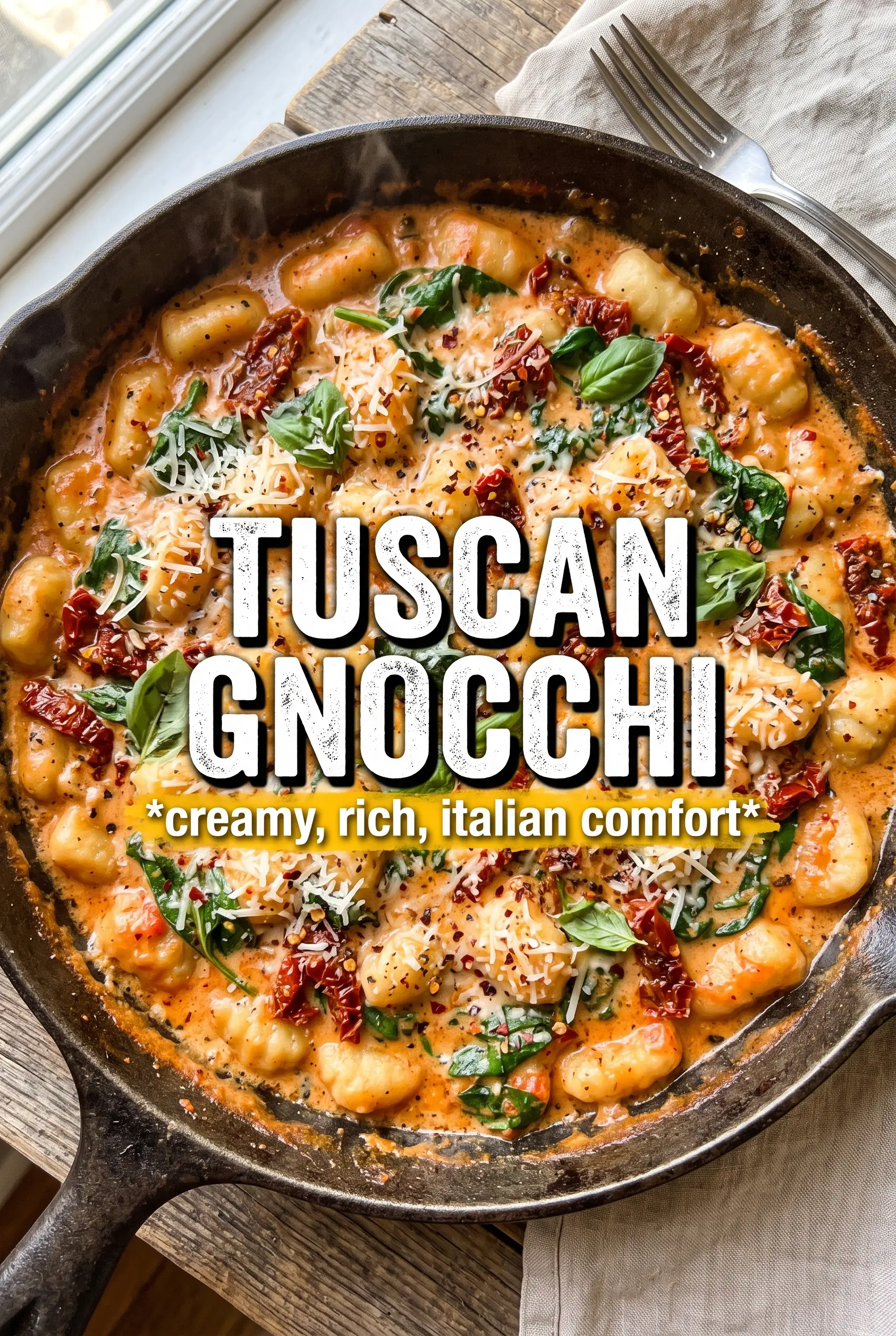
Golden-seared gnocchi nestled in a creamy sun-dried tomato sauce is the kind of weeknight dinner that disappears fast. The gnocchi get a little crust on the outside before they’re coated in parmesan cream, the sausage brings enough richness to make the dish feel complete, and the spinach softens into the sauce without turning muddy. It eats like a restaurant skillet but comes together in the same pan you use for the sausage.
What makes this version work is the order. The sausage gets browned first so it leaves behind flavor in the pan, then the garlic and sun-dried tomatoes take a quick turn in that oil to wake everything up. The cream simmers gently before the parmesan goes in, which keeps the sauce smooth instead of grainy. If you’ve ever had a creamy gnocchi dish turn heavy or broken, it usually comes down to rushing the heat or adding the cheese too soon.
Below, I’ve included the small details that keep the sauce silky, plus a few ways to adapt it if you need to work with what’s already in the fridge.
The sauce stayed silky and the gnocchi got those little golden edges in the pan, which made it taste much richer than the short ingredient list would suggest. My husband went back for seconds before I’d even sat down.
Love the creamy sausage-and-spinach skillet? Save this Tuscan gnocchi for the nights when you want a fast dinner with a glossy sauce and a little pan-seared texture.
The Trick to Keeping Gnocchi Tender Instead of Gummy
The biggest mistake with skillet gnocchi is treating it like pasta that needs a long boil. Potato gnocchi only needs enough heat to cook through and take on a little color if you’re pan-searing it, and the second it sits too long in a thick sauce, it starts to swell and lose that pillowy texture. This recipe keeps the sauce moving around the gnocchi instead of burying the gnocchi in sauce and walking away.
Another thing that matters here is the simmer. The cream and broth need a gentle bubble, not a hard boil. High heat tightens the dairy, reduces the sauce too aggressively, and can make the parmesan clump instead of melt smoothly. If the sauce looks thin at first, give it a minute. It thickens as the cream reduces and the cheese melts in.
- Pan-seared gnocchi gives you a light crust and keeps the texture from going soft all the way through.
- Sun-dried tomato oil carries a ton of flavor, so use it in the skillet instead of plain oil when you have it.
- Parmesan should be finely grated so it melts into the sauce instead of sitting in little sandy bits.
- Spinach goes in at the very end because it only needs a few seconds to wilt; any longer and it loses its color and structure.
What Each Ingredient Is Actually Doing in the Skillet
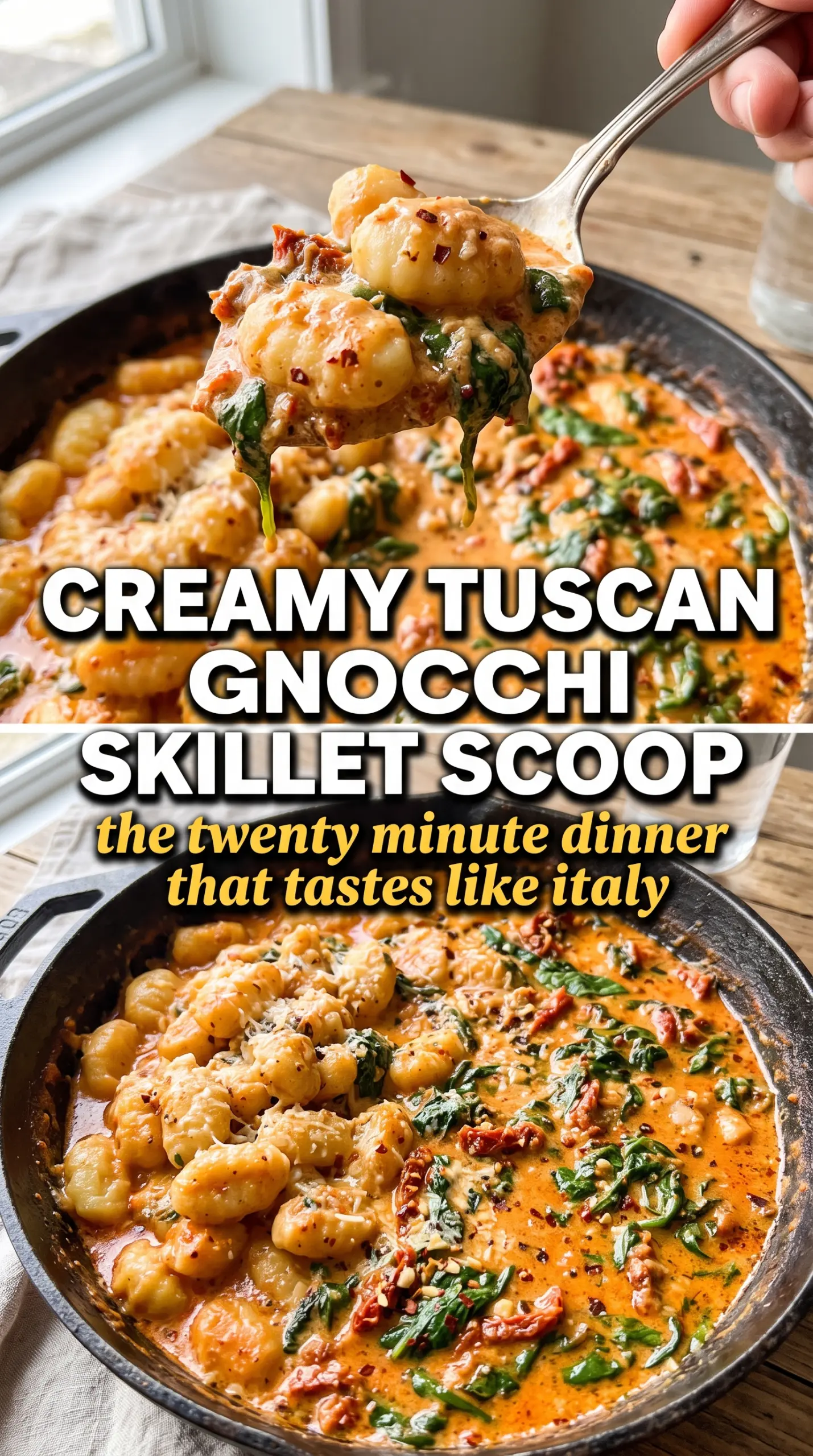
- Potato gnocchi is the backbone of the dish. Shelf-stable gnocchi works well here, and refrigerated gnocchi is fine too. If you use fresh gnocchi, it may need less time in the sauce, so watch the texture closely.
- Italian sausage brings seasoning, fat, and enough savory depth to stand up to the cream. Mild or hot both work. If you use chicken sausage, the dish will taste lighter and you may want a little extra salt at the end.
- Sun-dried tomatoes in oil are worth using in this specific recipe because the oil helps build the sauce and the tomatoes bring concentrated sweetness and acidity. Dry-packed tomatoes can work in a pinch, but soak them briefly in hot water and use a spoonful of olive oil so they don’t taste harsh.
- Heavy cream is what gives the sauce its body. Half-and-half can work, but it won’t cling to the gnocchi as well and is more likely to look loose. If you must swap, keep the heat low and simmer a little longer.
- Parmesan should be grated fresh if possible. Pre-shredded parmesan often contains anti-caking agents that can make the sauce slightly grainy.
Building the Sauce So It Stays Glossy
Brown the Sausage First
Cook the sausage in a large skillet until it’s deeply browned and no longer pink, breaking it into crumbles as it cooks. Those browned bits on the bottom are part of the sauce, so don’t wipe the pan clean. Drain off excess grease if there’s a lot, but leave a little behind for flavor. If the sausage is pale, the finished dish will taste flat and the sauce won’t have much backbone.
Wake Up the Tomatoes and Garlic
Add the garlic and chopped sun-dried tomatoes to the oil in the skillet and cook just until fragrant, about 2 minutes. You want the garlic softened, not browned, because burnt garlic turns bitter fast in a cream sauce. This short step pulls the best flavor out of the tomatoes and gives the whole pan a richer, sweeter base.
Let the Cream Reduce Before the Cheese Goes In
Pour in the cream, broth, Italian seasoning, and red pepper flakes, then let the sauce simmer gently for about 4 minutes. It should look slightly thicker and coat the back of a spoon before you add the parmesan. Stir in the cheese off a harsh boil; that’s the difference between a smooth sauce and one that turns stringy or grainy.
Finish With the Gnocchi and Spinach
Cook the gnocchi according to the package directions, then add them straight into the sauce while they’re still warm. Return the sausage, add the spinach, and toss just until the leaves wilt and the gnocchi are coated. Taste at the end and season with salt and pepper only after the parmesan has melted, since the cheese and sausage already bring plenty of salt to the pan.
How to Adapt Tuscan Gnocchi Without Losing the Good Parts
Make It Dairy-Free Without a Broken Sauce
Use unsweetened coconut cream or a thick dairy-free cooking cream and skip the parmesan, then add a spoonful of nutritional yeast or a dairy-free parmesan-style substitute for a little savory depth. The sauce won’t taste exactly the same, but it will still coat the gnocchi well if you keep the heat low and simmer gently. Thin plant milks are the wrong swap here because they don’t have enough body.
Use Chicken Sausage for a Lighter Skillet
Chicken sausage works well if you want less richness, especially with spinach and sun-dried tomatoes carrying the flavor. Since it usually has less fat than pork sausage, you may need a small splash of olive oil to keep the garlic from sticking when you start the sauce. The finished dish will be a little less bold but still satisfying.
Swap in Kale When You Want More Bite
Chopped kale can replace the spinach if you want a sturdier green with a little more chew. Add it a minute or two earlier than spinach so it has time to soften in the hot sauce. If the stems are thick, strip them out first or the final dish will feel fibrous.
Storage and Reheating
- Refrigerator: Store leftovers in an airtight container for up to 3 days. The sauce will thicken and the gnocchi will absorb some of it, so the texture gets softer by day two.
- Freezer: I don’t recommend freezing this one. Cream sauces can separate, and gnocchi turns mushy after thawing.
- Reheating: Warm it slowly in a skillet over low heat with a splash of broth or cream to loosen the sauce. The common mistake is blasting it in the microwave, which tightens the sauce and makes the gnocchi rubbery.


