Crack chicken foil packets hit that sweet spot between low-effort and downright craveable: juicy chicken, smoky bacon, melted cheddar, and ranch-seasoned cream cheese all steam together inside the foil until the whole packet turns saucy and rich. When you open one up, the cheese has melted into the chicken instead of sliding off the top, and the bacon stays tucked into every bite.
The trick is building the packet so the chicken cooks through without drying out. Heavy-duty foil matters here because you want a tight seal that traps steam, and the cream cheese goes in cubes so it softens evenly instead of clumping into one cold lump. The cheese melts best when it sits on top of the bacon and cream cheese, where it can sink into the hot chicken as the packet finishes cooking.
Below, I’ll walk through the small details that keep these packets from leaking or overcooking, plus a few smart swaps for oven cooking, meal prep, and feeding a crowd. If you’ve ever ended up with dry chicken in a foil packet, the heat timing here will help you avoid that.
The chicken stayed juicy and the cream cheese melted into the ranch seasoning just like I hoped. Opening the packets at the table was a bonus, and the bacon stayed crisp enough to give every bite some texture.
Save these crack chicken foil packets for campfire nights when you want juicy chicken, smoky bacon, and melted ranch cheese in one sealed packet.
The Part Most Foil Packet Chicken Gets Wrong: Heat Management
Foil packet chicken fails when the outside cooks faster than the center. That usually happens because the packet is sealed too loosely, the heat is too aggressive, or the chicken breast is too thick to finish in the same window as the toppings. The goal here is gentle steam plus direct heat, not a hard blast that tightens the meat before the cheese has a chance to melt.
The other common mistake is opening the packets too early. If the chicken isn’t done, the whole thing still looks pale and wet, but if you let the packet rest closed for a minute after cooking, the juices settle and the cheese finishes melting without overcooking the meat. Use a thermometer if you have one; 165°F is the number that matters.
- Heavy-duty foil — This is the one place I wouldn’t use thin foil. It tears more easily, which means leaking juices and uneven steam.
- Chicken breasts — Boneless breasts work best when they’re similar in size. If one is much thicker, pound it slightly so all four packets finish together.
- Ranch seasoning mix — The packet seasoning gives you the tangy, herby backbone this recipe needs. A homemade ranch blend works too, but it should be seasoned assertively because the bacon and cheese mute milder mixes.
- Cream cheese — Cubing it helps it melt into pockets instead of disappearing in one thick layer. Full-fat cream cheese gives the smoothest finish.
What Each Topping Is Doing Inside the Packet
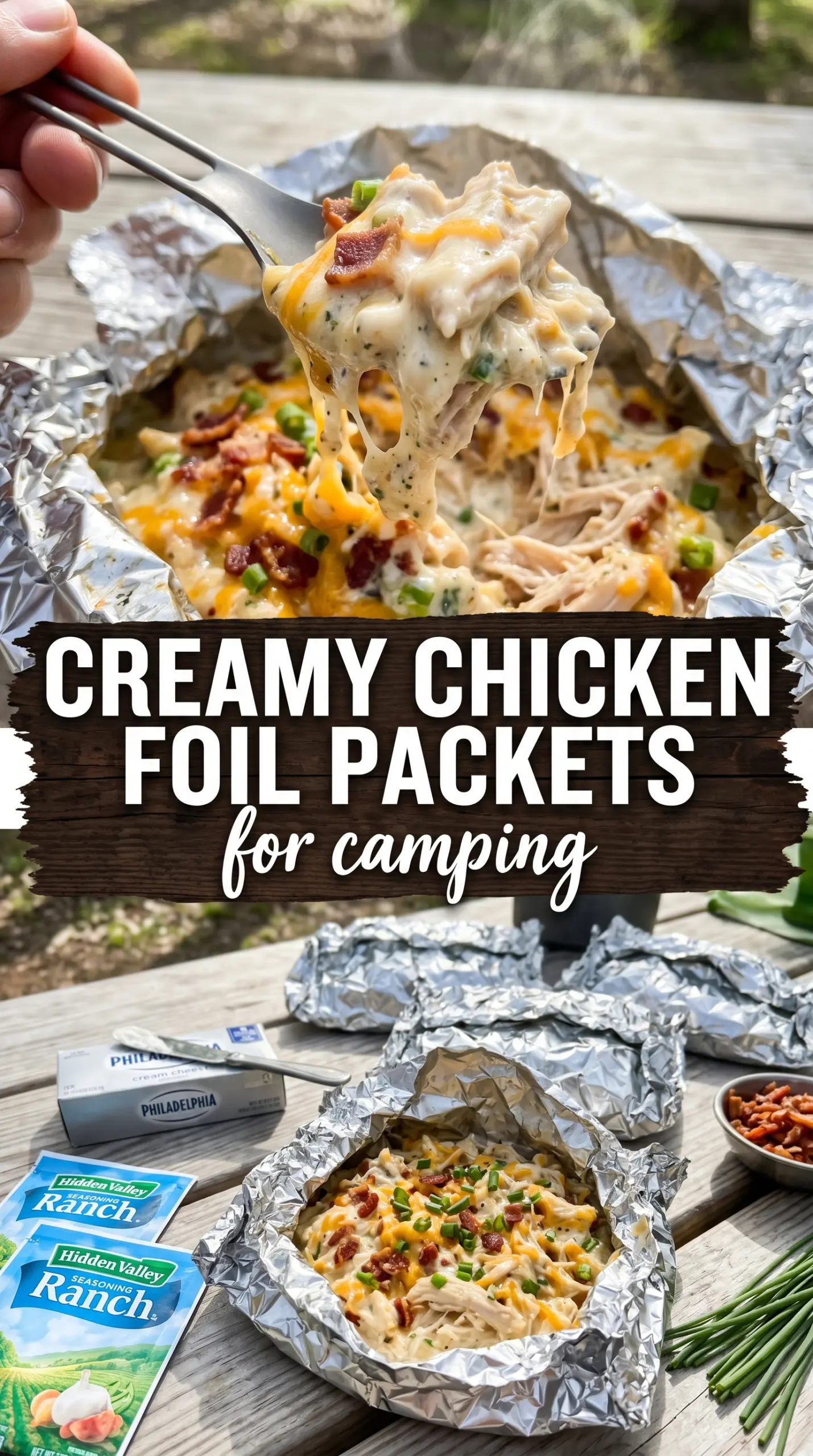
- Bacon — Cook it before it goes in. Raw bacon won’t render enough in the short cooking time, and the chicken will be done before the bacon ever gets the right texture.
- Cheddar cheese — Sharp cheddar gives the best contrast against the ranch and bacon. Pre-shredded works, but block-grated cheese melts a little smoother because it doesn’t carry the anti-caking coating.
- Green onions — These add a fresh bite that cuts through the richness. Add them before sealing so they soften slightly, but don’t bury them completely under the cheese or they’ll disappear.
Building the Packets So They Cook Evenly
Setting Up the Foil
Lay each chicken breast in the center of its own sheet of foil and leave enough border to fold over twice. That extra room matters because the packet needs a tight seal with a little air space inside to steam properly. If the foil is too small, the edges pop open and the chicken dries out before the middle is done.
Layering the Flavor
Sprinkle the ranch seasoning directly over the chicken first, then pile on the bacon, cream cheese, cheddar, and green onions. The seasoning needs to touch the meat to season the chicken itself, not just the toppings. Keep the cream cheese in small cubes so it softens instead of sitting in one cold mass in the center.
Sealing and Cooking
Fold the foil over the filling and crimp the edges tightly so the packet stays closed over medium heat. The packet should puff slightly as it cooks, which tells you steam is doing its job. If the heat is too high, the foil darkens fast and the chicken can turn stringy before the cheese fully melts.
Opening Without Losing the Juices
When the chicken reaches 165°F, open each packet carefully because the steam is hot and the melted cheese will be loose. Let the packet sit for a minute before serving so the sauce thickens just enough to cling to the chicken. If you cut in right away, the cheese mixture runs across the foil instead of staying on the meat.
How to Adapt These Foil Packets for the Oven, the Grill, or a Dairy-Free Table
Oven-Baked Version
Bake the sealed packets on a sheet pan at 400°F for about 25 to 30 minutes, depending on the thickness of the chicken. You lose a little campfire flavor, but the result is just as juicy and even, and cleanup stays minimal.
Grill Packets for Smokier Flavor
Set the packets over medium grill heat, not direct high flames. Direct fire can scorch the foil before the chicken cooks through, while medium heat gives you the same melty filling with a little char around the edges.
Dairy-Free Swap
Use a dairy-free cream cheese and a good melting plant-based cheddar. The texture will be slightly softer and less rich, but the ranch and bacon still carry the dish. Choose a brand that melts well; some plant-based cheeses stay rubbery instead of turning creamy.
Make It Spicy
Add chopped jalapeños or a pinch of cayenne with the ranch seasoning. That extra heat works because the creamy filling can handle it, and the spice keeps the bacon-and-cheddar combination from tasting heavy.
Storage and Reheating
- Refrigerator: Store leftovers in an airtight container for up to 3 days. The bacon softens a bit, but the flavor holds up well.
- Freezer: It freezes, but the cream cheese can separate slightly when thawed. If you freeze it, wrap tightly and thaw in the refrigerator before reheating.
- Reheating: Reheat covered in a 325°F oven until warmed through, or use the microwave in short bursts. The big mistake is blasting it on high heat, which makes the chicken tough and the cheese oily.
Questions I Get Asked About This Recipe
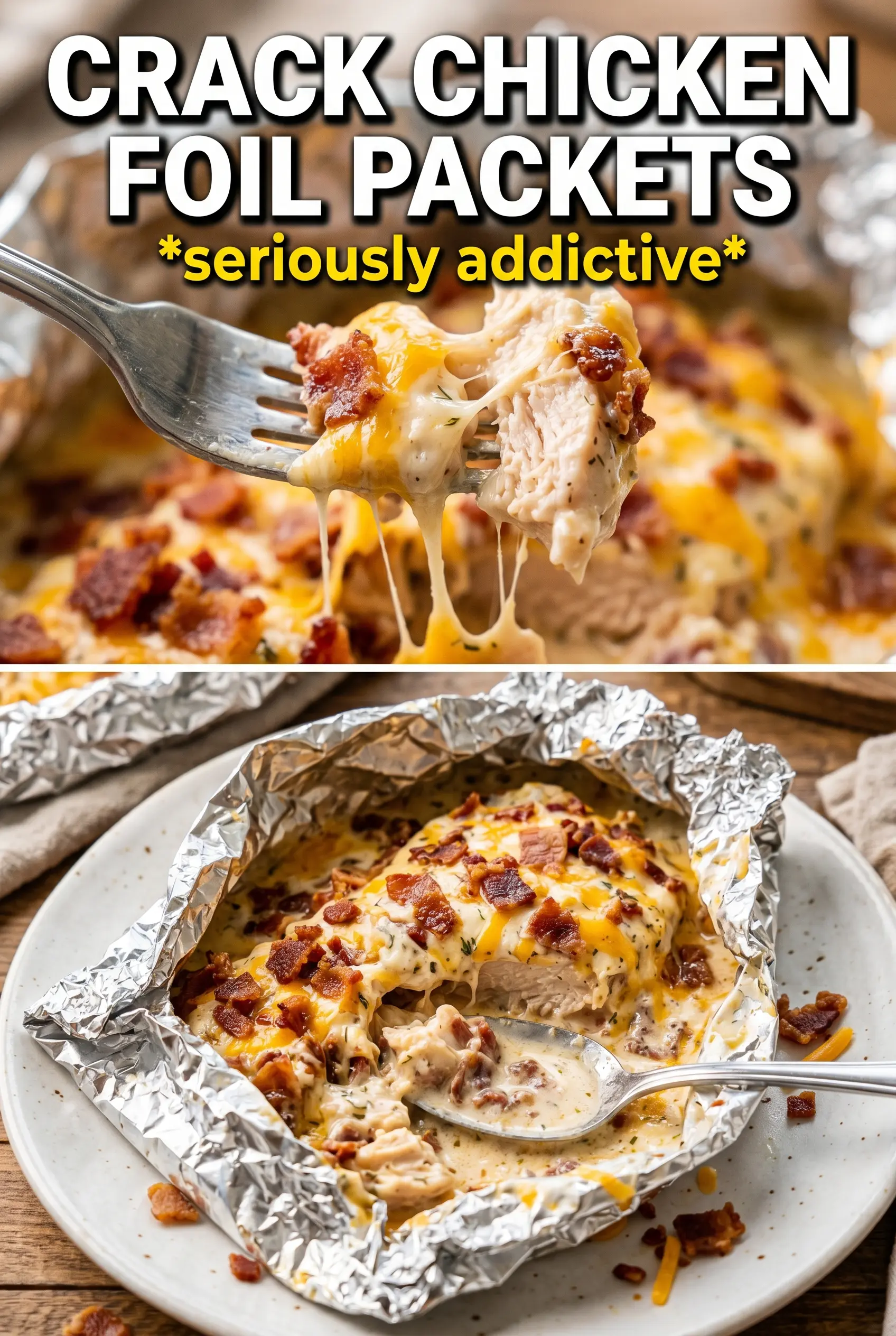
Crack Chicken Foil Packets
Ingredients
Equipment
Method
- Place each boneless chicken breast on a sheet of heavy-duty aluminum foil, centered so it can be fully sealed. Use 1 foil sheet per packet.
- Sprinkle each chicken breast with 1 packet ranch seasoning mix, dividing evenly among the packets. The surface should look lightly coated.
- Top each chicken breast with crumbled bacon, then sprinkle with shredded cheddar cheese. Leave some cheese overhang so it melts into the center.
- Add cream cheese cubes over the chicken, distributing them across the top. The cubes should sit visible before cooking.
- Scatter sliced green onions over each packet. Aim for an even layer so the flavor is distributed.
- Fold the foil into sealed packets, pinching edges tightly to trap steam. There should be no gaps along the seams.
- Place packets on a campfire grate over medium heat for 20-25 minutes, until chicken reaches 165°F. Watch for steam building inside the foil and avoid flipping.
- Carefully open the packets and serve hot. The mixture should look creamy and the cheese should be fully melted.