Cowboy stew lands in that sweet spot between hearty and low-effort: smoky sausage, ground beef, tender potatoes, and beans simmer together in a tomato-rich broth that eats like a full meal in one bowl. The best part is how the potatoes pick up all that ranch-seasoned, lightly smoky broth without falling apart, so every spoonful has a little of everything. It’s the kind of pot of food that disappears fast and somehow tastes even better the next day.
What makes this version work is the order. The beef and sausage get browned first, which builds the base flavor instead of leaving the stew tasting flat. The potatoes go in early enough to turn tender but not so early that they collapse, and the corn gets added near the end so it stays sweet and intact. That balance is what keeps the stew hearty instead of mushy.
Below, I’ll walk through the little details that matter most, including how to keep the broth from tasting thin and what to do if you want to stretch it for a bigger crowd. The ingredient notes and variations are worth a read if you’ve ever had a stew come out bland or overly thick.
The potatoes were tender right on time and the broth had that smoky ranch flavor without getting salty. I added the jalapeños on top and my husband went back for a second bowl before I even sat down.
Save this Cowboy Stew for a smoky, one-pot dinner loaded with beef, sausage, beans, and tender potatoes.
The Potatoes Need Time Before the Corn Joins In
The biggest mistake with a stew like this is adding everything at once and expecting the texture to sort itself out. Potatoes need a real simmer to turn creamy at the edges, and if the corn goes in too early it loses its pop and starts tasting tired. This recipe keeps the hearty ingredients in the pot long enough to soften and meld, then brings in the corn and sausage at the end so they stay distinct.
Browned meat matters here, too. Those browned bits on the bottom of the pot are not something to scrape away and forget about; they dissolve into the broth and give the stew that deeper, cooked-all-day taste even though the total time is under an hour. If your stew tastes flat, it usually means the meat didn’t brown enough or the broth was never given time to simmer down and concentrate.
What Each Ingredient Is Actually Doing in This Stew

- Ground beef — This is the base that gives the stew body and a savory backbone. An 80/20 blend works well because you get enough fat for flavor, but anything leaner than that may need a small splash of oil so it browns instead of dries out.
- Smoked sausage — This is where the smoky, ranch-style flavor really starts. Use a good fully cooked sausage, not raw links, and brown the slices briefly so the edges caramelize before they go back into the pot.
- Baby potatoes — Baby potatoes hold their shape better than large russets and give you a creamier bite without breaking the stew apart. Halving them keeps the simmer time predictable; if you leave them whole, they’ll need longer and the rest of the stew can overcook.
- Rotel and diced tomatoes — The mix gives you both acidity and texture. Rotel brings a little heat and seasoning, while the diced tomatoes add volume; if you only use one or the other, the stew loses either brightness or substance.
- Ranch seasoning, chili powder, and smoked paprika — These are the flavor shortcut that makes the broth taste rounded instead of just tomatoey. The ranch packet adds salt, herbs, and tang, so taste before adding much extra salt at the end.
- Beef broth — Use a broth you’d actually drink on its own. A weak broth makes the whole pot taste thin, and because the seasoning packet already brings salt, an overly salty broth can push the stew over the edge fast.
Building the Stew So the Broth Stays Thick and Smoky
Brown the Meat in Stages
Start with the ground beef and let it take on real color before you drain it. If the meat stays pale, the stew loses that deep savory base and the broth tastes more like seasoned soup than stew. Brown the sausage separately for a few minutes so the cut sides darken; that quick step gives you more flavor than tossing it in raw or steaming it along with the other ingredients.
Wake Up the Spices in the Pot
When the onion is soft and the garlic smells fragrant, stir in the chili powder and smoked paprika for a full minute. That brief toast in the fat pulls out the spice aroma and keeps the seasoning from tasting dusty. If the pot looks dry at that point, lower the heat instead of adding liquid right away; spices bloom best when they’re warm, not rushed.
Simmer Until the Potatoes Yield Cleanly
Once the broth, tomatoes, beans, ranch seasoning, and potatoes are in, bring the pot to a boil and then drop it to a steady simmer. You want the potatoes tender enough that a fork slips in without resistance, but not so soft that the cubes collapse when you stir. If the broth reduces too quickly before the potatoes are done, lower the heat and cover the pot partway so the stew cooks evenly.
Finish with Corn, Sausage, and the Final Seasoning
Add the corn and browned sausage after the potatoes are nearly done, then simmer just long enough to heat everything through. That keeps the corn sweet and the sausage firm instead of rubbery. Taste at the end, because ranch seasoning and broth brands vary; a pinch of salt and black pepper should sharpen the flavor, not dominate it.
Three Ways to Adjust Cowboy Stew Without Losing What Makes It Work
Make It Spicier with Fresh Heat
Add diced jalapeños with the onion or stir in a pinch of cayenne with the spices. Cooking the heat early gives the broth a fuller, rounder spice, while topping each bowl with fresh jalapeños keeps the bite brighter and sharper.
Gluten-Free Without Changing the Texture
Check the sausage and ranch seasoning packet to confirm they’re gluten-free, since that’s where hidden gluten usually shows up. The rest of the stew is naturally gluten-free, and the texture stays the same because the thickness comes from the potatoes and beans, not flour.
Stretch It for a Bigger Crowd
Add an extra can of beans, another cup or two of broth, and more potatoes if you need to feed more people. The stew will still taste balanced, but you may need a little extra salt and paprika at the end because the extra broth softens the seasoning.
Use Turkey or Chicken Sausage
You can swap in turkey sausage if you want a lighter stew, but the broth will lose some of its smoky richness. Brown it well and lean on the smoked paprika to bring some of that flavor back.
Storage and Reheating
- Refrigerator: Store in an airtight container for up to 4 days. The potatoes soak up more broth as it sits, so the stew thickens a bit overnight.
- Freezer: It freezes well for up to 2 months, though the potatoes soften slightly after thawing. Cool it completely first and leave a little headspace in the container.
- Reheating: Warm it gently on the stove over medium-low heat with a splash of broth or water if needed. A hard boil can make the potatoes break down and turn the broth muddy.
Answers to the Questions Worth Asking
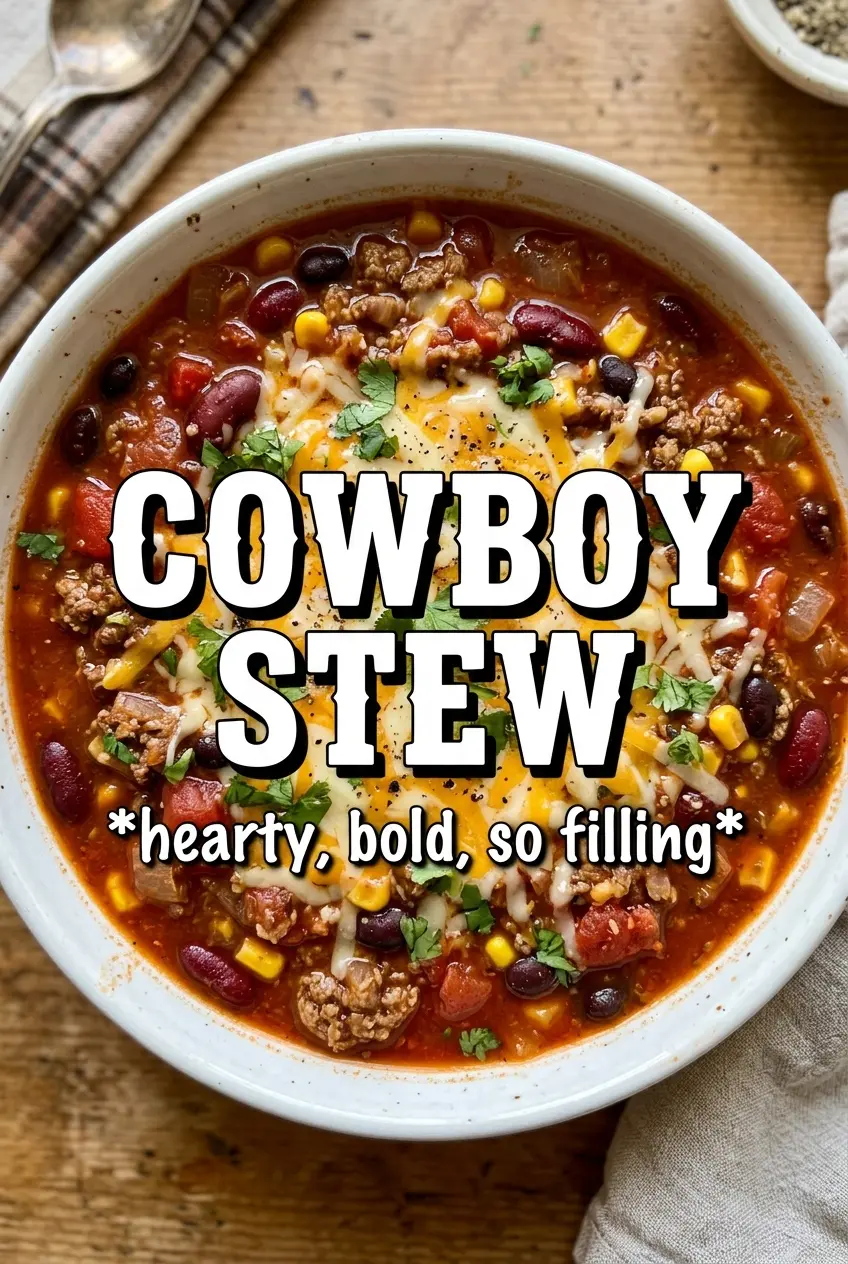
Cowboy Stew
Ingredients
Equipment
Method
- Heat a large pot over medium-high heat and brown the ground beef; drain off excess fat.
- Add the sliced smoked sausage and brown briefly, then remove.
- In the same pot, sauté the diced onion for 3 minutes until softened.
- Add the minced garlic and cook for 1 minute, stirring until fragrant.
- Stir in chili powder and smoked paprika, and cook for 1 minute to bloom the spices.
- Add Rotel tomatoes, diced tomatoes, beef broth, ranch seasoning, baby potatoes, and pinto beans; bring the mixture to a boil.
- Simmer for 15-18 minutes until the potatoes are tender.
- Add the drained corn and browned sausage, then simmer for 5 minutes.
- Season with salt and pepper to taste.
- Ladle the cowboy stew into bowls and top each serving with shredded cheddar, jalapeños, and green onions.


