Seared steak bites drenched in cowboy butter hit the table with the kind of sizzle that gets everyone hovering in the kitchen. The outside stays deeply browned and crusty, the center stays juicy, and the butter sauce picks up just enough garlic, herbs, lemon, and heat to coat every edge without turning heavy. It’s the sort of pan dinner that feels bigger than the effort it takes.
The trick here is treating the steak like steak, not stew meat. High heat, a dry surface, and space in the pan build that browned crust fast, while a short finish in the butter keeps the meat tender instead of overcooked. The sauce goes in after the sear, not before, so the butter doesn’t burn and the herbs stay bright instead of dull.
Below, I’ll walk through the part that matters most: how to get a real sear in a crowded skillet, what each ingredient is doing in the sauce, and how to adjust the heat level without losing the cowboy butter character.
The steak stayed juicy even after tossing it in the butter, and the sauce picked up all those browned bits from the pan. I served it with rice and the whole skillet was gone in minutes.
Save these cowboy butter steak bites for the night you want a fast skillet dinner with a hard sear and a garlicky herb butter finish.
The Part Most People Miss: Getting the Skillet Hot Enough Before the Steak Goes In
The difference between browned steak bites and gray, steamed ones comes down to heat and spacing. A cast iron skillet needs to be smoking hot before the beef touches it, and the cubes need room around them so the surface can sear instead of leaking juice into the pan. If the meat goes in too early, the outside never gets that crusty snap before the center starts overcooking.
I also like to cut the steak into even 1.5-inch cubes so every piece finishes at about the same time. Smaller pieces dry out before you get enough color, and bigger chunks need longer in the pan, which works against the quick-cook nature of this dish. Sear in batches and resist the urge to stir constantly; letting one side sit undisturbed is what builds the flavor.
What Each Ingredient Is Actually Doing in the Cowboy Butter
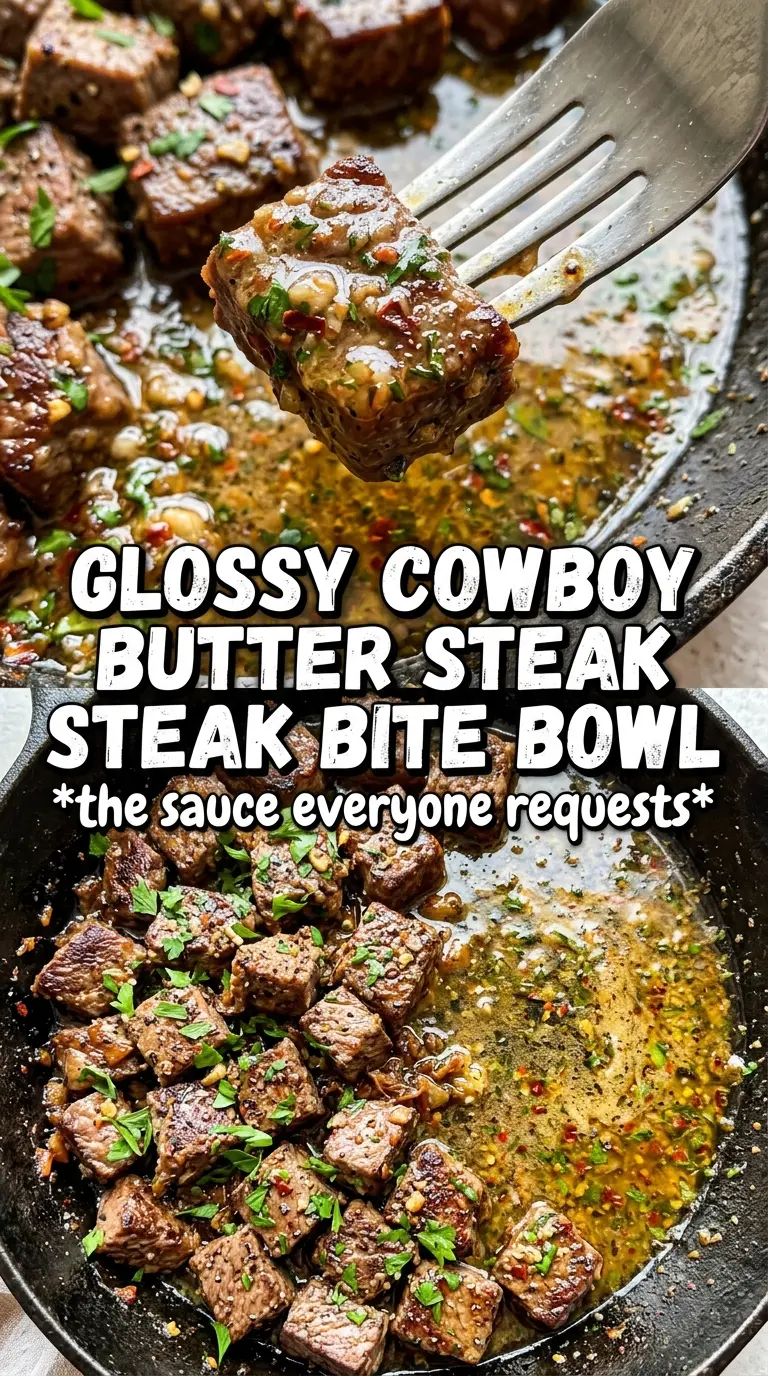
- Sirloin or ribeye — Sirloin gives you a meaty bite and stays a little leaner, while ribeye brings more marbling and a richer finish. Either works, but avoid thin cuts because they’ll cook through before the crust develops.
- Unsalted butter — This is the base of the sauce and carries the garlic, herbs, and spice. Unsalted lets you control the seasoning after the steak has already been salted and seared.
- Dijon mustard and lemon juice — These keep the butter from tasting flat. Dijon adds body and a little sharpness, while lemon lifts the whole pan and cuts through the richness so the sauce clings without feeling greasy.
- Garlic, shallot, parsley, and chives — Fresh herbs matter here because the sauce is finished fast and never cooked long enough to mellow out dried substitutes. If you only have dried parsley, use it sparingly; the flavor is muted and the sauce won’t taste as bright.
- Red pepper flakes and smoked paprika — The flakes bring the heat, and the paprika gives the cowboy butter its smoky edge. If you want less fire, cut the flakes in half rather than leaving them out completely, or the sauce loses its backbone.
How to Sear the Steak, Build the Butter, and Bring It Together Without Overcooking Anything
Seasoning and Dry Surface
Pat the steak cubes dry, then season them well with salt and pepper right before they hit the skillet. Moisture is the enemy of browning, and wet steak will steam while it cooks. If the pieces are salted too far ahead and start weeping, blot them again before searing so the pan stays hot and the surface crisps instead of sputtering.
The High-Heat Sear
Heat the skillet until it’s smoking, then add the steak in a single layer. You want a loud sizzle the second the meat lands in the pan. Leave the cubes alone for about 2 minutes per side, then flip once they release cleanly; if they stick, they need another moment. Work in batches and pull the pan off the heat if the fond starts to burn between rounds.
Finishing the Cowboy Butter
Lower the heat before the butter goes in, then cook the garlic and shallot just until fragrant. They should smell sweet and savory, not dark or sharp. Stir in the parsley, chives, Dijon, lemon juice, red pepper flakes, and smoked paprika, then return the steak and toss just long enough to coat. If you simmer the finished steak in the sauce, the beef keeps cooking and the butter can break.
How to Adapt Cowboy Butter Steak Bites Without Losing the Point
Make It Dairy-Free
Use a good plant-based butter that melts cleanly and has a plain, unsalted flavor. The sauce will still coat the steak, but it won’t taste quite as round as real butter, so keep the lemon and herbs in place to preserve the brightness.
Turn Down the Heat
Cut the red pepper flakes in half or skip them and add a pinch of black pepper instead. You’ll still get the smoky, garlicky cowboy butter flavor, just without the lingering burn that can overpower the steak.
Use a Different Cut
Strip steak or filet will also work if that’s what you have, but both cook a little differently. Filet needs less time and more care because it’s tender but lean, while strip steak gives you a firmer bite and handles the high-heat sear well.
Storage and Reheating
- Refrigerator: Store in an airtight container for up to 3 days. The steak will lose a little of its just-seared edge, but the butter sauce keeps it from drying out completely.
- Freezer: I don’t recommend freezing the finished dish. The butter sauce can separate and the steak turns a little chewy once thawed.
- Reheating: Warm gently in a skillet over low heat with a splash of water or broth. High heat will tighten the steak and split the butter, which is the fastest way to ruin the texture.
Answers to the Questions Worth Asking
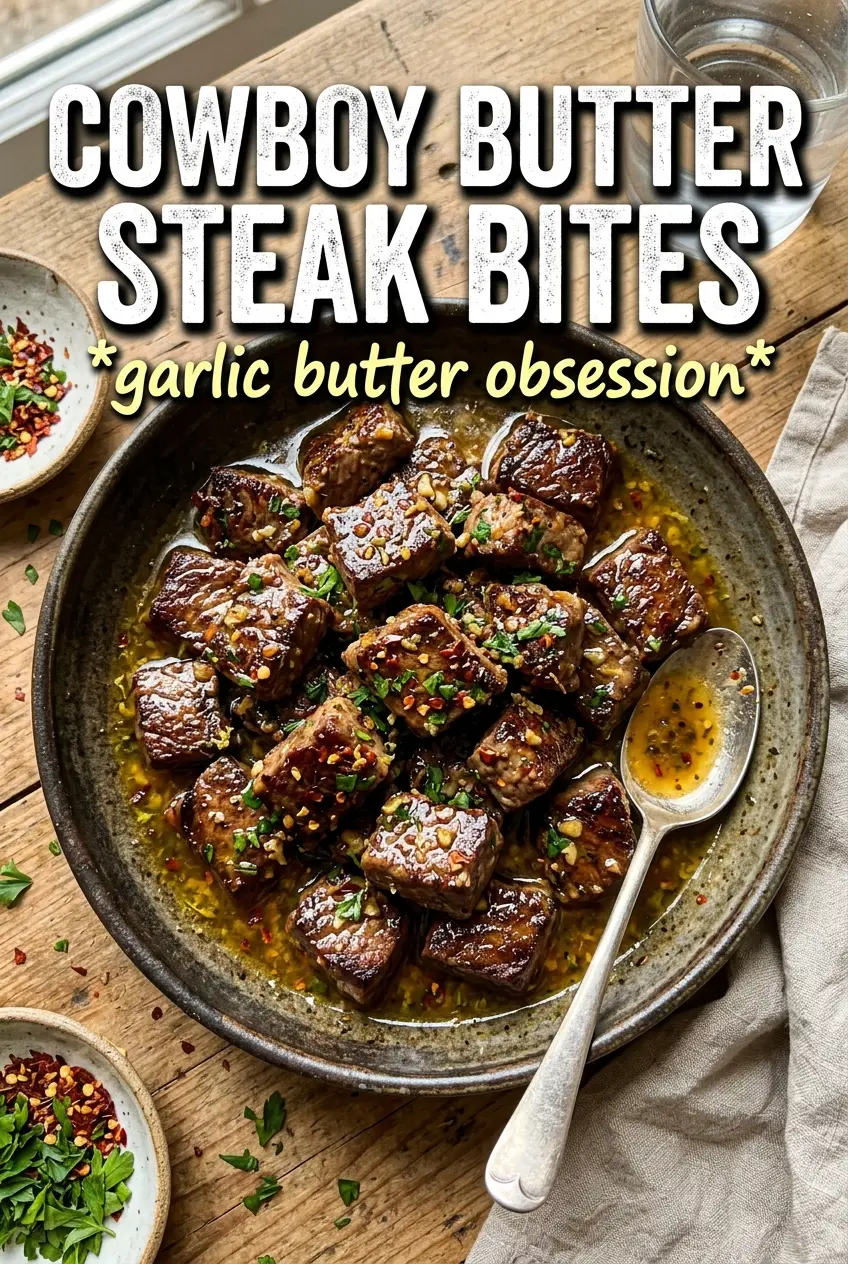
Cowboy Butter Steak Bites
Ingredients
Equipment
Method
- Season the steak cubes with salt and pepper. Coat evenly and set aside while you heat the skillet.
- Heat a cast iron skillet over high heat until smoking. Add steak cubes in a single layer without touching.
- Sear the steak bites for 2 minutes per side. Look for deep golden-brown edges and a firm sear.
- Work in batches and set the seared steak aside. Keep them warm while you sear the rest.
- Reduce heat to medium and add the butter to the skillet. Let it melt until foaming.
- Sauté the garlic and shallot for 1 minute. Stir until fragrant but not browned.
- Stir in the parsley, chives, Dijon mustard, lemon juice, red pepper flakes, and smoked paprika. Cook just until combined and bubbling.
- Return the steak bites to the skillet and toss to coat in the cowboy butter. Serve immediately while the sauce is bubbling and glossy.