Golden seared chicken and soft peach slices belong together in the skillet. The chicken stays juicy because it’s pounded to an even thickness before it ever hits the pan, and the peaches break down just enough to turn the honey-mustard sauce glossy without collapsing into jam. You get browned edges, sweet fruit, and a pan sauce that clings to every bite.
The trick is to treat the peaches like part of the sauce, not a separate topping. They go in after the garlic for a short sauté, just long enough to soften and release some juice, then the broth, honey, and Dijon simmer in the same pan so all those browned bits from the chicken get pulled into the sauce. Butter at the end gives it that smooth finish that makes the whole dish taste finished, not just cooked.
Below you’ll find the timing that keeps the chicken from drying out, the ingredient swaps that still work, and a few answers for the most common questions about making peach chicken in a skillet.
The peaches held their shape just enough, and the sauce thickened into a perfect glaze. I served it over rice, and my husband kept going back for extra spoonfuls of the pan sauce.
Love the glossy honey-mustard sauce and seared peaches? Save this chicken with peaches for an easy skillet dinner that feels special without extra work.
The Part That Keeps the Chicken Juicy While the Sauce Finishes
The biggest mistake with peach chicken is cooking the chicken all the way through before the sauce is ready, then letting it sit and dry out while you fuss with the pan. Here, the chicken is seared until it’s cooked through, then pulled out briefly so the peaches and sauce can build in the same skillet. That short rest keeps the meat tender and gives you room to thicken the sauce without overcooking the chicken.
The other thing that matters is heat control once the broth goes in. If the pan is screaming hot, the honey can tighten too fast and the sauce can turn sticky instead of glossy. Medium heat is enough once the liquid is in the pan. You want a gentle simmer that reduces the broth and concentrates the peach juices without scorching the sugars.
What Each Ingredient Is Actually Doing in This Skillet
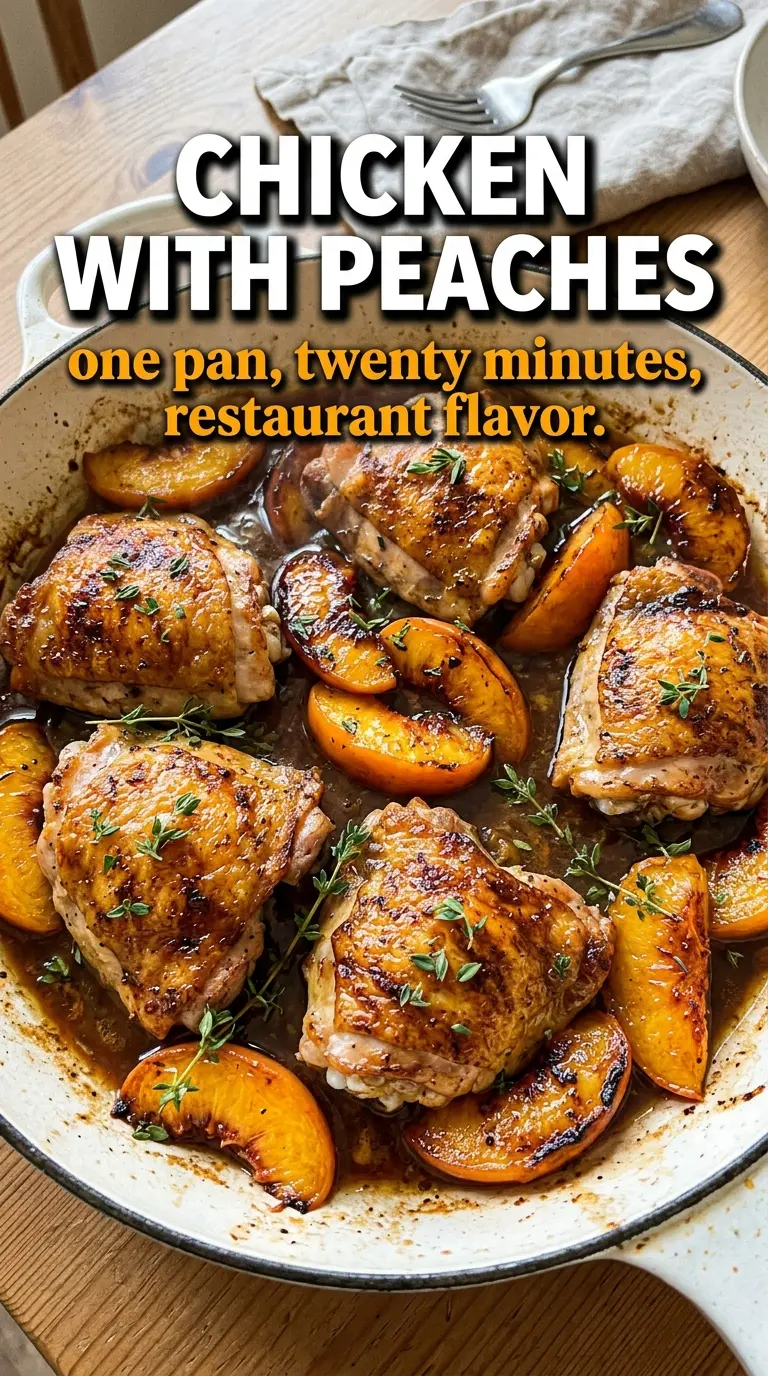
- Chicken breasts — Pounding them to even thickness is what keeps the thinner ends from drying out before the thick center cooks through. If you only have chicken thighs, they’ll work, but the dish will taste richer and the cook time will be a little less exact.
- Peaches — Use ripe peaches with some give, not hard fruit that tastes flat. They should soften in the pan and release juice, but they still need enough structure to hold slices in the finished dish.
- Dijon mustard — This gives the sauce its backbone and helps emulsify the butter at the end. Yellow mustard won’t give the same sharp depth, and the sauce will taste softer and less balanced.
- Chicken broth — It loosens the honey and mustard into an actual pan sauce instead of a glaze that grabs the pan. If you’re using salted broth, go lighter on the salt at the beginning.
- Butter — Swirled in at the end, it smooths out the sauce and gives it that glossy finish. Add it after the heat is lowered so it melts in cleanly instead of separating.
- Fresh thyme — It adds a clean, savory note that keeps the peaches from tasting candy-sweet. Dried thyme works in a pinch, but use less and crush it between your fingers before it goes in.
Building the Sauce So It Stays Glossy, Not Sticky
Searing the Chicken First
Season both sides of the chicken well, then sear it in hot olive oil until it’s deep golden and releases easily from the pan. If it sticks, it’s not ready to turn yet. You’re looking for color, not char, and the chicken should be cooked through before it comes out. A quick rest on a plate keeps those juices inside while you finish the sauce.
Softening the Peaches
Garlic only needs about 30 seconds in the pan before the peaches go in. Once the fruit hits the skillet, it should soften at the edges and start looking glossy, not mushy. If the peaches are under-ripe, they’ll stay firm and the sauce won’t have the same natural sweetness, so choose fruit that smells fragrant at the stem.
Reducing the Honey-Mustard Sauce
Whisk the honey, Dijon, and broth together before they go in so the mustard doesn’t clump. Let the sauce simmer for 3 to 4 minutes until it lightly coats a spoon and the bubbles slow down a bit. If it still looks thin, give it another minute; if it starts looking syrupy too fast, lower the heat and add a splash more broth.
Finishing with Butter and Returning the Chicken
Pull the pan off the heat or drop it to low before the butter goes in. That last swirl gives the sauce a smooth sheen, but high heat can split it and make the sauce look oily. Nestle the chicken back into the skillet, spoon the sauce over the top, and let it warm through for a minute so the flavors settle together.
Three Ways to Adapt Chicken with Peaches Without Losing the Point
Make It Dairy-Free
Swap the butter for a dairy-free butter substitute or skip it and finish with a small splash of olive oil. The sauce won’t have quite the same round, glossy finish, but it will still cling nicely to the chicken and peaches.
Use Chicken Thighs Instead
Boneless thighs stay juicy and give you a slightly richer dish. They may need a few extra minutes in the pan, so use the browning as your guide and cook until they’re done all the way through before building the sauce.
Turn It Gluten-Free Without Changing the Method
This recipe is already gluten-free as written if your broth is certified gluten-free. That’s one less thing to work around, and the sauce keeps the same texture because it’s reduced naturally instead of thickened with flour.
Storage and Reheating
- Refrigerator: Store leftovers in an airtight container for up to 3 days. The peaches will soften more, but the flavor holds up well.
- Freezer: It freezes, but the peaches lose some of their texture after thawing. Freeze for up to 2 months in a tightly sealed container if you don’t mind a softer sauce.
- Reheating: Warm gently in a skillet over low heat with a splash of broth to loosen the sauce. High heat can make the chicken dry and can cause the honey sauce to turn sticky instead of silky.
Answers to the Questions Worth Asking

Chicken with Peaches
Ingredients
Equipment
Method
- Season the chicken breasts with salt and pepper on both sides.
- Heat olive oil in a large skillet over medium-high heat and sear the chicken for 4-5 minutes per side until golden and cooked through, then remove and set aside.
- In the same skillet, saute garlic for 30 seconds.
- Add peach slices and cook for 2 minutes until slightly softened.
- Whisk honey, Dijon mustard, and chicken broth together and pour into the skillet, then cook for 3-4 minutes until the sauce thickens.
- Swirl in unsalted butter until the sauce looks glossy.
- Return the chicken to the pan, spoon the sauce over the top, garnish with fresh thyme, and serve.