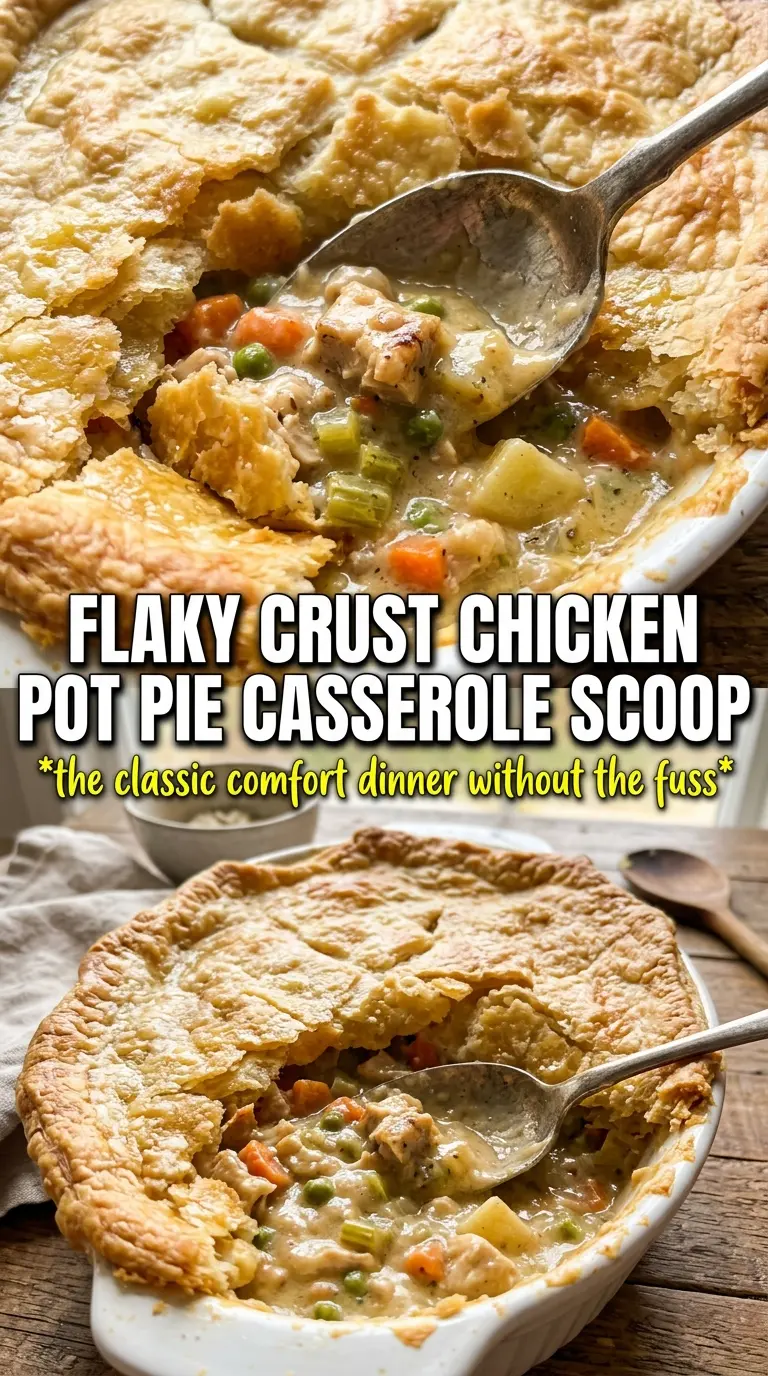
Chicken pot pie casserole bakes into the kind of dinner that makes the whole kitchen smell like butter, thyme, and comfort. The filling turns creamy and savory without turning gluey, the vegetables stay distinct, and the biscuit topping or puff pastry gives you that flaky, golden finish without the fuss of a bottom crust. It eats like a classic pot pie, but it lands on the table with less work and fewer dishes.
The trick is building the sauce before anything goes into the oven. A quick flour-and-butter base thickens the broth and cream into a proper gravy, which means the casserole holds together instead of turning soupy around the edges. Using cooked chicken also keeps the meat tender, since it only needs to warm through while the topping bakes.
Below, I’ve included the small details that keep the filling creamy and the topping crisp, plus a few easy swaps if you want to change the topping or use what you already have.
The filling thickened up exactly right and the biscuit topping stayed crisp instead of getting soggy. My husband went back for seconds before I even sat down.
Pin this chicken pot pie casserole for a creamy, golden weeknight dinner with biscuit topping and tender vegetables.
The Secret to Keeping the Filling Thick, Not Soupy
The part that makes or breaks chicken pot pie casserole happens before the baking dish ever goes in the oven. If the sauce is thin on the stovetop, it stays thin in the oven, and the biscuits or pastry end up sitting on top of a loose stew instead of a creamy filling. You want the sauce to coat a spoon and leave a clear trail for a second or two when you drag a spatula through the pan.
That’s why the flour cooks in butter first. It takes away the raw flour taste and gives the broth and cream something stable to cling to. Add the liquid gradually and keep whisking so the base stays smooth. If you dump it in all at once, you’ll get lumps that are harder to fix later, and the sauce won’t thicken evenly around the vegetables and chicken.
What Each Ingredient Is Doing in This Casserole
- Cooked chicken — Using cooked chicken keeps the texture tender and saves time. Rotisserie chicken works well here, and leftover roast chicken is even better if it’s not heavily seasoned. Shred it into bite-size pieces so it warms through evenly.
- Butter and flour — This is the base of the gravy. Butter carries the flour and gives the sauce richness, while flour thickens the broth and cream into that classic pot pie texture. Don’t skip the full minute of cooking the flour; it matters for flavor.
- Chicken broth — This brings the savory backbone. A good broth tastes clean and meaty, and a salty canned broth can work if you taste carefully before adding extra seasoning. If your broth is very salty, hold back on the salt until the end.
- Heavy cream — Cream gives the filling body and that soft, velvety finish. Half-and-half will work in a pinch, but the sauce won’t be quite as lush and it may need a little longer to thicken. Don’t let the filling boil hard once the cream goes in.
- Biscuits or puff pastry — Biscuits give you a hearty, rustic top, while puff pastry bakes into lighter, flakier layers. Either one works, but puff pastry wants a very hot oven and a full bake so the bottom doesn’t stay doughy. If using biscuits, space them a little so the steam can escape.
- Peas, corn, carrots, and celery — This combination gives the casserole the right balance of sweetness, color, and texture. Frozen peas and corn are fine because they go straight into the hot filling. The carrots and celery need to be diced small enough to soften during sautéing and bake evenly in the finished dish.
Building the Sauce Before the Topping Goes On
Softening the Vegetables
Start by cooking the onion, carrots, and celery in butter until the onion turns translucent and the vegetables lose their raw edge. You’re not trying to brown them; you just want them tender enough to finish in the oven without staying crunchy. If the pan starts looking dry before the vegetables soften, lower the heat and add a small splash of broth.
Making the Roux
Sprinkle the flour over the vegetables and stir for a full minute. The mixture should look pasty and smell a little nutty, not floury. This is the stage that keeps the filling from separating later, so don’t rush it or leave dry pockets stuck to the bottom of the pan.
Whisking in the Broth and Cream
Add the broth slowly while whisking, then follow with the cream. The sauce should go from loose and thin to glossy and lightly thickened as it heats. If it looks lumpy, keep whisking before you add anything else; once it simmers, most small lumps smooth out. Let it bubble gently for a minute or two so it thickens enough to hold the chicken and vegetables.
Finishing and Baking
Stir in the chicken, peas, corn, thyme, and garlic powder, then taste the filling before it goes into the baking dish. The flavor should be a little more seasoned than you want at the table, because the biscuit topping softens the impact slightly. Once the top is golden and the filling is bubbling at the edges, the casserole is ready. If you pull it early, the center will still be loose and the sauce won’t set properly.
How to Change the Topping, Keep It Dairy-Free, or Stretch It Further
Use puff pastry for a lighter, flakier top
Puff pastry gives you a more elegant finish and less of a bread-like bite than biscuits. Lay it over the hot filling and cut a few vents so steam can escape, or it can puff unevenly and go soggy underneath. It’s the best choice when you want a crust that feels closer to classic pot pie.
Make it dairy-free without losing the creamy filling
Use olive oil or dairy-free butter in place of the butter, and swap the heavy cream for full-fat coconut milk or an unsweetened dairy-free cooking cream. The filling will still thicken, but the flavor will be a little less rich and a little more savory, so taste carefully before serving. This works best with biscuits that are also dairy-free.
Turn it into a make-ahead casserole
You can cook the filling a day ahead and refrigerate it in the baking dish, then add the topping right before baking. That keeps the biscuits or pastry from getting damp while the filling chills. If the filling thickens in the fridge, loosen it with a splash of broth before topping and baking.
Stretch it with extra vegetables
Add mushrooms, diced potatoes, or green beans if you want more vegetables in the pan. Just cook anything firm enough to need extra time before it goes into the filling, or it’ll still be hard when the topping is done. More vegetables will make the casserole a little looser, so give the sauce an extra minute on the stove if needed.
Storage and Reheating
- Refrigerator: Store covered for up to 4 days. The topping softens as it sits, but the flavor stays good.
- Freezer: Freeze the filling without the topping for best texture. Biscuit or pastry tops don’t reheat well from frozen once baked.
- Reheating: Reheat covered at 350F until hot, then uncover for a few minutes so the topping dries out again. Microwave reheating works for the filling, but it makes the crust soft.
Answers to the Questions Worth Asking

Chicken Pot Pie Casserole
Ingredients
Equipment
Method
- Preheat oven to 400F. In a skillet, sauté onion, carrots, and celery in butter for 5 minutes, until softened and fragrant with light browning at the edges.
- Whisk in flour and cook for 1 minute. Stir continuously until the flour smell cooks off and the mixture looks slightly thicker.
- Gradually add chicken broth and heavy cream, then whisk until smooth. Simmer until thick, with steam and a spoon-drag consistency that coats the back of the spoon.
- Stir in chicken, peas, corn, thyme, and garlic powder, and season with salt and pepper to taste. Cook 2 minutes more so the filling is hot and evenly distributed.
- Pour the filling into a 9x13 dish. Spread it into an even layer so it bakes uniformly.
- Top with refrigerated biscuits or puff pastry. Arrange to cover the surface fully, leaving minimal gaps so the filling stays enclosed.
- Bake 25-30 minutes at 400F until golden and the filling is bubbling. Look for bubbling around the edges and a browned top with crisp, visible layers.