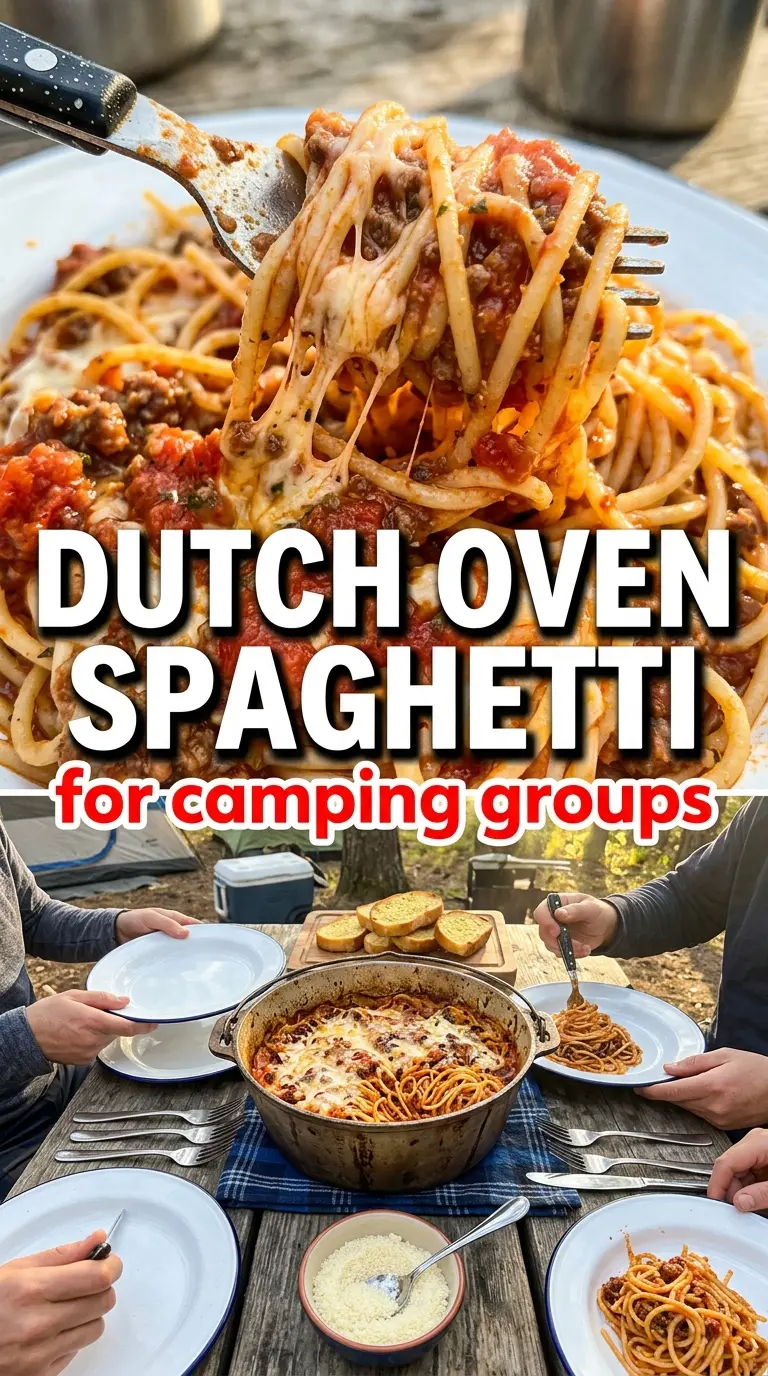
Cheesy baked spaghetti in a Dutch oven hits that sweet spot between hearty and low-fuss. The pasta turns saucy and tender, the beef brings enough richness to make it feel like a real meal, and the melted mozzarella on top bakes into a golden lid that scoops up in stretchy strands. It’s the kind of campfire dinner that gets eaten fast and talked about later.
What makes this version work is the way the pasta is already cooked before it goes into the Dutch oven. That keeps the noodles from going gummy or underdone while the cheese melts and the flavors come together over the coals. Mixing some of the mozzarella right into the pasta also helps bind everything so the casserole slices and serves cleanly instead of collapsing into a loose pile.
Below, I’ve included the small details that matter most when you’re cooking outdoors: how hot the coals should be, why the lid needs heat on top, and what to watch for if you want the cheese browned without drying out the edges.
The cheese got perfectly bubbly and the spaghetti held together instead of turning mushy, even after sitting in the Dutch oven for a few minutes. My kids scraped the pan clean.
Pin this cheesy campfire spaghetti bake for a Dutch oven dinner that feeds a crowd with bubbly mozzarella and barely any cleanup.
The Part That Keeps Dutch Oven Pasta from Turning Heavy
The biggest mistake with campfire spaghetti bake is treating it like a pasta pot instead of a casserole. If you layer in raw noodles and expect the Dutch oven to do all the work, the outside overcooks before the center catches up. This version avoids that by starting with fully cooked spaghetti, which means the heat only has to melt the cheese, warm the sauce, and pull everything together.
The other thing that matters is moisture. Pasta sitting over coals loses steam fast, so you want enough sauce to coat every strand before it goes into the oven. Half the mozzarella goes inside the mixture for body, and the rest goes on top where it can melt into a proper blanket instead of disappearing into the filling.
What Each Ingredient Is Actually Doing in This Campfire Bake
- Ground beef — This gives the dish its backbone and keeps it from feeling like plain saucy pasta. A standard 80/20 or 85/15 blend works well; anything much leaner can taste dry unless you add a little extra sauce. Drain the fat after browning so the final bake doesn’t turn greasy.
- Spaghetti sauce — Use a jarred sauce you’d actually eat on its own, because it’s carrying most of the flavor here. If your sauce is thick, that’s fine; if it’s very dense, loosen it with a splash of water so it coats the pasta instead of clumping.
- Cooked spaghetti — The pasta should be just tender, not soft. It keeps cooking a little in the Dutch oven, and starting with firm noodles protects you from a mushy finish.
- Mozzarella and Parmesan — Mozzarella gives the melt and the stretch, while Parmesan adds salt and a sharper edge on top. Freshly grated Parmesan melts better than the shelf-stable kind, but either one will work if that’s what you have.
- Italian seasoning and garlic powder — These add a quick layer of flavor without needing extra chopping. If your sauce is already heavily seasoned, use a light hand so the bake doesn’t taste crowded or salty.
Building the Bake Over Coals, Not Overthinking It
Brown the beef first
Cook the ground beef in a skillet over the campfire until it’s no longer pink and the moisture has mostly cooked off. You want browned bits, not steamed meat, because that deeper flavor carries into the whole dish. Drain off excess fat before mixing anything else in, or the finished bake will feel heavy.
Mix while the pasta is still warm
Combine the cooked spaghetti, beef, sauce, half the mozzarella, Italian seasoning, and garlic powder while the pasta is still warm enough to loosen up. Warm noodles absorb sauce better, so everything clings instead of sliding apart later. If the mixture looks dry in the bowl, add a bit more sauce before it goes into the Dutch oven.
Pack the Dutch oven and top it well
Spray the Dutch oven, add the spaghetti mixture, then spread the remaining mozzarella and Parmesan over the top. Don’t press the cheese down into the pasta; leave it on the surface so it can melt into a proper crust. A flat, even layer cooks more evenly than a piled-up mound.
Let the coals do the finishing
Cover the Dutch oven and place it on campfire coals with coals on top of the lid. That top heat is what gives you the melted, bubbly finish instead of just warming the bottom. Cook for 30 to 35 minutes, and start checking near the end; you want the cheese fully melted and the edges just starting to brown, not burnt.
Give it a short rest before serving
Let the bake sit for 5 minutes before scooping. That rest helps the sauce settle back into the pasta, so the first serving doesn’t run all over the Dutch oven. If you cut in too soon, the cheese will still be loose and the portions won’t hold together.
How to Tweak This for a Different Crowd or a Different Cooler
Make it lighter with ground turkey
Swap the beef for ground turkey if you want a leaner bake. Turkey needs a little help, so brown it well and don’t skip the seasoning; otherwise it can taste flat next to the sauce and cheese. The texture stays sturdy, but the flavor is a touch milder.
Skip the meat for a vegetarian version
Leave out the beef and use a chunky marinara or add sautéed mushrooms if you want more body. Mushrooms bring back some of the savory depth you lose without meat, and they hold up well in a Dutch oven. The bake will be a little softer, so keep an eye on the sauce level.
Use gluten-free pasta with one caution
Gluten-free spaghetti works here, but cook it just to the edge of done because it softens faster than wheat pasta once the casserole goes over heat. If you overcook it before baking, it can break apart when you stir in the sauce. Choose a sturdier rice or corn blend for the best structure.
Add heat without changing the structure
Stir in red pepper flakes or a spoonful of chopped pickled peppers if you want more bite. This changes the flavor, not the texture, so it’s an easy way to make the bake feel sharper without messing with the cheese or the pasta balance.
Storage and Reheating
- Refrigerator: Store leftovers in an airtight container for up to 4 days. The pasta will soak up more sauce as it sits, so expect a firmer texture the next day.
- Freezer: It freezes well in portions. Cool it completely, wrap tightly, and freeze for up to 2 months; the cheese won’t be quite as stretchy after thawing, but it still reheats nicely.
- Reheating: Reheat covered in the oven at 325°F until hot, or warm smaller portions in the microwave with a spoonful of water or sauce. The extra moisture keeps the pasta from drying out, which is the most common mistake with leftover baked spaghetti.
Answers to the Questions Worth Asking
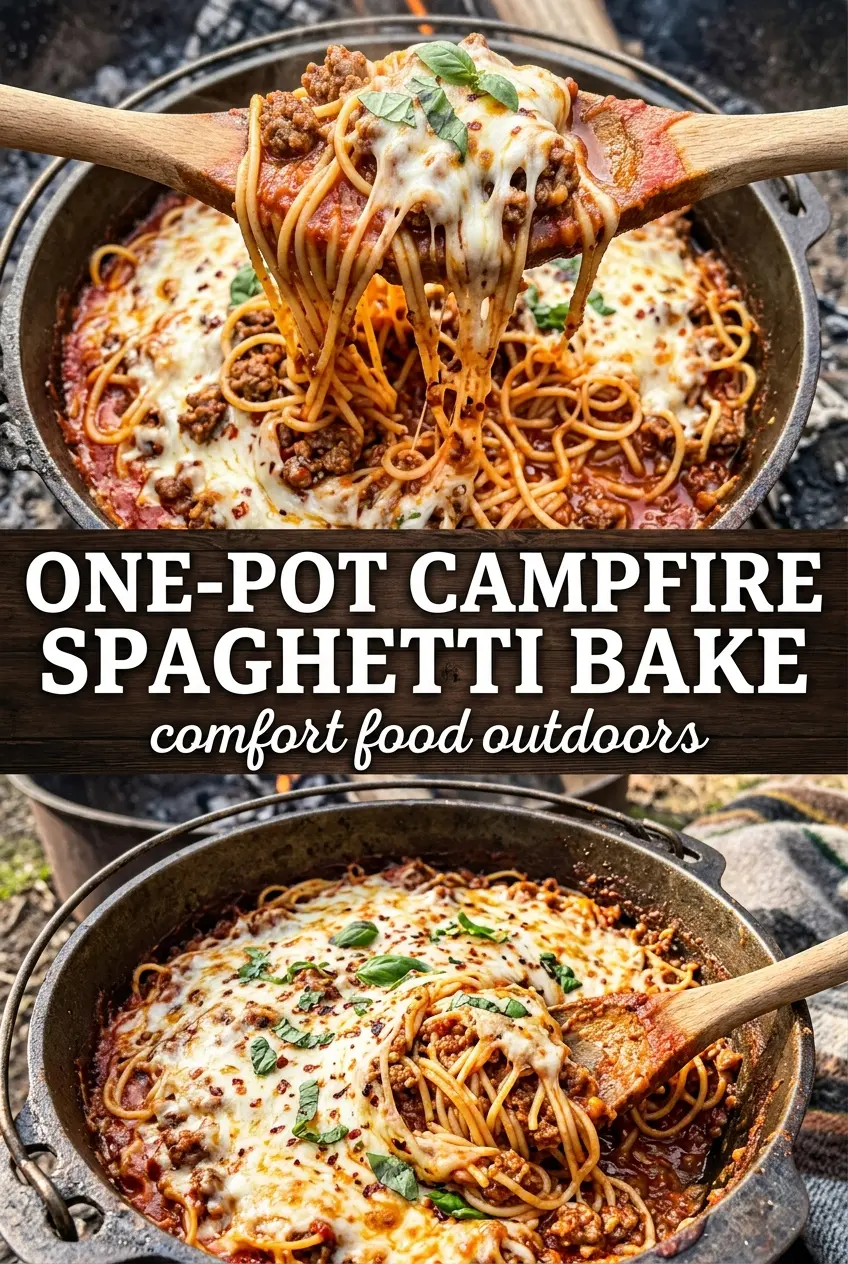
Campfire Spaghetti Bake
Ingredients
Equipment
Method
- Brown ground beef in a skillet over campfire until cooked through, then drain excess fat. The mixture should look crumbly with no visible pink.
- Mix cooked spaghetti, beef, spaghetti sauce, half the mozzarella, Italian seasoning, and garlic powder until evenly combined. The pasta should be thoroughly coated and look saucy throughout.
- Spray the Dutch oven with cooking spray, then add the spaghetti mixture in an even layer. You should see sauce peeking through the pasta.
- Top with the remaining mozzarella and Parmesan cheese. The surface should be fully covered for a golden, bubbly finish.
- Cover the Dutch oven and place it on campfire coals with coals on top of the lid. Aim for steady heat so the cheese melts without burning.
- Cook for 30-35 minutes, until the cheese is melted and bubbly. Look for active bubbling at the edges and a lightly browned, set top.
- Let cool for 5 minutes before serving. The bake should thicken slightly so it scoops cleanly.