Campfire popcorn in a can turns a plain bag of kernels into the kind of snack people hover around the fire for. It pops up light, salty, and smoky, with just enough campfire drama to make a simple bowl of popcorn feel like part of the evening instead of a filler between dinner and dessert.
The trick is keeping the kernels moving and giving them a steady stream of heat without scorching the oil. A metal coffee can works well because it holds up to the flame and gives the popcorn room to tumble as it pops, while the small holes in the bottom let steam escape so the popcorn stays crisp instead of chewy. Constant shaking matters more here than anywhere else; if the can sits still, the kernels at the bottom burn before the rest catch up.
Below you’ll find the little details that keep this from going sideways, plus a few useful ways to adapt it if you’re cooking at a campsite, in the backyard, or for a crowd around the fire.
The popcorn came out light and evenly popped, and the can never tasted burnt because we kept it moving over the fire. My kids thought the whole process was half the fun.
Love the smoky crunch of campfire popcorn in a can? Save it to Pinterest for your next firepit night.
The Can Has to Vent, or the Popcorn Steams
People usually focus on the fire size, but the real problem is trapped steam. If the bottom of the can is sealed tight, the kernels pop into a damp environment and the finished popcorn turns softer than it should. Those small holes in the bottom give the moisture somewhere to go, which keeps the popcorn crisp and helps the kernels pop more evenly.
The other mistake is putting the can too close to roaring flames. You want steady heat, not a blast furnace. A good shake keeps the oil moving across the kernels so the ones on the bottom don’t fry while the ones on top sit untouched. Once the popping slows to a few seconds between pops, pull it off right away; waiting longer means burnt popcorn and bitter oil.
What the Coffee Can, Oil, and Kernel Quality Are Doing Here
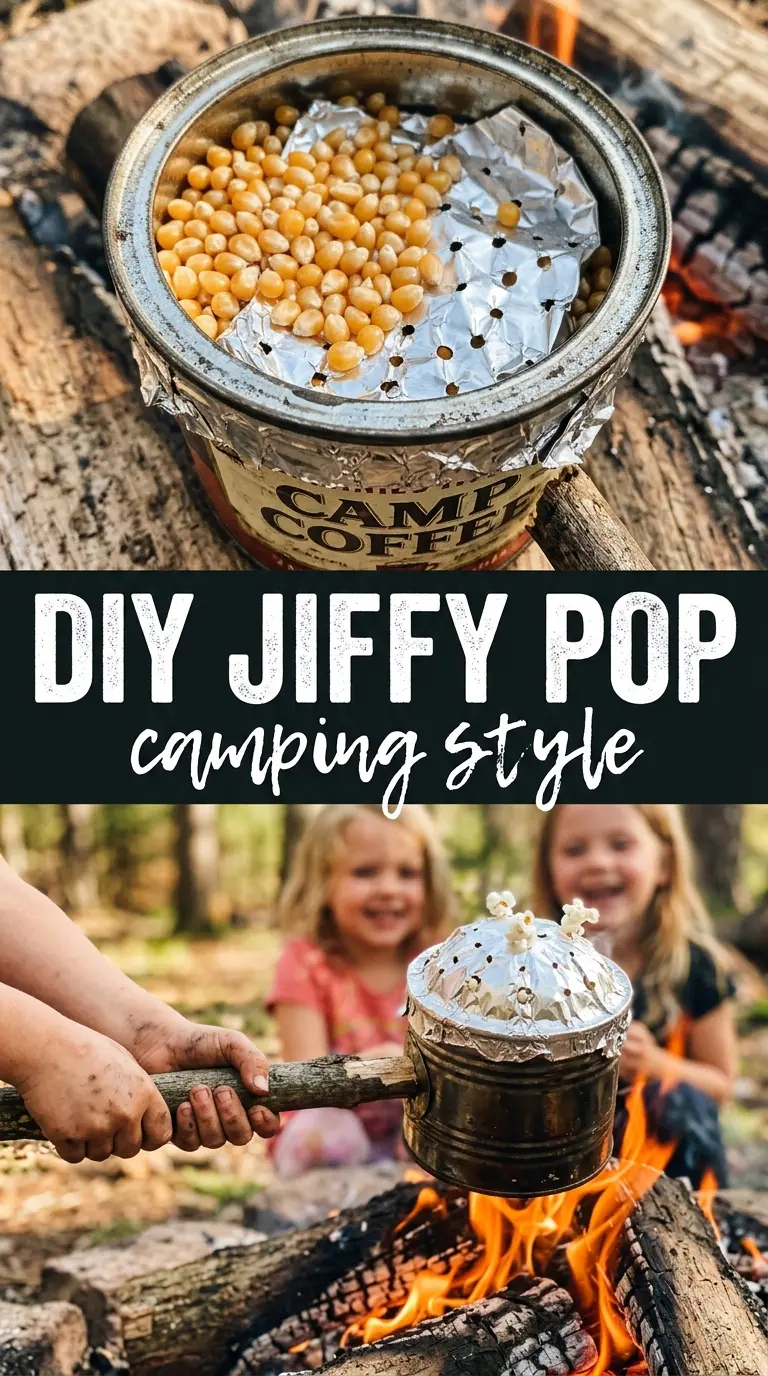
- Popcorn kernels — Fresh kernels matter more than people think. Old popcorn still cooks, but it leaves too many unpopped kernels behind. If your bag has been sitting in a pantry for years, expect weaker popping and a smaller yield.
- Vegetable oil — This gives you the cleanest, most reliable result over open flame. It has a higher smoke point than butter, which keeps the can from smoking out before the popcorn finishes. If you want a swap, use canola oil with the same amount.
- Metal coffee can — This is the whole trick. It needs to be metal, sturdy, and big enough for the kernels to move around as they pop. A paper or plastic container won’t hold up, and a flimsy thin metal container can warp if the fire is too hot.
- Wire handle — A sturdy wire or coat hanger lets you keep the can moving safely over the fire. The handle should be secure enough that you can shake constantly without fighting the weight of the can.
- Butter, melted — This is optional for finishing, not cooking. Add it after popping so it doesn’t burn in the can. If you want the popcorn to stay extra crisp, skip the butter and just season with salt.
Shaking the Can Until the Popping Slows
Punching the Vent Holes
Use a sharp tool to punch several small holes in the bottom of the can before you add the kernels. The holes should be big enough for steam to escape, but not so large that kernels or oil leak out. If the holes are uneven, that isn’t a problem; what matters is airflow, not perfect placement.
Loading the Kernels and Oil
Add the kernels and oil to the can, then secure the lid tightly. The oil needs to coat the kernels before heating starts, so give the can a quick tilt or two if needed. If you add too much oil, the popcorn turns greasy; if you add too little, the kernels don’t heat evenly and you’ll get more duds.
Cooking Over the Fire
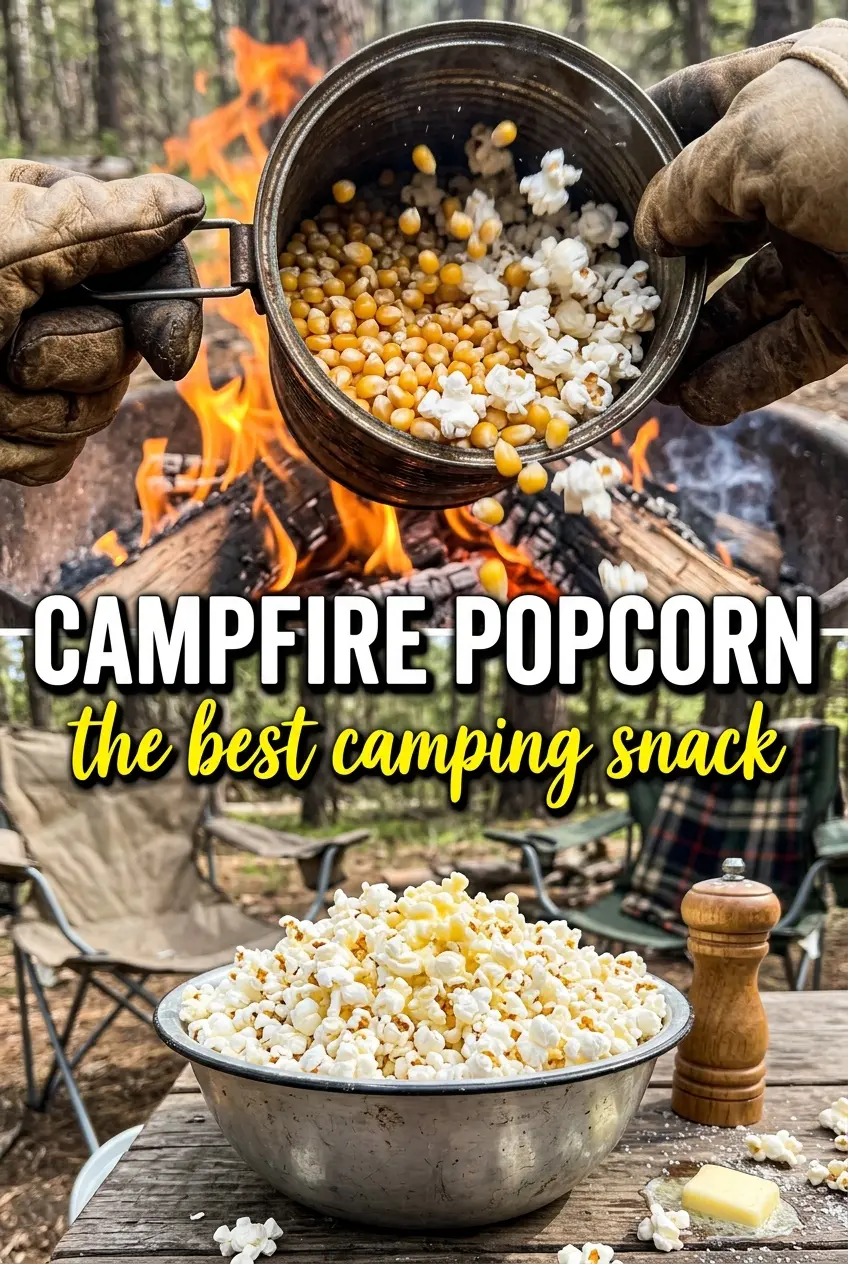
Hold the can above the campfire and shake constantly for 8 to 10 minutes. The sound will start as a few scattered pops, then move into a fast burst, then slow back down. That slowing is your cue to stop, because the last few seconds are where popcorn goes from perfect to scorched. Remove the lid carefully with the openings turned away from your face, then pour the popcorn into a bowl right away.
Finishing the Bowl
Season with salt while the popcorn is still hot so it sticks, then drizzle on melted butter if you want it richer. Toss fast so the seasoning spreads before the butter settles at the bottom. If the popcorn tastes flat, it usually means it needed salt sooner, not more butter.
How to Adapt Campfire Popcorn for Different Setups
Dairy-Free Firepit Bowl
Skip the butter and finish with fine salt while the popcorn is hot. You still get full flavor from the toasted kernels and oil, and the texture stays lighter and crisper without a fatty coating.
Extra-Savory Version
Add a little garlic powder, smoked paprika, or chili powder after popping, not before. Spices in the can can burn over the fire, but they cling nicely once the popcorn is in a bowl and lightly buttered.
When You Don’t Have a Coffee Can
A sturdy metal camp pot with a lid can work if it has enough room for the kernels to move. The result is a little less playful than the coffee-can method, but the popcorn will still pop well as long as you keep it moving and vent the steam.
Scaling It for a Crowd
Make several small batches instead of overfilling one can. Too many kernels at once trap heat and cause uneven popping, while smaller batches stay more consistent and keep the burned-batch risk down.
Storage and Reheating
- Refrigerator: Store in an airtight container for up to 2 days. It loses some crispness as it sits, especially if butter was added.
- Freezer: Freezing isn’t a good fit for popcorn. The texture suffers, and condensation after thawing makes it limp.
- Reheating: Spread leftovers on a baking sheet and warm at 250°F for 5 to 8 minutes to dry them out a bit. Don’t microwave it if you want to keep what crunch is left.
Answers to the Questions Worth Asking
Campfire Popcorn in a Can
Ingredients
Equipment
Method
- Punch several small holes in the bottom of the large metal coffee can with lid for ventilation.
- Add popcorn kernels and vegetable oil to the can and secure lid.
- Create a handle by wrapping coat hanger or sturdy wire around the can.
- Hold the can over campfire flames, shaking constantly, for 8-10 minutes until popping slows, using a steady shake to keep kernels moving (visual cue: kernels visible popping through the lid area if possible).
- Carefully remove the lid and pour popcorn into a bowl (visual cue: popping has slowed to a few seconds between pops).
- Season with salt to taste while the popcorn is hot (visual cue: salt clings slightly on the warm surface).
- Season with melted butter if desired and serve immediately.