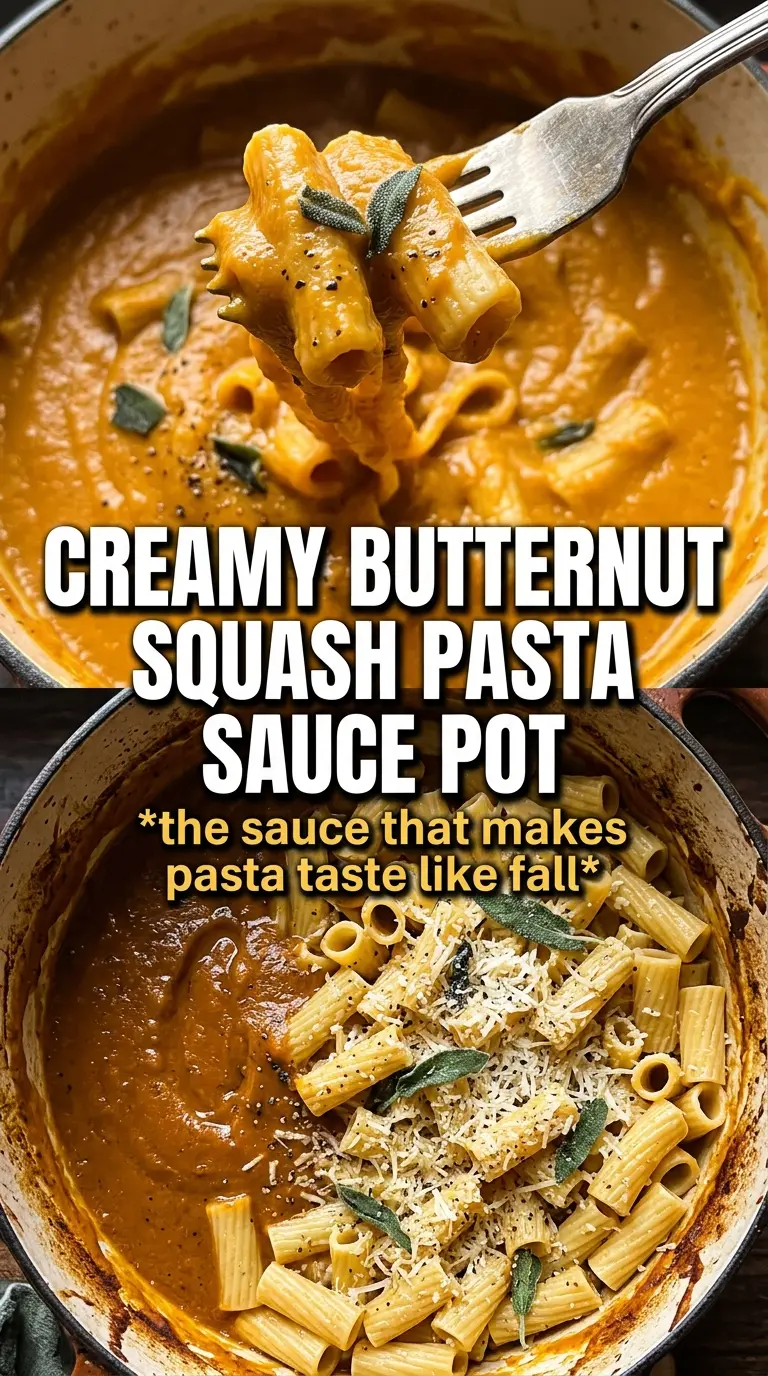
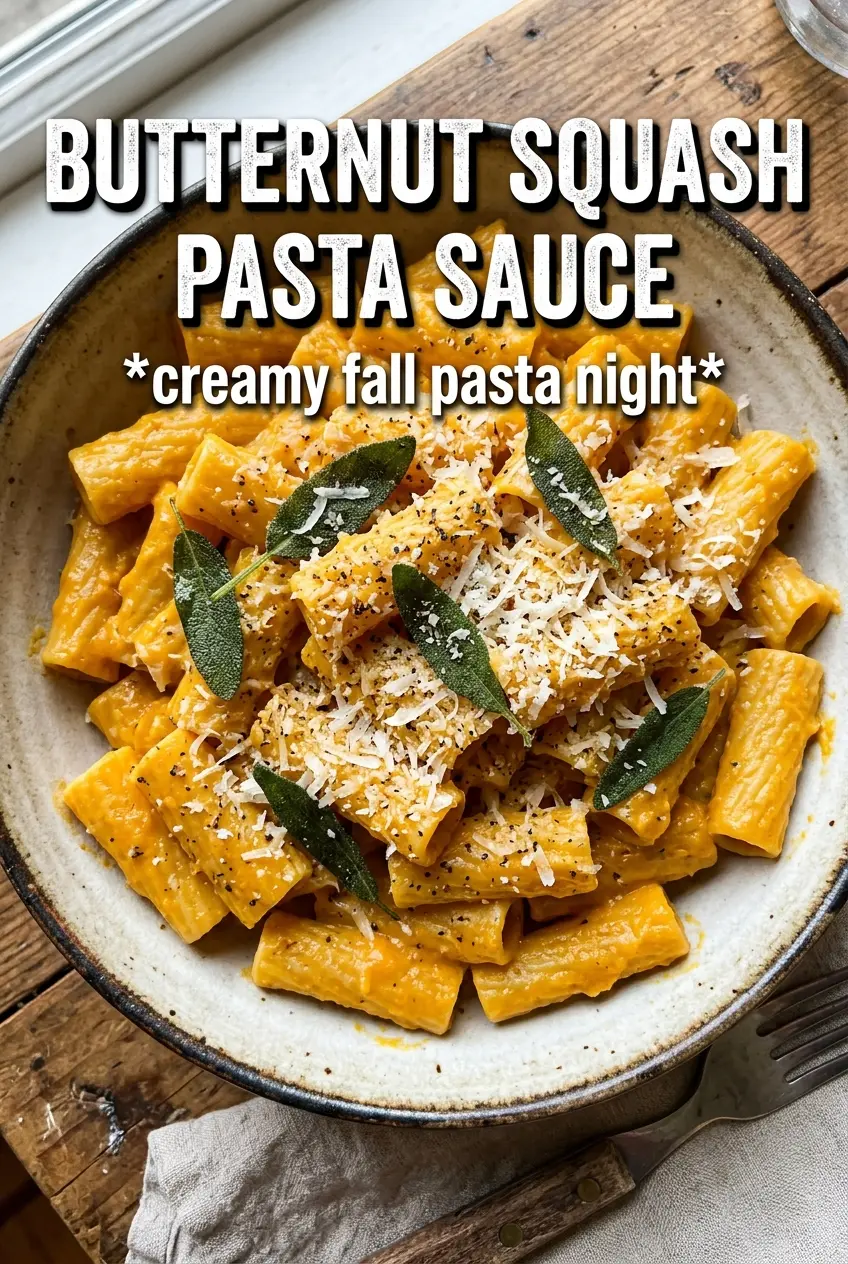
Silky, sweet-savory butternut squash pasta sauce coats every ridge of rigatoni with a glossy orange sheen and enough body to cling without turning heavy. The squash brings a mellow sweetness, but it never tastes flat because the onion, garlic, sage, and parmesan keep pulling it back toward savory. What you get is a sauce that feels cozy and polished at the same time, the kind that makes plain pasta taste like dinner was planned with care.
The trick is cooking the squash until it is truly soft before blending. If it still has any firmness, the sauce can turn grainy no matter how long you blitz it. I also like to use broth instead of plain water here, because the squash needs a little help building depth before the cream and cheese go in. The parmesan adds salt and body, while a small splash of pasta water loosens the sauce just enough to wrap around the noodles.
Below, I’ve included the exact point where the sauce should go from brothy to silky, plus a few smart swaps if you want to make it dairy-free or stretch it for a bigger pasta night.
The squash blended into the smoothest sauce, and the parmesan gave it just enough saltiness without overpowering the sage. I tossed it with rigatoni and the sauce clung to every piece instead of pooling at the bottom of the bowl.
Save this butternut squash pasta sauce for the nights when you want a silky, restaurant-style pasta with almost no fuss.
The Reason This Sauce Stays Silky Instead of Going Grainy
Most squash sauces go wrong at the blending stage, not the simmering stage. If the squash is even a little undercooked, the blender turns it into a sandy puree instead of a smooth sauce. You want the cubes soft enough to collapse the second you press them against the side of the pot. That’s the moment the starches have loosened enough to puree cleanly.
The other common failure is adding dairy to a sauce that’s still boiling hard. Cream and parmesan want gentle heat. A hard simmer can make the sauce look broken or greasy, especially once the cheese goes in. Pull the heat down before you stir in the cream and parmesan, and give the sauce a few minutes to settle into a glossy finish.
- Sage — Fresh sage brings the earthy note that keeps the squash from tasting one-dimensional. Dried sage can work in a pinch, but use less because it blooms fast and can take over.
- Parmesan — This is the ingredient that makes the sauce taste finished. Freshly grated parmesan melts smoother than pre-shredded cheese, which often contains anti-caking agents that can make the sauce a little gritty.
- Broth — Vegetable broth keeps the sauce vegetarian, while chicken broth gives it a deeper savory base. Either is better than water here because the squash needs that salty backbone before the cream is added.
- Heavy cream — This is what turns the puree into a true pasta sauce instead of a soup. Half-and-half can work, but the sauce will be a little thinner and less plush.
- Pasta water — The starch in pasta water helps the sauce cling to rigatoni and penne. Add it a splash at a time so the sauce loosens just enough to coat without sliding off the noodles.
What Each Ingredient Is Actually Doing in This Recipe
- Primary ingredient (the star) — Quality matters most. Choose the best you can find.
- Cooking medium (oil, butter, or broth) — This carries flavors and prevents dryness.
- Seasonings (salt, pepper, spices, herbs) — Layer flavors so nothing overpowers. Build depth gradually.
- Aromatics (garlic, onion, herbs) — Cook with fat to bloom flavors. Become the foundation.
- Supporting ingredients — Complement the main ingredient without overpowering it.
- Sauce or liquid (if applicable) — Brings flavors together. Balance richness with acid.
- Acid (lemon, vinegar, wine, or other) — Brightens and prevents flat-tasting results.
- Final finish (garnish, glaze, or sauce) — Prevents one-dimensional taste and adds visual appeal.
Building the Sauce Until It Clings to the Pasta
Softening the Onion and Sage
Start by cooking the onion in olive oil until it turns translucent and sweet at the edges, about 5 minutes. That early softness matters because raw onion would sharpen the sauce instead of smoothing it out. Add the garlic and sage only after the onion has had time to soften; garlic burns fast, and sage needs a minute or two in the oil to release its flavor without turning bitter.
Cooking the Squash All the Way Through
Once the squash and broth go in, bring the pot to a boil and then lower it to a steady simmer. Covering isn’t required, but you do want the liquid moving gently so the squash cooks evenly and the broth reduces a little. The squash is ready when a spoon cuts through a cube with no resistance and the pieces start to fall apart on their own. If the broth reduces before the squash is tender, add a splash more liquid and keep going.
Blending Into a Smooth Base
Blend the mixture until it looks completely smooth and glossy, with no visible fibers or chunks left behind. An immersion blender is easiest here because you can control the texture in the pot, but a countertop blender works too if you let the mixture cool slightly first. If the sauce seems too thick to blend, add a little broth or pasta water. A thick paste at this stage usually means the squash needed a bit more liquid, not that the recipe is off.
Finishing With Cream and Cheese
Lower the heat before stirring in the cream, parmesan, nutmeg, and red pepper flakes. The sauce should shift from matte to glossy as the cheese melts in and the nutmeg rounds out the sweetness. Let it simmer gently for about 5 minutes so the flavors come together and the texture turns velvety. If it looks a little tight, loosen it with reserved pasta water until it coats the spoon in a smooth layer.
What to Change When You Need This Pasta to Fit Your Kitchen
Make It Dairy-Free
Swap the heavy cream for full-fat coconut milk or an unsweetened oat cream, and skip the parmesan unless you have a dairy-free alternative that melts well. Coconut milk gives the sauce a slightly richer, rounder finish, while oat cream stays closer to the original flavor. The sauce will still be silky, but it won’t have quite the same sharp savory edge from the cheese.
Make It Vegetarian
Use vegetable broth instead of chicken broth and the rest of the recipe can stay the same. Since the sauce depends on squash, garlic, sage, and parmesan for its depth, you won’t lose much by making that swap. This is the cleanest change if you want a meatless main dish without changing the texture.
Use It With Gluten-Free Pasta
This sauce works well with gluten-free rigatoni or penne because the texture is naturally creamy and doesn’t rely on flour. Cook the pasta just until tender, then toss it with a little extra pasta water so the sauce can coat it before the noodles start to stiffen. Gluten-free pasta can drink up sauce fast, so serve it right away.
Storage and Reheating
- Refrigerator: Store the sauce or the finished pasta in an airtight container for up to 4 days. It thickens as it chills, so expect a denser texture the next day.
- Freezer: The sauce freezes well for up to 2 months if you freeze it without the pasta. Cream sauces can separate a little after thawing, but a good stir while reheating usually brings it back together.
- Reheating: Rewarm gently over low heat with a splash of broth, milk, or pasta water. Don’t blast it on high heat, or the cream can separate and the sauce can turn oily before it loosens again.
Questions I Get Asked About This Recipe
Butternut Squash Pasta Sauce
Ingredients
Equipment
Method
- Heat 2 tbsp olive oil in a large pot over medium heat. Sauté 1 diced onion for 5 minutes until softened and slightly translucent, then stir in the minced garlic and chopped fresh sage and cook 2 minutes until fragrant.
- Add 1 small cubed butternut squash and 3 cups vegetable or chicken broth to the pot. Bring to a boil, then reduce to a simmer and cook 20 minutes until the squash is very tender.
- Blend the mixture completely smooth with an immersion blender. Blend until the sauce has a silky texture with no visible squash pieces.
- Return the sauce to a gentle simmer, then stir in 1/2 cup heavy cream, 1/2 cup grated parmesan, 1/4 tsp nutmeg, and 1/4 tsp red pepper flakes. Simmer 5 minutes, stirring often, until glossy and slightly thickened.
- Cook the rigatoni or penne according to package instructions until al dente. Reserve 1/2 cup pasta water, then toss the hot pasta into the sauce and loosen with pasta water as needed until evenly coated.
- Season the sauce with salt and pepper to taste. Taste and adjust until the flavor pops and the sauce clings to the pasta.


