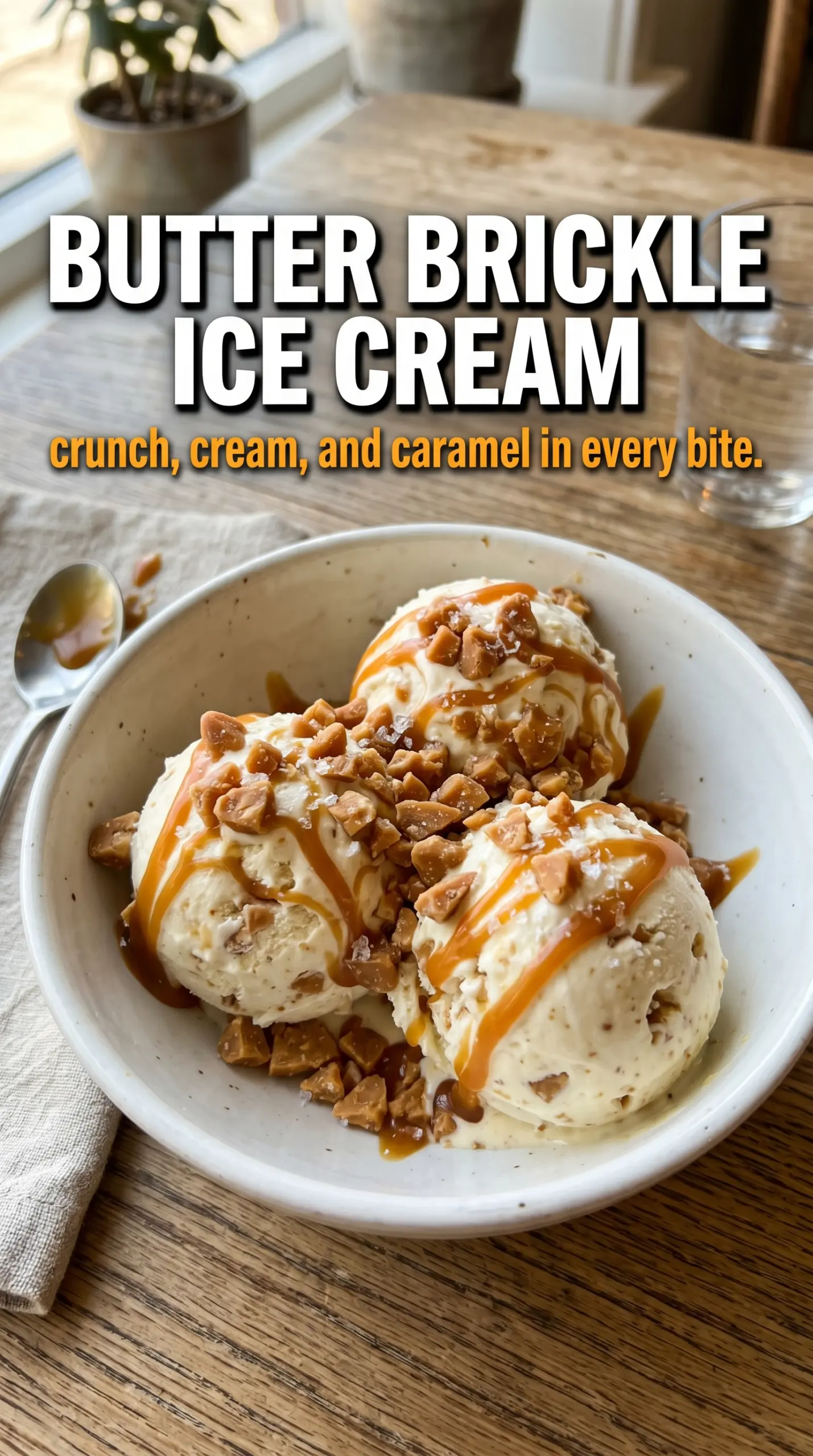
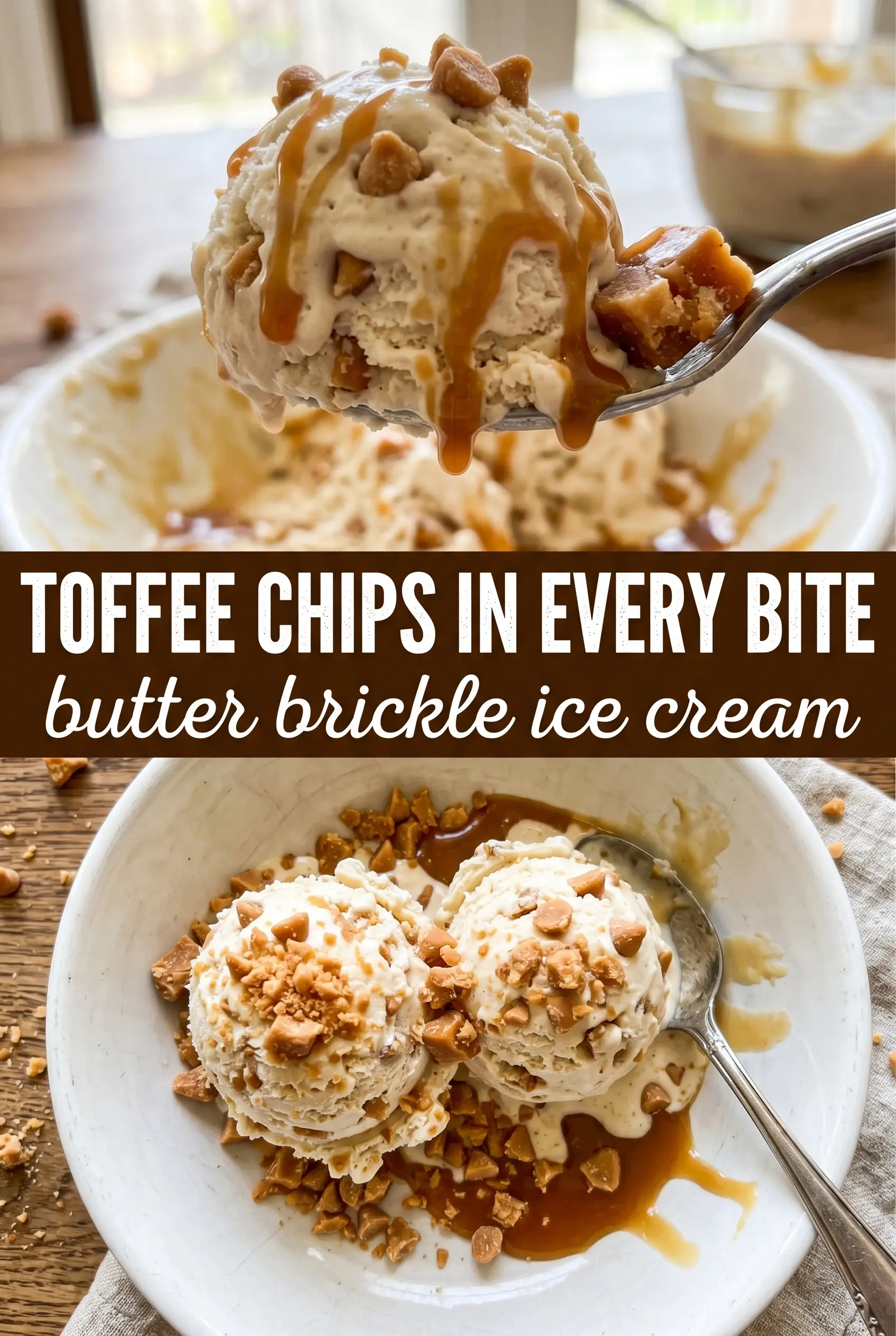
Butter brickle ice cream brings the kind of crunch that makes you keep going back for one more spoonful. The base is rich and custardy, with that soft vanilla creaminess you want in homemade ice cream, but the real payoff is the toffee: brittle, golden shards that melt at the edges the moment they hit the cold cream. It’s the contrast that makes this flavor worth making from scratch.
The brickle has to be cooked to hard crack stage so it stays snappy after freezing. Anything softer turns sticky in the ice cream. The custard base is built with egg yolks, brown sugar, and a little salt, which gives it a deeper caramel note than plain vanilla ice cream and keeps the sweetness from flattening out.
Below, I’ve included the timing that matters most, the texture cues that tell you the custard is ready, and the easiest way to keep the brickle pieces from disappearing into the churn.
The custard came out silky and the toffee stayed crisp even after freezing overnight. I loved that the brickle melted just a little around the edges instead of turning chewy.
Save this butter brickle ice cream recipe for the nights when you want creamy custard and crunchy homemade toffee in every bite.
The Hard Crack Stage Is What Keeps the Brickle Crisp
Butter brickle lives or dies on the candy. If you stop the sugar and butter mixture too early, it will bend instead of shatter, and those chewy pieces soften fast once they hit the custard. Hard crack stage, around 300°F, gives you the brittle texture that holds up in frozen dessert.
The other mistake is stirring like you’re making caramel sauce. You want the sugar to dissolve and cook, but once it’s moving toward color, let the heat do the work. Constant aggressive stirring can create grainy candy or hot spots that darken too fast on the bottom.
What the Egg Yolks and Brown Sugar Are Doing in the Custard
- Heavy cream — This gives the ice cream its lush body and protects the custard from tasting thin. You need the fat here; swapping in lower-fat cream will make the texture icier.
- Whole milk — It loosens the base just enough so it freezes scoopable instead of heavy. Don’t replace all of it with cream unless you want a denser, richer result that also takes longer to freeze.
- Brown sugar — This adds a light molasses note that makes the ice cream taste more like buttery toffee, not just vanilla. Packed brown sugar matters because the recipe depends on that full measure for sweetness and texture.
- Egg yolks — They thicken the custard and give it that silky, custard-style finish. There isn’t a true one-to-one substitute if you want the same body; if you skip them, you’ll end up with a different style of ice cream.
- Vanilla — Use a good extract because it rounds out both the custard and the brickle. Add it after cooking so the flavor stays clean and doesn’t cook off.
Building the Custard Without Scrambling the Yolks
Heat the Dairy Until the Sugar Disappears
Warm the cream, milk, and brown sugar together until the sugar is dissolved and the mixture is steaming, not boiling. If you rush this part and leave sugar crystals behind, they can make the custard feel a little gritty. You’re looking for a smooth base with no sugar on the bottom of the pan.
Temper the Yolks Slowly
Whisk the hot dairy into the yolks in a thin stream, not all at once. That gradual addition raises the temperature without cooking the eggs into bits. If you see tiny flecks forming, stop and whisk harder before adding any more hot liquid.
Cook to a Custard That Coats the Spoon
Return the mixture to the pan and cook over low to medium-low heat until it reaches 175°F and lightly coats the back of a spoon. The custard should look slightly thicker and feel silky, not bubbly or foamy. If it starts to simmer, pull it off the heat right away; boiling is what turns a smooth base grainy.
Chill Before Churning
Strain the custard, stir in the vanilla and salt, then chill it for the full four hours. Cold base churns faster and freezes with a smoother texture. If you churn it while it’s still warm, the machine has to work too hard and the ice cream ends up looser and icier.
Use Dark Brown Sugar for a Deeper Toffee Note
Dark brown sugar gives the custard a stronger molasses edge and makes the final flavor lean closer to English toffee. Light brown sugar still works, but the ice cream will taste a little softer and less caramel-heavy.
Make It Dairy-Free With Coconut Cream and Oat Milk
You can swap in full-fat coconut cream and barista-style oat milk, but the result will taste more coconut-forward and freeze a little firmer. The brickle still gives you the same crunch, but the custard won’t have the same classic dairy richness.
Skip the Egg Yolks for a Faster No-Cook Version
If you want a simpler churn, use a no-cook base with cream, milk, brown sugar, vanilla, and salt, then churn it cold. You’ll lose the custard-like silkiness and the finished ice cream will be a little icier, but the toffee still carries the flavor.
Storage and Reheating
- Refrigerator: Not applicable once churned; this ice cream belongs in the freezer. The custard base can be chilled up to 24 hours before churning.
- Freezer: Freeze in an airtight container for up to 2 weeks for the best texture. After that, the brickle is still good, but the ice cream can start to pick up ice crystals.
- Reheating: Let it sit at room temperature for 5 to 10 minutes before scooping. If you try to force a cold, hard pint with a warm spoon, you’ll smash the brickle pieces instead of getting clean scoops.
Questions I Get Asked About This Recipe
Butter Brickle Ice Cream
Ingredients
Equipment
Method
- Melt the granulated sugar and unsalted butter in a saucepan over medium heat, stirring until the mixture reaches 300°F (hard crack stage). Keep stirring so it caramelizes evenly and doesn’t scorch.
- Stir in the salt and vanilla extract, then pour the hot toffee onto parchment. Let it cool completely until firm.
- Shatter the cooled toffee into bite-size pieces. Set aside so it stays dry and crunchy until churning.
- Heat the heavy cream, whole milk, and brown sugar, stirring until the sugar dissolves and the mixture is smooth. Do not boil aggressively.
- Slowly whisk the hot cream mixture into the egg yolks to temper them. Keep whisking until the custard base looks uniform.
- Cook the custard, stirring constantly, until it reaches 175°F on a thermometer. When ready, it should coat the back of a spoon.
- Strain the custard, then stir in the vanilla extract and salt. Cool the custard to room temperature.
- Refrigerate the custard for 4 hours until very cold. Chill time is required for best texture during churning.
- Churn the chilled custard in an ice cream maker until it reaches soft-serve consistency. Fold in the butter brickle pieces during the last 5 minutes.
- Transfer the churned ice cream to a container and freeze until firm. Freeze until fully set for clean scoops.