Buffalo chicken pasta salad hits the sweet spot between bold, creamy, and chilled enough to hold up on a crowded table. The pasta stays tender but firm, the chicken picks up that tangy heat, and the ranch pulls everything together without turning the bowl heavy. Every forkful gets a little crunch from celery and a salty bite of blue cheese, which is exactly why this version keeps disappearing first.
The key is balance. The pasta gets rinsed cold so it stops cooking and doesn’t soak up too much dressing right away, and the buffalo sauce gets tossed with the chicken before anything else so the heat clings where it belongs. Ranch can flatten the flavor if you add too much too soon, so I like to start with enough to coat and then let the salad chill before deciding whether it needs a little more. That resting time isn’t optional — it gives the pasta time to drink in the sauce and settle into the right texture.
Below, you’ll find the timing that keeps this salad from going watery, plus the swap I use when I need a milder version for a mixed crowd.
The ranch and buffalo sauce coated everything evenly, and after chilling, the pasta had the perfect bite instead of turning mushy. I added extra celery for crunch and my husband asked for it again the next day.
Save this buffalo chicken pasta salad for game day, potlucks, or any time you want a chilled pasta bowl with ranch, heat, and blue cheese.
The Chill Time That Keeps the Pasta from Going Soft
Cold pasta salad goes wrong when the noodles are still warm or when the dressing goes on before the pasta has settled. Warm pasta keeps absorbing liquid, which sounds harmless until the bowl turns thick and sticky instead of creamy. Rinsing the pasta under cold water stops the cooking fast, and the hour in the fridge gives the buffalo sauce, ranch, and pasta time to settle into the same temperature and texture.
The other thing that matters here is balance between heat and creaminess. Buffalo sauce can take over fast, especially with blue cheese in the mix, so the ranch isn’t just for richness — it softens the edges without muting the bite. If your salad tastes flat after chilling, it usually needs salt, not more ranch.
What Each Ingredient Is Actually Doing in This Bowl
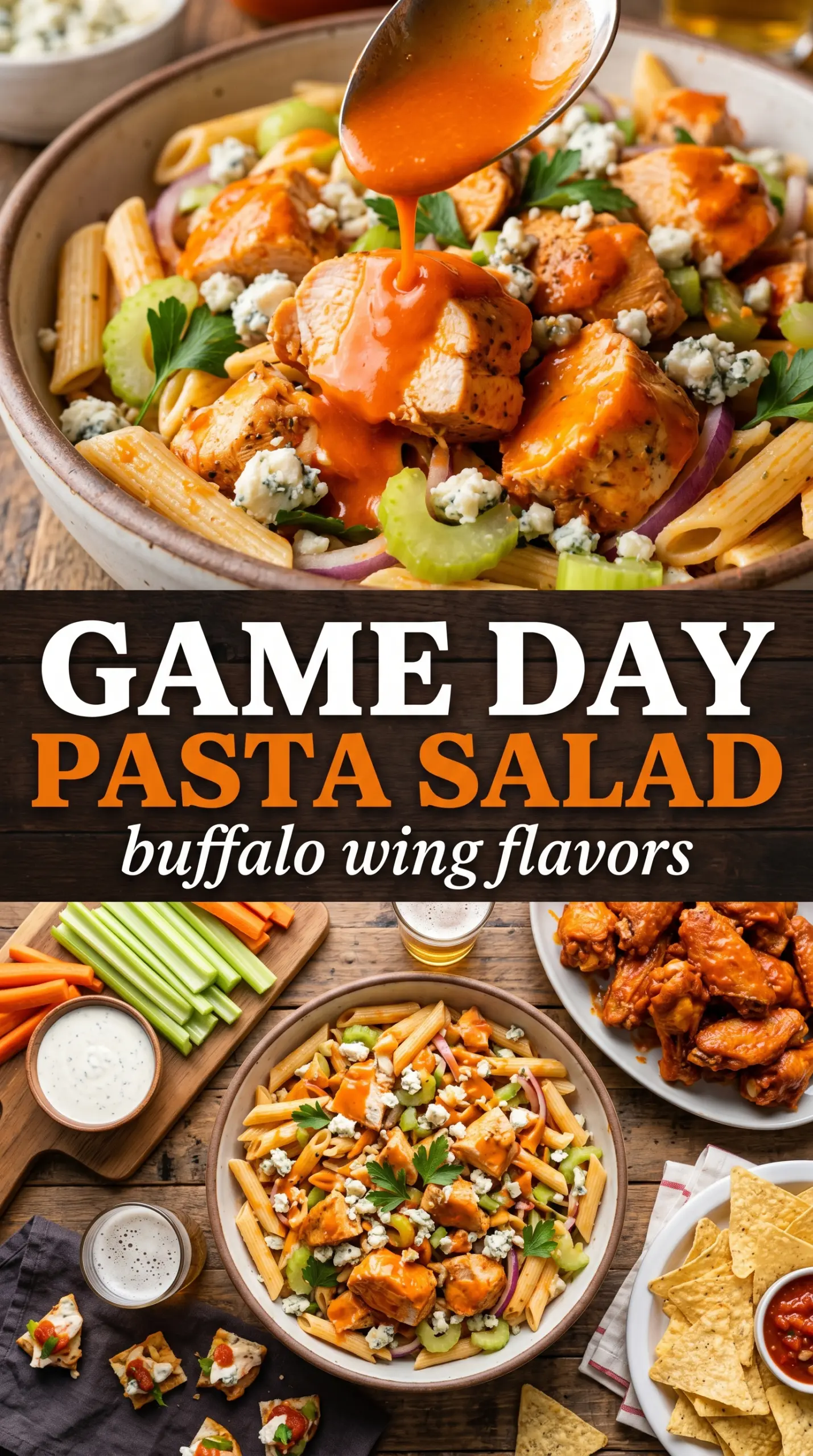
- Penne or rotini — Either shape works, but ridges and curves hold onto the dressing better than smooth pasta. Rotini clings especially well; penne gives you a cleaner bite. Cook it just to al dente because it softens a little more as it chills.
- Cooked chicken breast — This is the protein that turns the salad into a meal. Dicing it small helps every bite pick up the buffalo sauce instead of leaving you with dry chunks. Rotisserie chicken works too, and it’s the best shortcut when you want this done fast.
- Buffalo sauce — This is the main flavor anchor, so use one you like straight from the bottle. If your sauce is very spicy, back it off a little and lean more on ranch. The chicken needs to be fully coated before it meets the pasta so the heat stays distributed.
- Ranch dressing — This gives the salad its creamy base and keeps the blue cheese from feeling sharp in every bite. A thicker ranch holds up better than a thin pourable dressing. If you only have the thinner kind, use a little less at first and add more after chilling.
- Celery and green onions — These bring crunch and freshness, which keeps the salad from feeling heavy. Don’t skip the celery; it’s what gives you that cold, crisp contrast against the creamy dressing.
- Blue cheese crumbles — Blue cheese is part of the signature flavor here. If you want it milder, use less and save the rest for topping so people can add more as they like.
- Cherry tomatoes — They add juiciness and a little sweetness, which helps break up the heat and richness. Halve them so they don’t roll away and so their juices can mix into the dressing.
Building the Salad So It Stays Creamy, Not Heavy
Cook the Pasta Past the Boil, Not Past the Point
Cook the pasta until it’s just al dente, then drain it and rinse it under cold water until it feels cool to the touch. That rinse matters more here than it does in a hot pasta dish because it stops the carryover cooking and keeps the salad from getting gummy. If the pasta is even a little warm when the dressing goes in, it keeps drinking and the whole bowl tightens up. Shake off as much water as you can before you mix anything else in.
Coat the Chicken Before It Meets the Bowl
Toss the diced chicken with buffalo sauce first and let every piece get slick and evenly coated. That step keeps the heat from disappearing into the dressing and gives the chicken its own flavor instead of making it taste like plain meat in a spicy sauce. If you add the buffalo sauce later, it streaks through the salad instead of seasoning the chicken itself. A shallow bowl works best so you can see when the chicken is fully covered.
Fold in the Dressing and Stop Before It Looks Loose
Add the ranch after the pasta, chicken, celery, and tomatoes are mixed, then toss just until everything looks coated. The bowl should look creamy, not soupy. If it seems a little thick at this point, that’s fine because the chilled pasta will loosen it slightly as it rests. Save the final blue cheese and green onions for the top so the texture stays bright and fresh.
How to Adjust the Heat, Creaminess, and Crunch Without Losing the Point
Make It Milder for Mixed Heat Levels
Use a milder buffalo sauce and start with a little less than the recipe calls for, then add more after chilling if needed. The ranch stays the same, but the buffalo flavor will read more tangy than hot. This is the easiest way to keep the salad kid-friendly or potluck-friendly without losing the Buffalo chicken identity.
Dairy-Free Version
Swap in a dairy-free ranch and skip the blue cheese, then add a little extra celery and green onion for sharpness. You’ll lose the tangy funk from the cheese, but the salad still works because the buffalo sauce carries the flavor. Taste after chilling and add salt a little at a time, since dairy-free dressings can read flatter.
Gluten-Free Pasta Salad
Use a gluten-free penne or rotini and cook it just until tender, because gluten-free pasta can go soft fast once it’s chilled. Rinse it thoroughly and toss gently so it doesn’t break apart. The rest of the recipe stays the same, but the pasta shape you choose matters more than usual for keeping a good bite.
Storage and Reheating
- Refrigerator: Store covered for up to 4 days. The pasta will absorb more dressing as it sits, so it gets thicker by day two.
- Freezer: I don’t recommend freezing this salad. The ranch and pasta both change texture after thawing, and the celery loses its crunch.
- Reheating: This salad is meant to be served cold. If it has thickened in the fridge, stir in a spoonful of ranch or a small splash of buffalo sauce before serving instead of heating it.
Questions I Get Asked About This Recipe
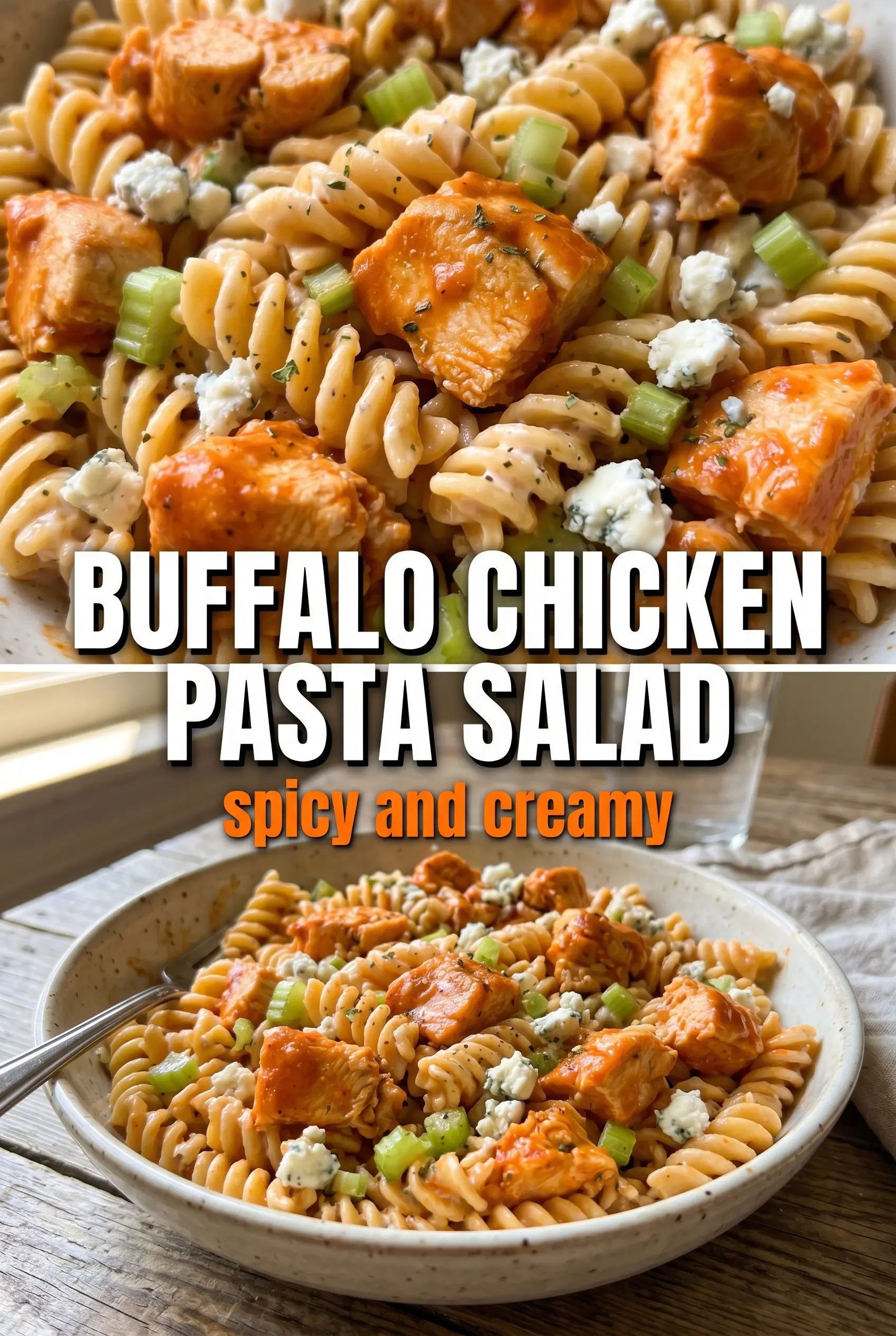
Buffalo Chicken Pasta Salad
Ingredients
Equipment
Method
- Bring a large pot of salted water to a boil, then cook penne or rotini pasta according to package directions. Drain, rinse with cold water, and spread on a sheet pan to cool quickly.
- In a bowl, toss cooked chicken breast, diced with buffalo sauce until well coated. Set aside while you assemble the salad.
- In a large bowl, combine cooled pasta, buffalo chicken, celery, and cherry tomatoes. Toss gently to distribute everything evenly.
- Add ranch dressing and toss to coat until the pasta looks evenly dressed. Season with salt and pepper to taste if needed.
- Gently fold in most of the blue cheese crumbles. Keep the remainder for topping so it stays visible.
- Refrigerate the salad for at least 1 hour. This resting time helps the ranch dressing cling to the pasta.
- Before serving, top with the remaining blue cheese crumbles and the green onions. Serve cold for the best texture contrast.