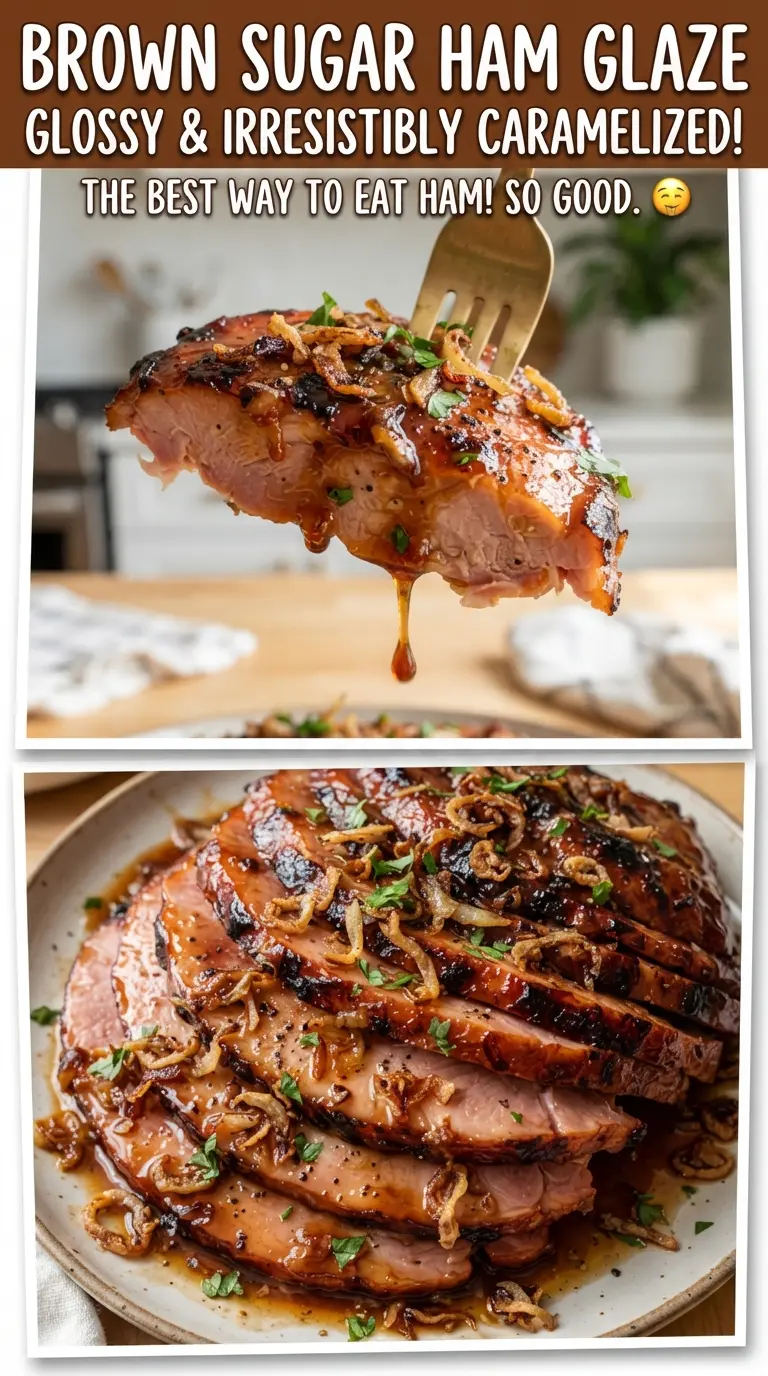
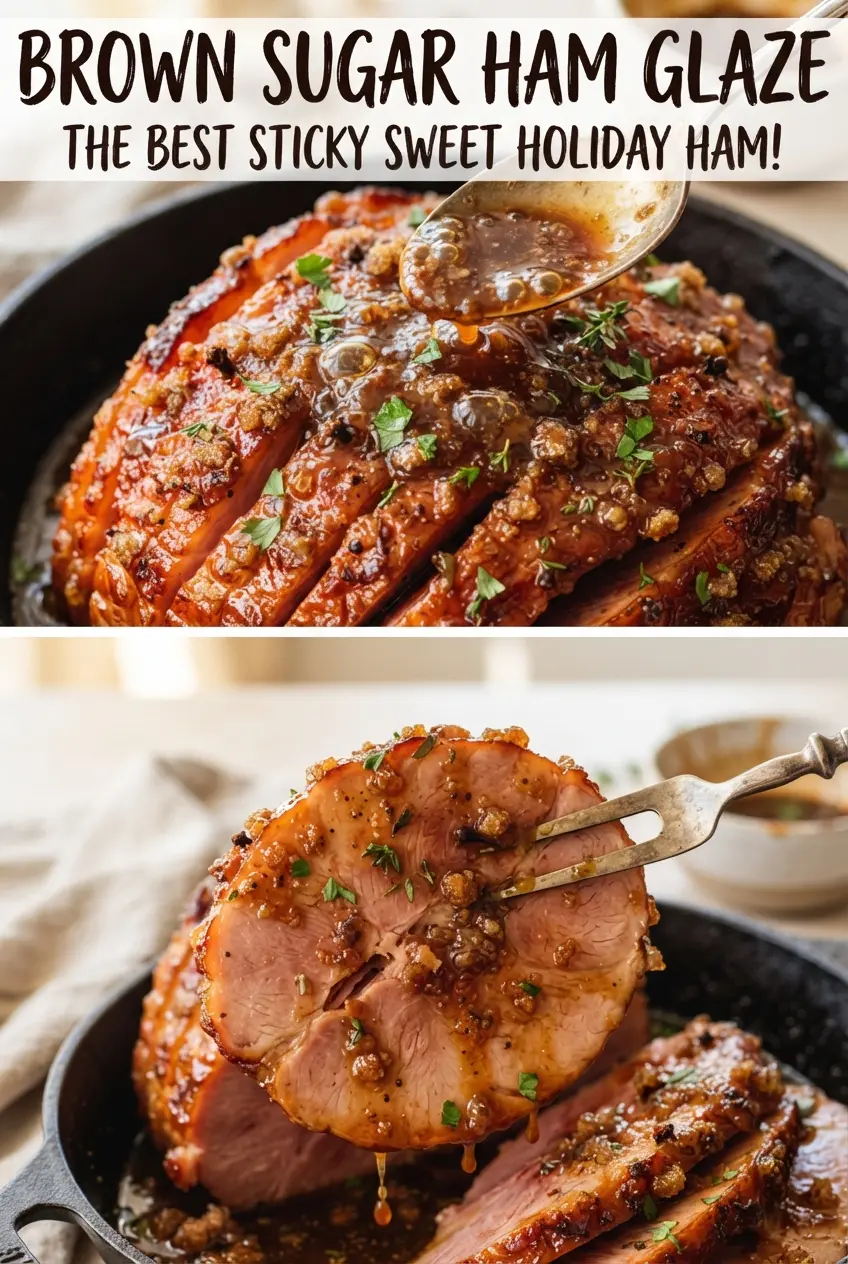
Sticky, glossy brown sugar ham glaze turns an ordinary baked ham into the kind of centerpiece people keep circling back to for one more slice. It coats the meat in a lacquered amber sheen, settles into the scored edges, and bakes into that sweet-savory crust everyone hopes for but doesn’t always get. The key is balance: enough sugar to caramelize, enough acid and mustard to keep the glaze from tasting flat, and just enough simmering to thicken it without turning it into candy.
This version leans on honey and pineapple or orange juice for shine and fruit brightness, while Dijon mustard cuts through the sweetness so the glaze tastes layered instead of one-note. Butter gives it body and a smooth finish, and the cinnamon and cloves bring just enough warm spice to read as holiday-worthy without taking over. It comes together in minutes on the stovetop, then does its best work during the last stretch of baking when the glaze can build in thin coats instead of sliding right off.
The glaze thickened up perfectly in about 4 minutes, and brushing it on every 10 minutes gave the ham that shiny, sticky crust without burning the sugar.
Keep this brown sugar ham glaze handy for a glossy, clove-kissed finish on holiday ham.
The Trick to a Glaze That Sticks Instead of Sliding Off
The biggest mistake with ham glaze is rushing it onto the meat too early or too thin. A loose glaze just runs down the sides before it has a chance to lacquer the surface, and too much heat turns the sugar bitter before the ham finishes warming through. The sweet spot is a short simmer on the stove until the glaze looks shiny and slightly syrupy, then repeated brushing in the final 30 minutes of baking so each layer can set before the next one goes on.
That layered approach matters because the ham is already fully cooked. You’re not trying to cook the glaze for a long time; you’re trying to build color, shine, and flavor on the surface without drying out the meat underneath. If the glaze starts to look grainy in the pan, the sugar hasn’t fully dissolved yet. Keep stirring over medium heat until it’s smooth before you take it off the burner.
What Each Ingredient Is Actually Doing in This Glaze
- Packed brown sugar — This is the base of the glaze and what gives it that deep caramel color. Light or dark brown sugar both work, but dark brown sugar brings a little more molasses depth if you want a richer finish.
- Honey — Honey helps the glaze cling and gives it a round sweetness that brown sugar alone can’t. It also helps the surface turn glossy as the ham bakes.
- Pineapple or orange juice — The juice loosens the glaze just enough to brush it on, and the acidity keeps the sweetness from getting heavy. Pineapple gives a brighter, tangier edge; orange reads a little softer and more classic.
- Dijon mustard — This is the ingredient that keeps the glaze from tasting like candy. Use a smooth Dijon, not grainy mustard, so the glaze stays silky.
- Butter — Butter adds body and gives the glaze a smoother finish. It also helps the sugars melt evenly in the pan.
- Apple cider vinegar — Just a tablespoon sharpens everything and helps the glaze taste balanced once it hits the salty ham.
- Cinnamon and cloves — These should whisper, not shout. They’re there for warmth and a little old-school holiday flavor, and a light hand is important because cloves can take over fast.
Building the Glaze on the Stove So It Bakes Like a Lacquer
Melting the Sugar Without Scorching It
Add everything to a saucepan and stir over medium heat until the brown sugar dissolves. The mixture should look smooth and glossy, with no visible granules sticking to the sides. If you let it boil hard right away, the edges can catch before the sugar has melted, which gives you a rough, slightly bitter glaze instead of a clean one.
Watching for the Right Thickness
Once the glaze starts to simmer, keep it going for 3 to 4 minutes. You’re looking for a spoon-coating texture that still pours easily, not a thick paste. It will thicken a little more as it cools, so pull it from the heat while it still looks just a touch looser than the finish you want on the ham.
Brushing on Thin, Even Layers
Brush the glaze over the ham during the last 30 minutes of baking, then repeat every 10 minutes. Thin layers build the best shine and keep the sugar from burning on the surface. If you dump on too much at once, it slides into the pan and leaves the top uneven, so use just enough to coat the scored ridges and let each layer settle before the next one.
Finishing at the Table
Spoon the remaining warm glaze over sliced ham right before serving. Warm glaze flows into the slices and gives you that last hit of shine and sweetness that baked-on glaze can’t always reach. If it has thickened in the pan, warm it gently with a splash of juice to loosen it back up.
How to Change the Sweetness, Spice, or Diet Without Losing the Shine
Use orange juice for a softer, citrus-forward glaze
Orange juice makes the glaze a little rounder and less tangy than pineapple. It works especially well if you want the ham to taste classic and balanced instead of bright and sharp.
Swap in maple syrup for a deeper, woodsy sweetness
Replace the honey with maple syrup if you want a slightly darker, less floral finish. The glaze will still brush on beautifully, but the flavor shifts from bright and sticky to richer and more earthy.
Make it dairy-free by skipping the butter
You can leave the butter out and still get a glossy glaze. It won’t have quite the same round mouthfeel, but the sugar, honey, and mustard still thicken nicely once they simmer together.
Turn down the clove for a gentler spice note
If you’re sensitive to clove, cut it in half or leave it out. Cinnamon alone still gives the glaze warmth, and the ham will taste cleaner and less holiday-spice heavy.
Storage and Reheating
- Refrigerator: Store leftover glaze in an airtight container for up to 1 week. It will thicken as it chills.
- Freezer: It freezes well for up to 2 months. Thaw it in the refrigerator overnight before reheating.
- Reheating: Warm it slowly in a small saucepan over low heat with a splash of juice or water if needed. Don’t boil it hard, or the sugars can seize and turn sticky instead of smooth.
Answers to the Questions Worth Asking
Brown Sugar Ham Glaze
Ingredients
Equipment
Method
- Combine brown sugar, honey, pineapple or orange juice, Dijon mustard, butter, apple cider vinegar, ground cinnamon, and ground cloves in a saucepan. Stir to mix so the brown sugar is evenly distributed.
- Bring the mixture to a simmer over medium heat, stirring until the sugar dissolves. Keep it at a gentle simmer with visible bubbles around the edges.
- Simmer for 3-4 minutes until slightly thickened and glossy. Look for a smooth amber sheen that coats the back of a spoon.
- Brush the warm glaze over a fully cooked ham during the last 30 minutes of baking. Apply a light, even layer over the scored diamond pattern.
- Re-brush every 10 minutes during those last 30 minutes of baking. Each pass should leave glossy drips that settle into the cut lines.
- Spoon the remaining warm glaze over sliced ham at the table. Pour gently so the glaze gathers on the surface of each slice.