Brown sugar cinnamon ice cream turns out dense, silky, and deeply flavored in a way plain vanilla never can. The brown sugar gives the base a caramel note that tastes almost like the edges of a snickerdoodle, while the cinnamon lands warm instead of sharp. Churned properly, it scoops with that soft, creamy resistance that makes homemade ice cream worth the extra steps.
What makes this version work is the custard base. Egg yolks give it body, and cooking the mixture just until it reaches 175°F keeps it smooth instead of eggy or grainy. The cinnamon goes in after straining, which keeps the flavor bright and prevents any dusty grit from hanging around in the finished ice cream. That little detail matters more than people expect.
Below, I’ve included the small fixes that keep custard ice cream from going scrambled, plus a few ways to adjust the spice level without losing that brown sugar richness.
The custard came out perfectly smooth and the cinnamon stayed warm and balanced, not harsh. I froze it overnight and it scooped like the ice cream shop kind, even after dinner the next day.
Save this brown sugar cinnamon ice cream for the nights when you want snickerdoodle flavor in a rich, scoopable custard.
The part that keeps custard ice cream smooth instead of sandy
The biggest mistake with brown sugar ice cream is rushing the base before the sugar has fully dissolved. If the mixture goes into the churn with undissolved sugar, you can end up with a faint graininess that shows up after freezing. Heating the cream, milk, and brown sugar until the surface steams and the sugar disappears gives you a clean, smooth custard from the start.
The other place people get into trouble is cooking the yolks too fast. Medium-low heat matters here. Once the custard starts to thicken, it can jump from perfect to curdled in a hurry, so keep stirring and watch for the coating-on-a-spoon stage, not a boil.
What the brown sugar, yolks, and spices are each doing here
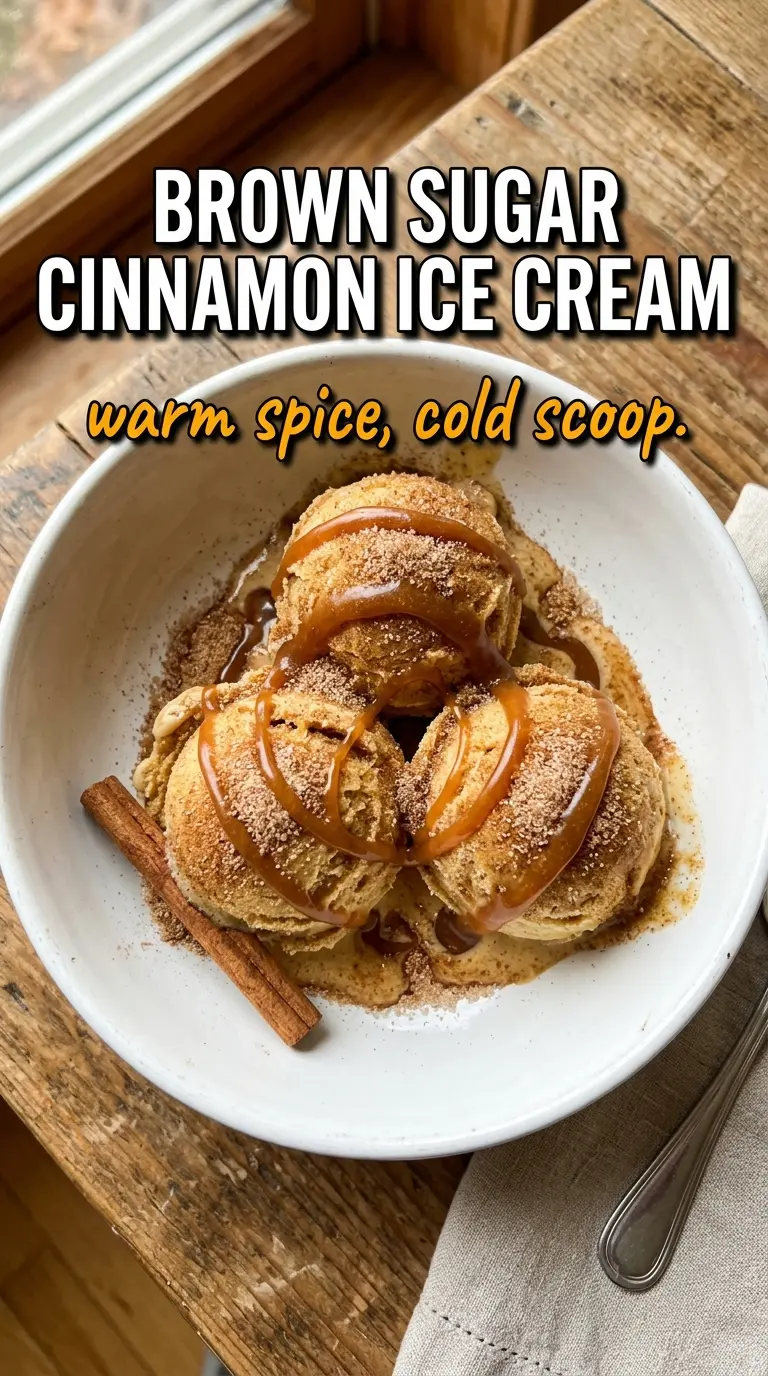
- Brown sugar — This is the base flavor, not just a sweetener. Packed brown sugar melts into the dairy and gives the ice cream its caramel depth. Light or dark brown sugar both work, but dark brown sugar brings a heavier molasses note and a darker finish.
- Heavy cream and whole milk — The cream gives body and a plush mouthfeel, while the milk keeps the custard from turning too rich to scoop cleanly. Swapping in half-and-half will work in a pinch, but the finished ice cream will be less dense and a little icier.
- Egg yolks — These are what make the base custardy instead of plain frozen cream. They thicken the mixture and help it hold a smoother texture after churning. Don’t skip the tempering step; pouring the hot dairy in slowly keeps the yolks from scrambling.
- Cinnamon, nutmeg, and vanilla — Cinnamon leads, nutmeg rounds it out, and vanilla keeps the spice from tasting flat. Adding them after straining preserves their brightness. If you want a stronger snickerdoodle feel, add a tiny extra pinch of cinnamon, not more nutmeg.
Cooking the custard without curdling it
Warming the dairy and dissolving the sugar
Start by heating the cream, milk, and brown sugar together until the sugar is fully dissolved and the mixture is steaming. You want it hot enough to temper the yolks, but not simmering hard. If you still feel sugar granules when you rub a little between your fingers, keep it on the heat a bit longer before moving on.
Tempering the yolks slowly
Whisk the yolks in a bowl, then drizzle in the hot dairy a little at a time while whisking constantly. That gradual addition keeps the eggs from setting into little bits. If the yolks look thicker and slightly pale, you’re on track. Once enough hot liquid is in the bowl, pour everything back into the saucepan.
Cooking to the right thickness
Return the custard to medium-low heat and stir constantly, scraping the bottom and corners of the pan. It’s ready at 175°F, or when it lightly coats the back of a spoon and holds a clean line when you run a finger through it. Don’t wait for a boil. By then the yolks are already overcooking.
Straining and finishing the spice
Push the custard through a fine mesh sieve into a clean bowl, then stir in the cinnamon, vanilla, nutmeg, and salt. Straining catches any tiny cooked egg bits before they can ruin the texture. The spices go in at this stage so they taste fresh and aromatic instead of muted by the heat.
Chilling, churning, and firming up
Cool the custard over an ice bath first, then refrigerate it for at least 4 hours before churning. A cold base churns faster and freezes with a finer texture, while a warm base tends to stay loose and icy. After churning, freeze it until firm enough to scoop. The first hour in the freezer does the most work, so give it time.
How to bend this recipe without losing the snickerdoodle feel
Make it darker and more caramel-like
Use dark brown sugar instead of light brown sugar. It pushes the custard toward a deeper molasses flavor and makes the final color richer and more amber. The tradeoff is a heavier sweetness, so keep the cinnamon where it is instead of increasing it.
Dairy-free version with coconut cream
Replace the heavy cream with full-fat coconut cream and the whole milk with unsweetened oat milk. You’ll lose a little of the classic custard richness, but the texture stays creamy if you chill it thoroughly before churning. The coconut note is faint under the cinnamon and brown sugar, not overpowering.
Extra cinnamon for a stronger spice finish
Add up to 1/2 teaspoon more cinnamon if you want the spice to read more boldly after freezing. Ice cream always tastes a little milder once frozen, so a small bump can help. Don’t go heavy-handed or the custard starts tasting dusty instead of warm.
Storage and Reheating
- Refrigerator: The churned custard keeps in the freezer, not the fridge, for up to 2 weeks with the best texture. After that, it’s still safe, but the edges can pick up ice crystals.
- Freezer: Press parchment or plastic wrap directly onto the surface before covering the container. This helps prevent freezer burn and keeps the top from drying out.
- Reheating: Let it sit at room temperature for 5 to 10 minutes before scooping. Hard-frozen custard cracks if you attack it straight from the freezer, and that’s when the texture seems firmer than it really is.
Answers to the questions worth asking

Brown Sugar Cinnamon Ice Cream
Ingredients
Equipment
Method
- Heat heavy cream, whole milk, and packed brown sugar in a saucepan over medium heat until the mixture steams and the sugar dissolves completely, about 5–7 minutes, watching for steam to rise from the surface.
- Slowly whisk the hot cream mixture into the egg yolks, then pour everything back into the saucepan, keeping the texture smooth as it thickens slightly from residual heat.
- Cook over medium-low heat, stirring constantly, until the custard reaches 175F, about 8–10 minutes, and look for a coating consistency on a spoon.
- Strain the custard through a fine mesh sieve into a clean bowl, then stir in cinnamon, vanilla extract, nutmeg, and salt until fully combined and the spices are evenly suspended.
- Cool the custard completely over an ice bath, about 10–15 minutes, until it is no longer hot to the touch.
- Refrigerate the custard at least 4 hours, covered, until thoroughly chilled and ready to churn.
- Churn the chilled custard in an ice cream maker until thickened, about 20–25 minutes, and look for a soft-serve texture.
- Transfer to a freezer-safe container and freeze until firm, about 2–4 hours, until you can scoop cleanly with minimal melting.