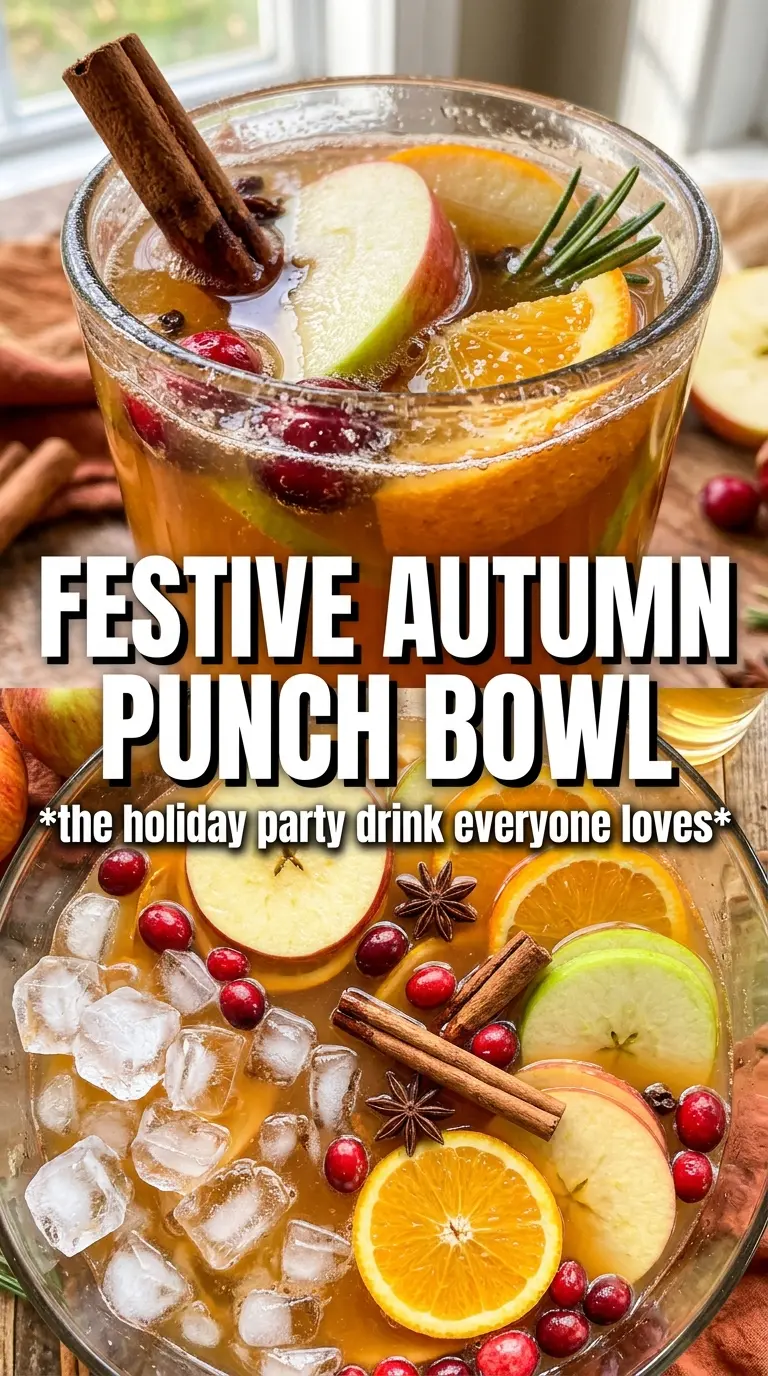
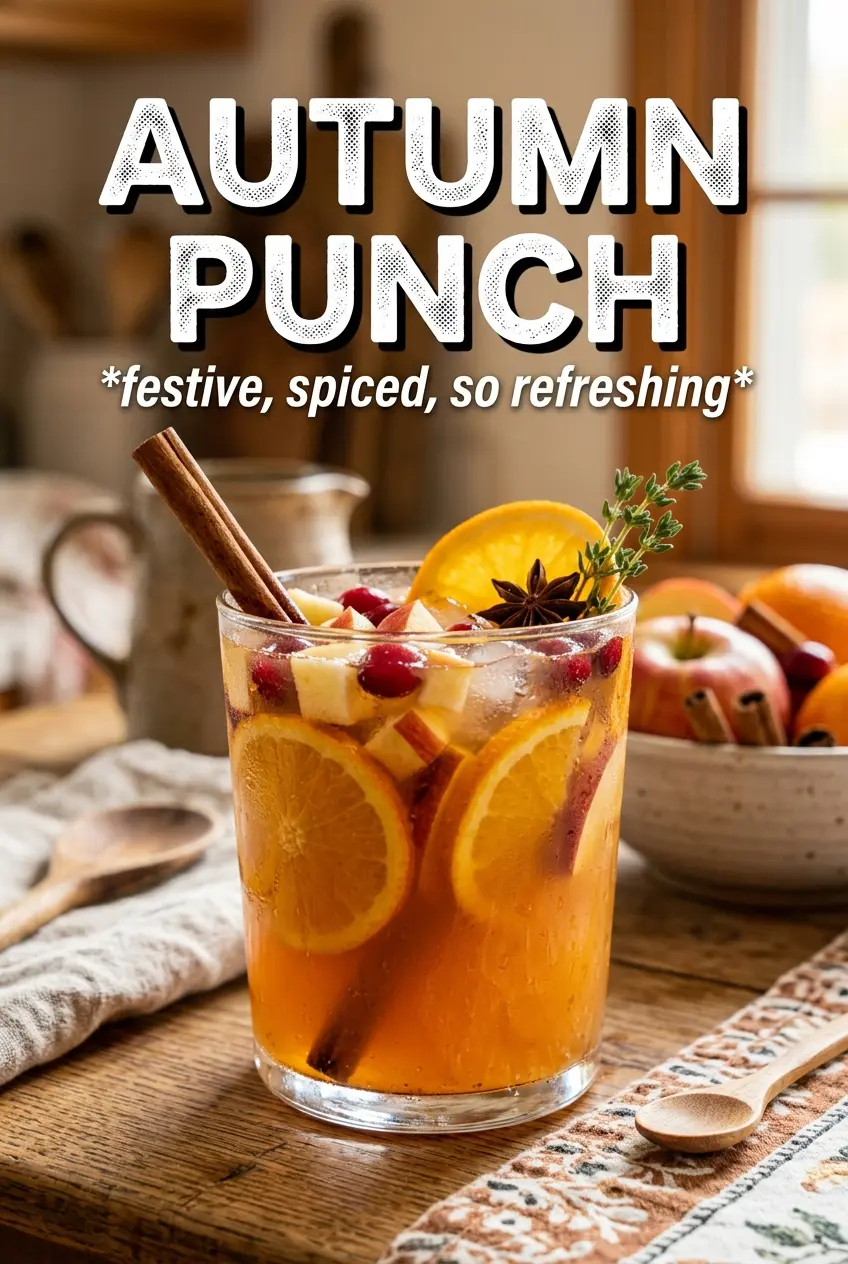
Autumn punch hits the table with that deep amber color and a bright, spiced aroma that makes people drift back for a second glass before the ice has even started to melt. The balance is what keeps it from tasting one-note: apple cider gives it body, cranberry juice brings sharpness, orange juice rounds it out, and the cinnamon, star anise, and rosemary make the whole bowl smell as good as it tastes.
This version works because the flavors get time to mingle before the fizzy ingredient goes in. That hour in the fridge matters. It lets the fruit and spices infuse the base without flattening the bubbles, so you end up with punch that tastes layered instead of watered down. Maple syrup or honey softens the tartness just enough, but the juice still tastes fresh, not syrupy.
Below, I’ve included the small timing detail that keeps the punch lively, plus a few ways to scale it for a crowd or make it spiked without throwing off the balance.
The punch tasted like actual apples and cranberries, not just sweet juice, and the rosemary made it feel special without being weird. I added the ginger ale right before serving and it stayed fizzy the whole time.
Save this autumn punch for the bowls that need crisp apple cider, tart cranberry, and those cinnamon-and-rosemary garnishes that make it feel festive.
The Reason This Punch Stays Bright Instead of Going Flat
The biggest mistake with punch is adding the fizzy ingredient too early. Once ginger ale or sparkling cider sits in the bowl for an hour, it loses the lively lift that makes the drink taste fresh. This recipe builds the flavor first with cider, cranberry, orange, sweetener, fruit, and spices, then finishes with bubbles right before serving so every glass has some sparkle.
The other detail that matters is the rest time. A short chill gives the cinnamon sticks and star anise time to infuse the base without turning the drink muddy. If you skip that rest, the punch still works, but it tastes more like mixed juice than a layered drink. Give it the hour. That’s when the apple, cranberry, and spice settle into one another.
- Apple cider — This is the backbone of the punch. Use a good, cloudy cider if you can; it gives the drink depth and that fresh-pressed apple taste. If all you have is clear apple juice, it’ll still work, but the finished punch will taste lighter and a little less rounded.
- Cranberry juice — This brings the tart edge that keeps the punch from leaning too sweet. Use unsweetened or lightly sweetened cranberry juice if possible. Cocktail-style cranberry juice can make the drink drift into candy-sweet territory.
- Ginger ale or sparkling cider — Add this at the very end. Ginger ale gives the punch a sharper bite, while sparkling cider keeps the flavor more apple-forward. Either one is fine, but both need to go in just before serving or the fizz disappears.
- Star anise and cinnamon sticks — These do more than decorate the bowl. Cinnamon gives warmth, and star anise adds a faint licorice note that makes the punch taste more complex. Ground spices won’t behave the same way here; they cloud the punch and sink to the bottom.
- Orange, apple, and rosemary — The fruit adds aroma as it sits, and the rosemary gives the bowl a clean herbal smell that keeps the punch from tasting one-dimensional. Slice the fruit thin so it releases flavor quickly, and use fresh rosemary sprigs, not dried, for the best aroma.
What Each Ingredient Is Actually Doing in This Recipe
- Primary ingredient (the star) — Quality matters most. Choose the best you can find.
- Cooking medium (oil, butter, or broth) — This carries flavors and prevents dryness.
- Seasonings (salt, pepper, spices, herbs) — Layer flavors so nothing overpowers. Build depth gradually.
- Aromatics (garlic, onion, herbs) — Cook with fat to bloom flavors. Become the foundation.
- Supporting ingredients — Complement the main ingredient without overpowering it.
- Sauce or liquid (if applicable) — Brings flavors together. Balance richness with acid.
- Acid (lemon, vinegar, wine, or other) — Brightens and prevents flat-tasting results.
- Final finish (garnish, glaze, or sauce) — Prevents one-dimensional taste and adds visual appeal.
How to Build the Bowl So Every Glass Tastes Balanced
Mix the Base First
Start with the apple cider, cranberry juice, orange juice, and maple syrup or honey in a large punch bowl or pitcher. Stir until the sweetener disappears completely, because any syrup left clinging to the bottom will make the first glasses sweeter than the last. If your cider is very tart, add a touch more sweetener, but stop before it tastes thick or sticky. You want a drink with enough backbone to stay interesting after the ice goes in.
Let the Fruit and Spice Infuse
Add the orange slices, apple slices, cinnamon sticks, and star anise, then refrigerate the bowl for about an hour. During that time, the spices soften the sharp edges of the juice and the fruit gives up a little aroma of its own. If you rush this part, the punch tastes thinner and more one-note. Don’t leave the star anise in for too long after serving, though, or the licorice note can take over.
Finish With Bubbles and Ice
Right before serving, stir in the ginger ale or sparkling cider and add the ice or frozen ice ring. This is the point where the punch turns from good to party-ready, because the carbonation lifts the fruit and spice aromas as you ladle it. If you add ice too early, the punch gets diluted before guests even arrive. A frozen ring is best for a crowd since it chills the bowl without making the first cup watery.
Garnish for the Bowl, Not Just the Photo
Top the punch with fresh rosemary sprigs and extra fruit slices. The rosemary isn’t only for looks; it gives the first sip a clean herbal smell that makes the whole drink feel more composed. If you’re using the spiked version, stir in the bourbon or dark rum after the base has chilled, then add the fizz at the very end so the alcohol doesn’t flatten the carbonation. Keep the bowl cold and the flavors stay crisp.
How to Adapt This Punch for Different Crowds
Make It Spiked for Adults
Add the bourbon or dark rum after the punch has chilled and before the final fizz goes in. Bourbon keeps the drink warm and caramel-like, while dark rum leans a little richer and molasses-forward. Don’t pour it in early if you want the alcohol to stay balanced instead of getting lost under the spices.
Make It Completely Alcohol-Free
Skip the spirit entirely and use sparkling cider instead of ginger ale if you want the apple flavor to stay front and center. This version tastes clean, festive, and bright, with a softer finish than the boozy version. It’s the best choice when you want the punch to feel special without any burn or bite from alcohol.
Use Honey Instead of Maple Syrup
Honey gives the punch a softer floral note, while maple adds a deeper, woodsy sweetness. Either one works, but honey dissolves a little more easily if your juices are cold from the fridge. If you want the punch to stay more neutral and apple-focused, go with maple; if you want a rounder finish, use honey.
Storage and Serving Timing
- Refrigerator: The mixed base keeps for up to 2 days without the fizzy ingredient and ice. The fruit will soften, but the flavor stays good.
- Freezer: Don’t freeze the finished punch. The juices and fruit lose their texture once thawed, and the carbonation won’t survive.
- Reheating: This punch isn’t meant to be reheated. If you want it colder for serving, chill the base longer or use a frozen ice ring so you don’t dilute the bowl.
Answers to the Questions Worth Asking
Autumn Punch
Ingredients
Equipment
Method
- In a large punch bowl or pitcher, combine apple cider, cranberry juice, orange juice, and maple syrup or honey.
- Stir well, then add orange slices, apple slices, cinnamon sticks, and star anise.
- Refrigerate for 1 hour to develop flavors, keeping the spices and fruit infused while the punch chills.
- Just before serving, add ginger ale or sparkling cider and add ice or a frozen ice ring to keep the drink cold.
- Garnish with fresh rosemary sprigs and extra fruit slices right before pouring.


