Autumn pearl couscous salad has the kind of balance that keeps people going back for a second scoop: tender couscous pearls, sweet roasted squash, tart cranberries, toasted nuts, and creamy goat cheese all in one bowl. It lands at that sweet spot where it feels fresh and substantial at the same time, which is exactly why it works as a side dish for everything from roast chicken to a simple lunch plate.
What makes this version work is the contrast. The couscous gets cooked first and cooled so it stays separate instead of turning sticky, and the squash is roasted until the edges caramelize, not just softened. The maple balsamic dressing brings acidity and sweetness without drowning the greens, and the goat cheese goes on at the end so it stays in soft little pockets instead of disappearing into the bowl.
Below, I’ll walk through the one detail that keeps pearl couscous from clumping, plus a few smart swaps if you want to adjust the salad for what’s in your pantry. It’s the kind of recipe that gets easier every time you make it.
I tossed the couscous with the dressing while it was just barely warm, and it soaked up the flavor without getting soggy. The squash held its shape, and the toasted pecans gave it the best crunch.
Save this autumn pearl couscous salad for a grain-salad side that stays bright, creamy, and crunchy in every bite.
The Reason Pearl Couscous Stays Light Instead of Turning Gummy
Pearl couscous can go wrong fast if it sits too long wet or gets stirred too aggressively once it’s cooked. The trick is to cook it until just tender, drain it well, and spread it out for a few minutes so excess steam escapes. That small cooling step keeps the grains separate and gives the dressing something to cling to instead of sliding off a slick, overcooked pile.
The other thing that matters here is contrast in temperature and texture. Warm squash can go straight into the bowl, but the couscous should be at room temperature before you toss everything together. If both are hot, the greens wilt too quickly and the goat cheese melts into the dressing before you get that clean finish.
What Each Ingredient Is Actually Doing in This Salad
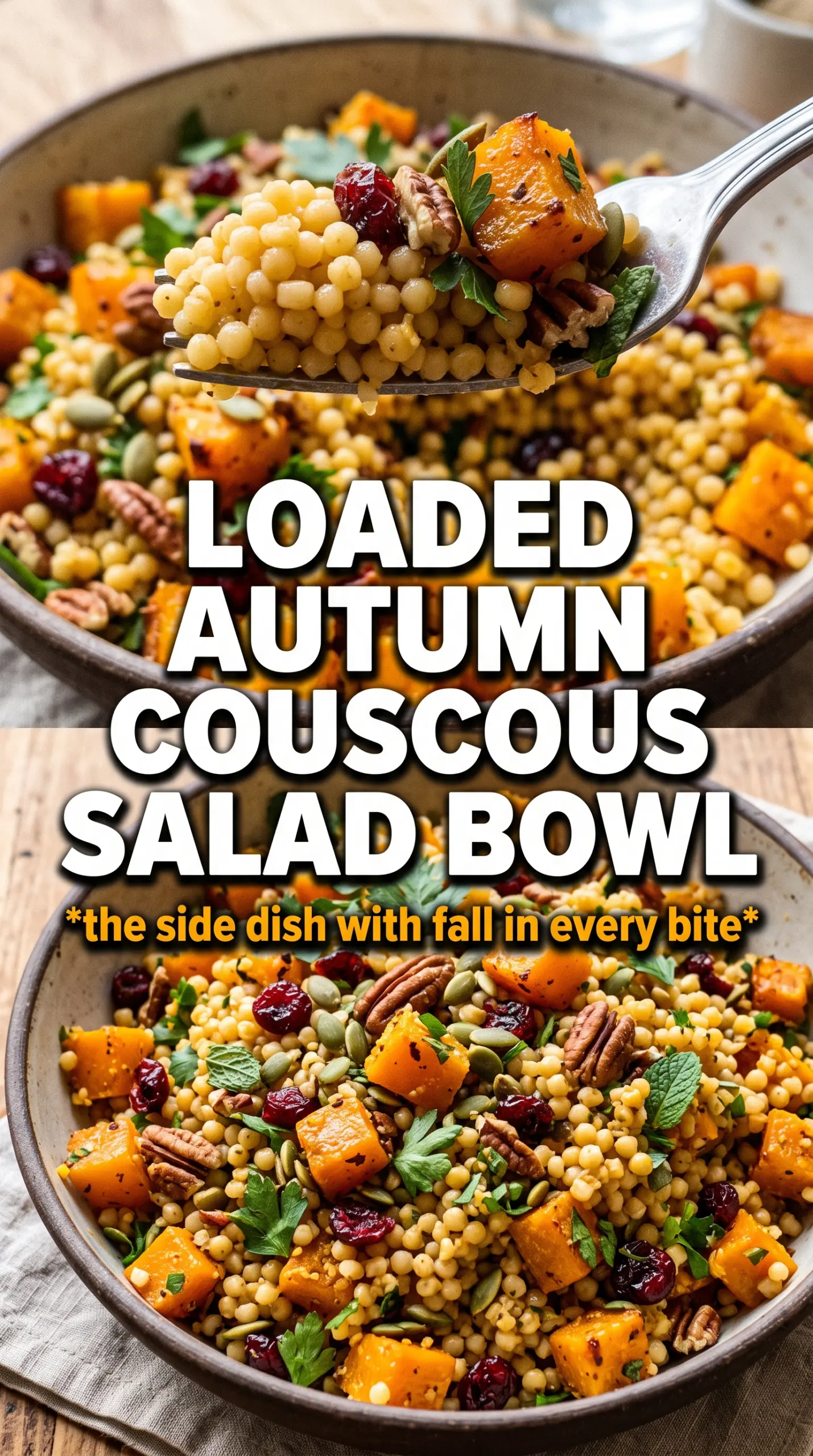
- Pearl couscous — This is the base that gives the salad body. Regular couscous turns soft and fluffy, but pearl couscous has a chewier bite that stands up to dressing and mix-ins. If you need a substitute, small orzo works in a pinch, but it won’t give the same little springy texture.
- Butternut squash — Roasting it until the edges turn deep gold is what brings sweetness and a little caramelized flavor. Cubes that are too large stay bland in the center, so cut them evenly. Sweet potato works as a swap if that’s what you have, though it tastes a little denser and earthier.
- Arugula or mixed greens — The peppery greens keep the salad from leaning too sweet. Arugula gives more bite, while mixed greens soften the flavor if you want something gentler. Add them at the end so they stay crisp.
- Cranberries, pecans, and pumpkin seeds — This trio handles sweetness and crunch. Toasting the nuts and seeds matters because it wakes up the oils and makes the salad taste fuller. If you skip the toasting step, the whole dish tastes flatter.
- Goat cheese — The tang is what ties the sweet and savory parts together. Crumble it over the top right before serving so it keeps its shape. Feta is the closest substitute if you want a saltier edge.
- Maple balsamic dressing — Balsamic brings sharpness, maple softens the edges, and Dijon helps the dressing emulsify so it coats the salad evenly. Whisking the mustard in first gives you a smoother dressing than just shaking everything together. If the dressing tastes flat, it usually needs another pinch of salt more than it needs more maple.
Building the Salad So Every Bite Gets a Little Bit of Everything
Cooking the Couscous Without Overworking It
Cook the pearl couscous in well-salted water until it’s tender but still has a little chew at the center. Drain it well, then spread it on a tray or in a wide bowl so it cools instead of steaming in a pile. If you stir it while it’s hot and crowded, the starches cling together and you lose that loose, salad-friendly texture.
Roasting the Squash Until the Edges Brown
Toss the squash with olive oil, salt, and pepper, then spread it out in a single layer on a hot sheet pan. You want the pieces to color, not sit and soften in their own moisture, so give them space. Pull them when the edges are caramelized and the centers are tender enough to pierce without collapsing.
Whisking and Tossing at the Right Moment
Whisk the dressing until the oil and vinegar look fully blended, then add it after the couscous has cooled slightly. That timing keeps the greens from wilting too early and helps the dressing cling to the grains. Toss gently so the squash stays intact; rough mixing will mash it and muddy the bowl.
Finishing for Texture, Not Just Looks
Add the goat cheese and pumpkin seeds at the end so they stay distinct in the finished salad. The cheese should sit in soft crumbles, not dissolve, and the seeds should still taste toasted. If the salad needs another wake-up before serving, a small extra squeeze of acid or a pinch of salt does more than another drizzle of oil.
How to Adapt This for Different Tables and Different Pantries
Make It Dairy-Free
Skip the goat cheese and add extra toasted pumpkin seeds or a handful of chopped avocado right before serving. You lose the tangy creaminess, so the dressing needs to carry more of the punch; bump the Dijon slightly or add a tiny splash more balsamic to keep the salad lively.
Swap the Grain for a Gluten-Free Base
Use cooked quinoa or millet instead of pearl couscous if you need a gluten-free version. Quinoa gives a lighter, fluffier salad, while millet feels a little more earthy and substantial. Either one works best when cooled completely before dressing, or the whole bowl gets damp and heavy.
Turn It Into a Fuller Main Dish
Add shredded rotisserie chicken, chickpeas, or roasted salmon on top. Chickpeas keep it vegetarian and add more chew, while chicken makes the salad feel like a full lunch. If you go this route, hold back a little dressing so the extra protein doesn’t make the bowl feel overloaded.
Storage and Reheating
- Refrigerator: Store leftovers for up to 3 days in an airtight container. The greens will soften, but the flavor holds well.
- Freezer: This salad doesn’t freeze well once assembled because the greens and cheese break down. You can freeze the roasted squash and cooked couscous separately if you want to get ahead.
- Reheating: Eat it cold or let it sit at room temperature for 15 to 20 minutes. If you rewarm the couscous and squash, do it gently and add the greens, cheese, and seeds after, not before, or they’ll wilt and lose their texture.
Answers to the Questions Worth Asking
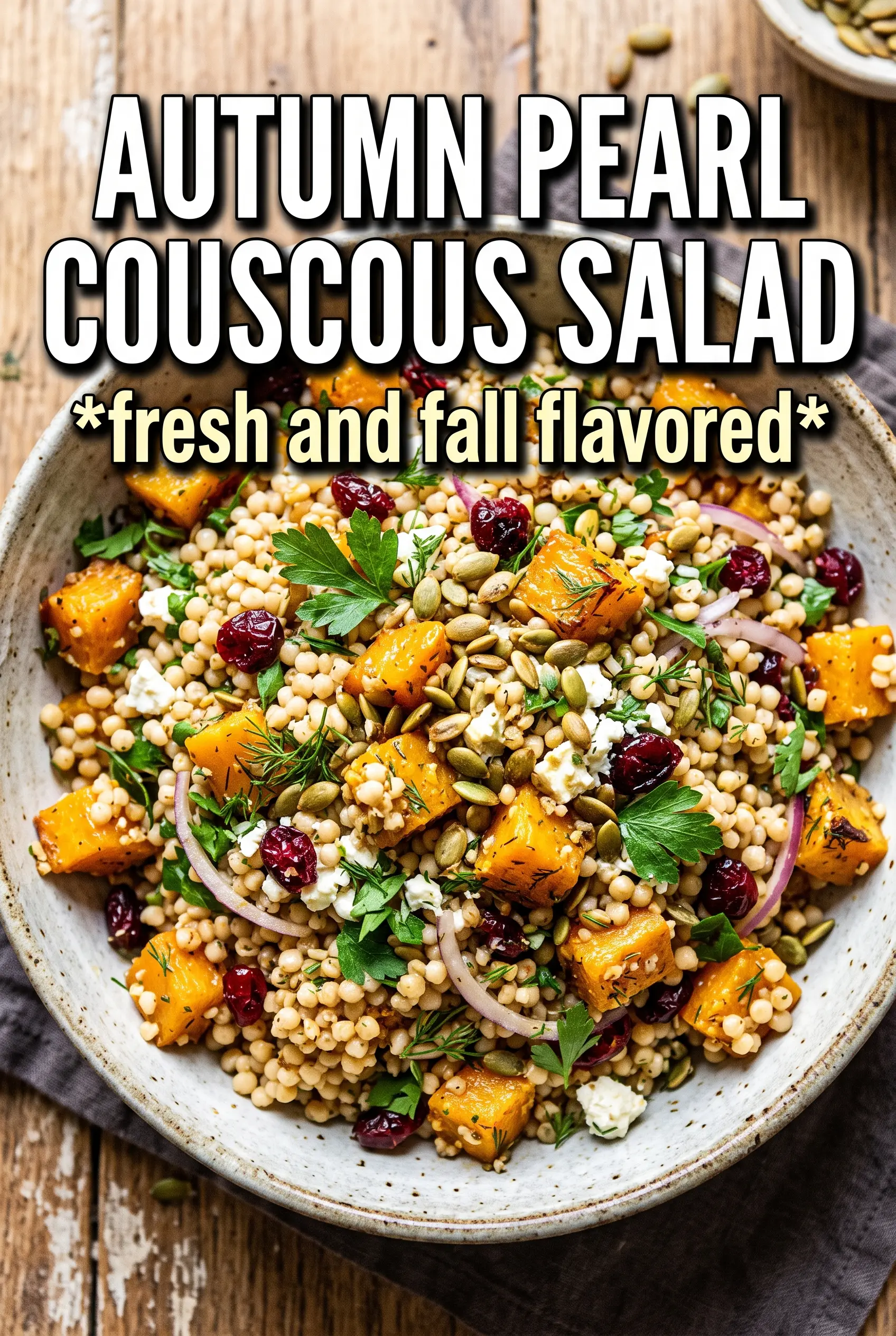
Autumn Pearl Couscous Salad
Ingredients
Equipment
Method
- Cook the pearl couscous according to package directions, then cool it to room temperature so the salad doesn’t wilt.
- Roast the butternut squash at 425F with olive oil, salt, and pepper for 25 minutes, until it turns golden around the edges.
- Whisk olive oil, balsamic vinegar, maple syrup, and Dijon until emulsified, then season with salt and pepper to taste.
- In a large bowl, combine the cooled couscous, roasted butternut squash, arugula (or mixed greens), dried cranberries, and pecans.
- Drizzle the dressing over the salad and toss gently until everything is lightly coated.
- Top with crumbled goat cheese and toasted pumpkin seeds right before serving for the best texture.