Delicata squash gives Caesar salad the kind of contrast that makes you keep going back for another forkful. The romaine stays cool and crisp, the dressing clings to every leaf, and the roasted squash brings a caramelized edge that regular croutons can’t match. It still eats like a Caesar, but there’s a little more depth, a little more sweetness, and a lot more texture.
The part that makes this version work is the balance. Delicata squash roasts fast, turns tender at the center, and keeps enough shape to stand in for croutons without getting heavy. A quick dressing made with mayo, lemon, Dijon, Worcestershire, and parmesan gives you that classic Caesar bite without needing a blender or raw egg. Toasted pepitas finish the bowl with a nutty crunch that holds up after the salad is tossed.
Below, I’m walking through the little details that matter most: how to roast the squash so it caramelizes instead of steaming, why the dressing should be whisked until fully smooth, and what to do if you want to turn this into a heartier lunch.
The delicata came out caramelized and tender without falling apart, and the dressing coated the romaine perfectly. I loved that the pepitas stayed crunchy even after tossing.
Save this Autumn Caesar Salad With Delicata Squash Croutons for a crisp, creamy salad with caramelized squash and toasted pepitas.
The Trick to Keeping Delicata Tender, Not Mushy
The biggest mistake with roasted squash in a salad is treating it like a side dish and letting it go too far. Delicata has a thin skin, so you don’t need to peel it, but it still needs enough heat to caramelize the edges before the centers collapse. Cut the rings evenly and roast them in a single layer so they brown instead of steaming. If the pan looks crowded, use a second sheet. That extra space is what gives you those browned edges that act like the crunchy element in a classic Caesar.
Roasting at 425°F keeps the squash moving toward caramelization without drying it out. Flip the rings halfway through so both sides pick up color, and pull them when the centers are just tender when pierced with a fork. They’ll keep softening as they sit, so don’t wait for them to feel fully soft in the oven.
What Each Ingredient Is Actually Doing in This Salad
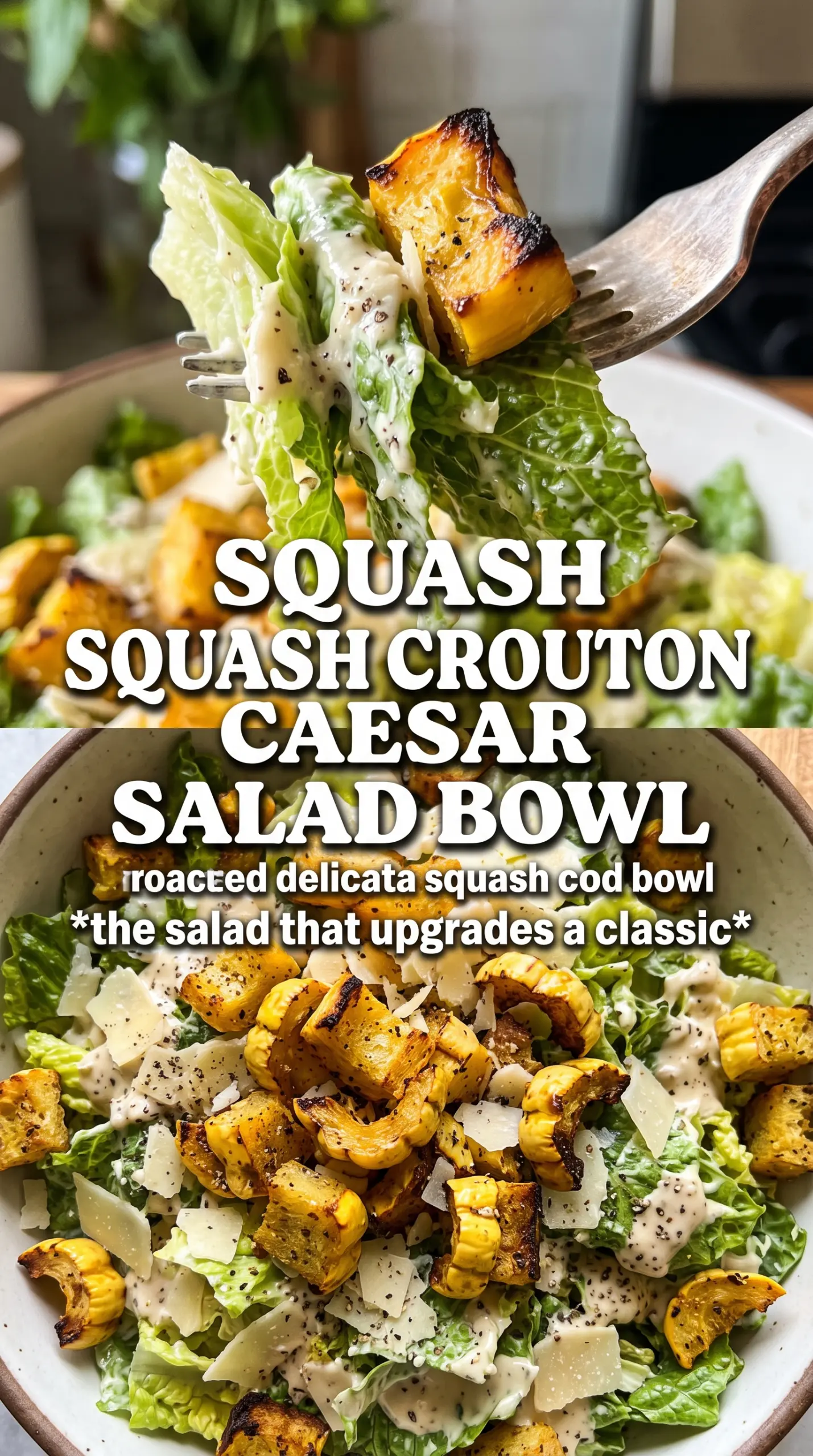
- Delicata squash — This is the ingredient that changes the whole salad. Its skin is tender enough to eat, and the flesh turns sweet and caramelized in the oven without turning watery. If you swap in butternut, you’ll get a softer texture and need to peel and cube it first.
- Mayo — Mayo gives the dressing body and helps it cling to the romaine without needing raw egg or a blender. Use a good one here, because it’s the base of the dressing. If you use a lighter mayo, the dressing will still work, but it won’t taste as full.
- Parmesan — Shaved parmesan on top gives sharpness and salt, while the grated parmesan in the dressing helps it taste finished. Freshly shaved is worth it for the topping because the texture matters. Pre-grated works in a pinch for the dressing, but it won’t melt into the dressing as smoothly.
- Pepitas — These replace the crunch you’d usually get from croutons. Toast them first so they taste nutty and stay crisp after tossing. If you skip the toasting step, they read flat and blend into the salad instead of standing out.
- Lemon juice and Dijon — These keep the dressing bright enough to balance the squash’s sweetness. Dijon also helps the dressing emulsify, which keeps it smooth instead of loose and greasy. If the dressing tastes heavy, it usually needs another small squeeze of lemon, not more salt.
Roasting, Whisking, and Tossing Without Losing the Crunch
Getting the Squash Caramelized
Toss the delicata rings with olive oil, salt, and pepper, then spread them on a sheet pan with space between each piece. Crowding traps steam, and steam is what gives you pale squash instead of browned squash. Roast at 425°F for 20 to 25 minutes, flipping once halfway through, until the edges are golden and the centers are tender. If the rings start to slump before they color, your oven may run cool, so leave them in a few minutes longer rather than turning up the heat and scorching the edges.
Building the Caesar Dressing
Whisk the mayo, parmesan, lemon juice, Worcestershire, garlic, Dijon, salt, and pepper until the dressing looks smooth and glossy. The garlic needs to be minced fine or it stays sharp and pokey in the finished salad. If the dressing seems too thick, loosen it with a teaspoon of water or lemon juice at a time until it coats the back of a spoon. A broken or curdled look usually means the lemon went in too fast, but a strong whisk pulls it back together.
Tossing the Salad at the Last Minute
Dress the romaine right before serving so it stays crisp. Romaine bruises fast once it’s coated, and if it sits too long it turns limp and watery. Add the shaved parmesan first so it catches in the leaves, then arrange the roasted squash on top instead of burying it under the greens. Finish with the pepitas at the very end so they keep their crunch on the plate.
Add shaved apple for a sharper sweet note
Thin slices of crisp apple bring a brighter crunch and push the salad a little more toward fall. Keep the slices thin so they don’t overpower the romaine, and add them right before serving so they don’t brown. Honeycrisp works especially well because it stays crisp and doesn’t water down the dressing.
Make it vegetarian without losing the Caesar character
Use a vegetarian Worcestershire or replace it with a small splash of soy sauce and an extra squeeze of lemon. You’ll keep the salty depth that Caesar dressing needs without changing the texture of the dressing. The flavor lands a little less savory, but the parmesan and garlic fill most of that gap.
Make it dairy-free with a different finishing strategy
Swap in a dairy-free mayo and use nutritional yeast in place of parmesan in the dressing and on top. You’ll lose the sharp, nutty bite of real parmesan, but the lemon, garlic, and Worcestershire still give the salad enough backbone. Add a pinch more salt and extra pepitas to keep the bowl feeling complete.
Storage and Reheating
- Refrigerator: Store the components separately for up to 2 days. The romaine stays crisp, while the roasted squash softens a bit but still tastes great cold or room temperature.
- Freezer: This salad doesn’t freeze well assembled. You can freeze roasted delicata squash by itself, but the greens and dressing should be made fresh.
- Reheating: Rewarm the squash on a sheet pan in a 375°F oven for a few minutes if you want it warm. Don’t microwave it, or the edges go limp and the texture turns soft instead of caramelized.
Questions I Get Asked About This Recipe
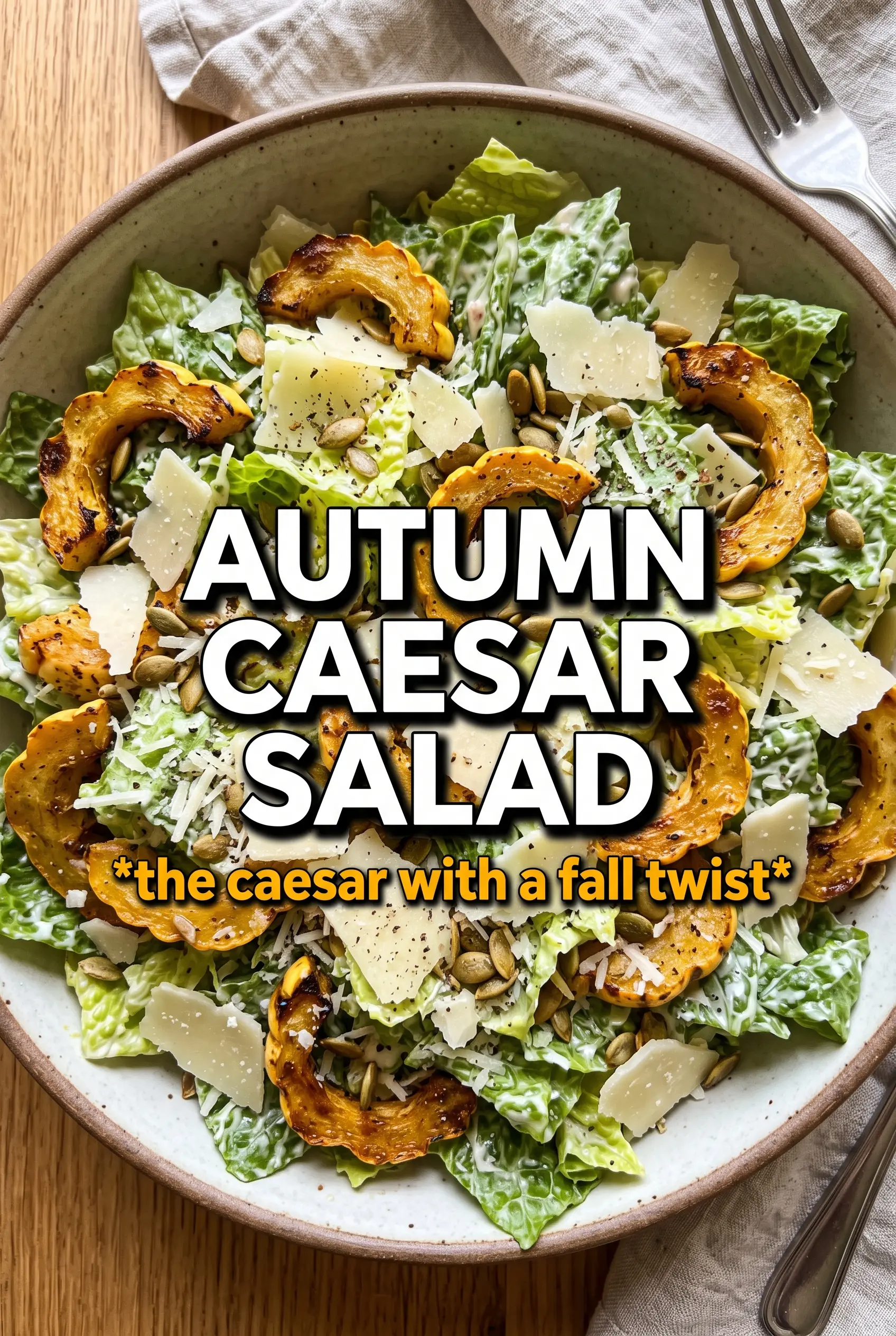
Autumn Caesar Salad With Delicata Squash Croutons
Ingredients
Equipment
Method
- Preheat the oven to 425°F, then toss the delicata rings with olive oil, salt, and pepper until evenly coated. Spread in a single layer on a sheet pan.
- Roast for 20-25 minutes, flipping halfway, until caramelized and browned at the edges. Remove when the rings look crisp-tender and visibly golden.
- Whisk the Caesar dressing ingredients—mayo, parmesan, lemon juice, Worcestershire, minced garlic, Dijon, salt, and pepper—until smooth. Stop when no garlic or Dijon bits remain.
- Toss the chopped romaine with Caesar dressing and shaved parmesan until glossy and evenly coated. Add more dressing as needed so every leaf lightly clings.
- Arrange the dressed romaine on plates, then top with the roasted delicata rings as croutons. Distribute them so you get crunch in every serving.
- Scatter toasted pepitas over the top, then finish with extra parmesan. Serve immediately while the squash still feels crisp.