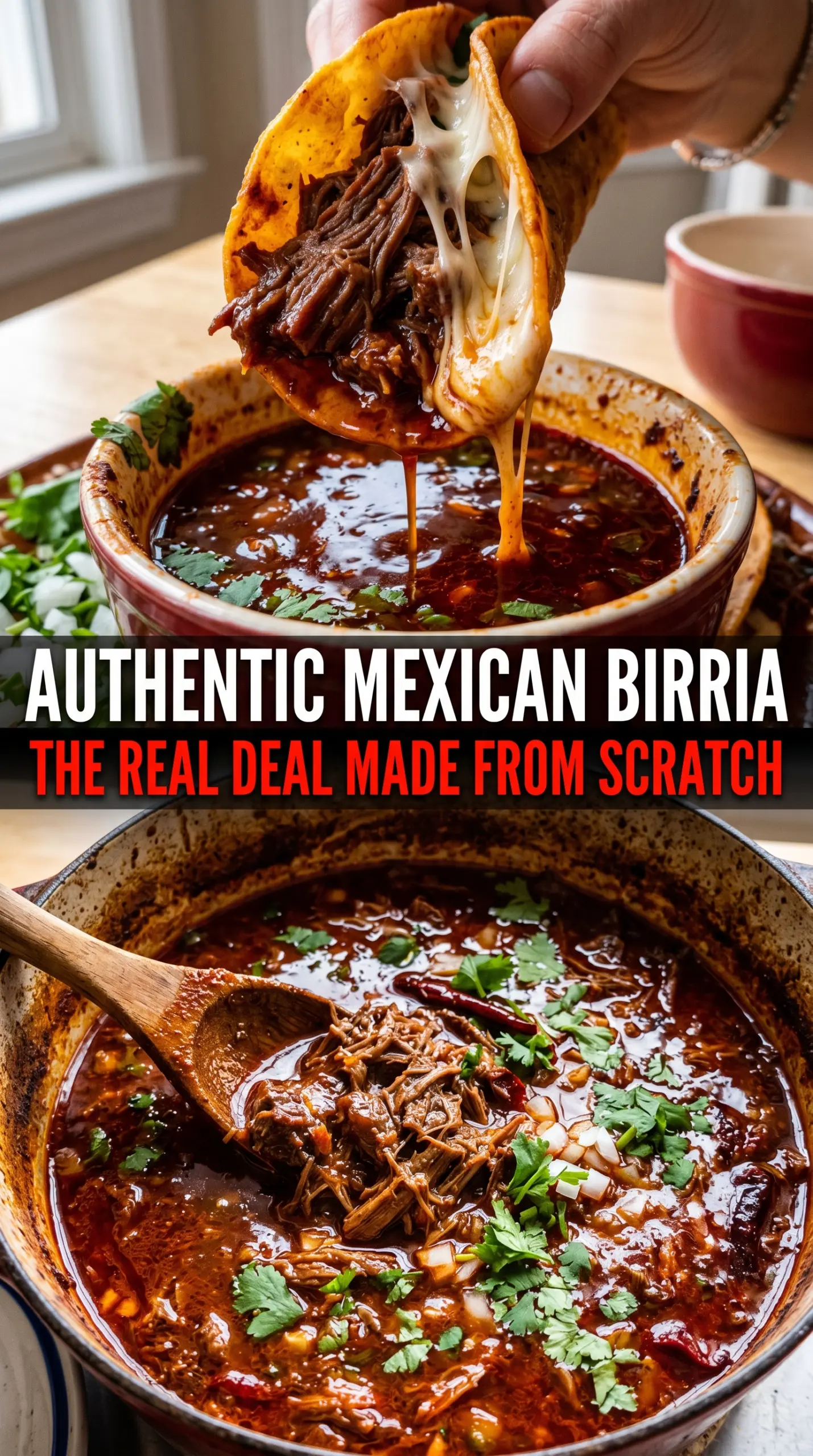
Rich birria starts with a broth that tastes deep, smoky, and gently fiery, with beef that falls apart in long shreds instead of drying out into strings. The best bowls have that mahogany color from properly toasted dried chiles and a consomé that clings to the meat and tortillas without turning greasy or thin.
What makes this version work is balance. Guajillo brings color and a clean chile flavor, ancho adds sweetness and body, and a few chipotles give the broth a slow-building heat that doesn’t take over. Searing the beef first matters too. Those browned bits at the bottom of the pot become part of the sauce, and that’s where a lot of the depth comes from.
Below, you’ll find the small details that keep the chile sauce smooth, the meat tender, and the consomé rich enough to ladle over tacos or serve as a bowl on its own. If birria has ever tasted flat, the fix is usually in the toasting, blending, or simmering time.
The chile sauce turned silky after blending, and the beef stayed tender all the way through the long simmer. We used the consomé for dipping tacos and nobody left the table until the pot was empty.
Save this birria for the nights when you want tender shredded beef, smoky consomé, and tacos worth dipping twice.
The Toasting Step That Gives Birria Its Depth
Birria can taste muddy if the chiles go straight into the blender without a little heat first. Toasting them for just a minute wakes up the oils and gives the broth that dark, round base people expect from a good bowl. Go too far and the chiles turn bitter, so the goal is fragrant and pliable, not blackened.
The other trap is skipping the soak or rushing the blend. Softened chiles break down into a smooth sauce much more easily, and that smoothness matters because any little fragment left behind will taste gritty in the finished consomé. If your sauce looks rough, strain it before it goes into the pot.
What Each Ingredient Is Doing in the Pot
- Beef chuck roast — This cut has enough fat and connective tissue to turn spoon-tender during a long simmer. Leaner beef won’t give you the same silky texture or full-bodied broth.
- Guajillo chiles — These bring the deep red color and a clean chile flavor. They’re worth finding, because they give the broth its signature look without making it harsh.
- Ancho chiles — Ancho adds dried-fruit sweetness and a little thickness to the sauce. Without it, the birria can taste sharp instead of rounded.
- Chipotle chiles — These are the smoke and heat in the pot. If you want a milder version, cut one or two chiles rather than swapping them out completely.
- Tomatoes, onion, and garlic — They build the body of the sauce and keep the chile blend from tasting one-note. Roast the tomatoes if you want a darker, slightly sweeter edge.
- Vinegar — A small amount wakes up the sauce and keeps the broth from tasting flat after a long cook. It’s not there to make the dish sour; it sharpens everything else.
Building the Broth So the Meat Stays Tender
Toast and Soak the Chiles
Lay the dried chiles in a dry skillet and toast them just until they smell deep and fragrant, turning once so they don’t scorch. Soak them in hot water until they turn soft and flexible. If they’re still leathery, the blender will work too hard and the sauce won’t turn smooth.
Blend the Sauce Until It Turns Silky
Blend the softened chiles with onion, garlic, tomatoes, vinegar, cumin, and oregano until the mixture looks glossy and even. If your blender struggles, add a splash of the soaking liquid, but don’t thin it too much or the broth loses body. For the smoothest result, strain the sauce into the pot before it hits the beef.
Sear the Beef Before the Simmer
Brown the beef cubes in hot oil until the edges are dark and the pan has a layer of fond on the bottom. That browned surface is where the savory depth starts. If the meat steams instead of sears, the pot is crowded or the heat is too low, and you’ll miss the best flavor in the dish.
Let the Pot Simmer Low and Slow
Add the chile sauce, broth, and bay leaves, then bring everything to a gentle simmer and cover the pot. Keep the heat low enough that you see small bubbles, not a hard boil. A violent boil tightens the meat and can make the broth taste flat, while a calm simmer gives you shreddable beef and a richer consomé.
Shred, Season, and Rest
Pull the beef when it falls apart easily with a fork, then shred it and return it to the broth long enough to soak up the sauce. Taste the liquid after the meat goes back in and season with salt and pepper at the end. Resting the pot for a few minutes before serving lets the flavors settle and makes the consomé taste fuller.
How to Adapt Birria for a Smaller Table or a Different Heat Level
Milder Birria Without Losing the Color
Cut the chipotles back to one or two and keep the guajillo and ancho amounts the same. You’ll still get the deep red broth and the smoky backbone, but the heat will sit in the background instead of building with every bite.
Gluten-Free Serving Style
The birria itself is naturally gluten-free as long as your broth is. Serve it with corn tortillas instead of flour tortillas, and warm them well so they don’t crack when you dip them into the consomé.
Make It Ahead for Better Flavor
Birria tastes even better after a night in the fridge because the broth thickens and the spices settle in. Reheat it gently with a splash of broth if needed, and save the tortilla assembly for just before serving so everything stays hot and crisp.
Storage and Reheating
- Refrigerator: Keeps for 4 days in a covered container. The broth often looks even richer the next day.
- Freezer: Freezes well for up to 3 months. Cool it completely first and freeze the meat with enough broth to keep it from drying out.
- Reheating: Warm it slowly on the stove over medium-low heat until the broth is steaming and the beef is hot through. Don’t boil it hard, or the meat can turn stringy and the fat can separate.
Answers to the Questions Worth Asking
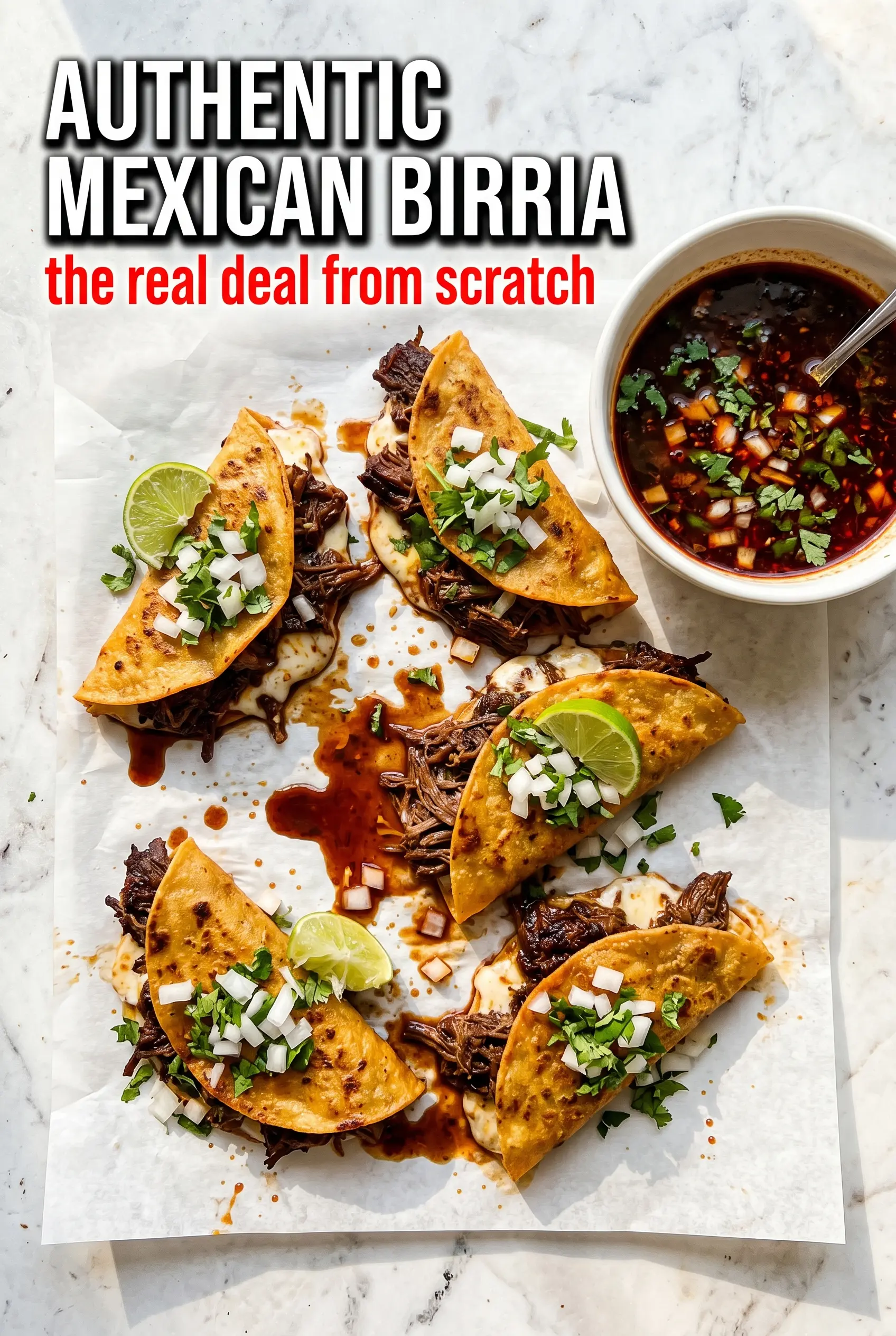
Authentic Mexican Birria
Ingredients
Equipment
Method
- Toast the dried guajillo chiles, dried ancho chiles, and dried chipotle chiles in a dry skillet for 1 minute per side, until fragrant and slightly darkened. Visual cue: look for blistered spots and a deep chile aroma.
- Soak the toasted chiles in hot water for 15 minutes, until soft and pliable. Visual cue: they should turn more flexible and darker in color.
- Blend the soaked chiles with the quartered onion, garlic cloves, halved tomatoes, apple cider vinegar, cumin, and oregano until smooth. Visual cue: the mixture should look like a thick, uniform red-brown sauce.
- Heat oil in a large pot and sear the cubed beef chuck roast until browned on all sides. Visual cue: caramelized edges form on the beef.
- Add the blended chile sauce and beef broth to the pot, then stir to combine. Visual cue: the broth turns rich mahogany-colored.
- Add the bay leaves, bring the mixture to a simmer, and cook covered for 2.5 to 3 hours until the meat is very tender. Visual cue: the beef should pull apart easily with a fork.
- Shred the beef and adjust seasoning with salt and pepper to taste. Visual cue: shredded strands soak up the consomé and look glossy.
- Rest the birria for 30 minutes off the heat to let flavors meld and slightly thicken. Visual cue: the broth becomes a little deeper in color and more cohesive.
- Serve the birria in warm corn tortillas with diced onion and fresh cilantro, and offer the flavorful consomé as a dipping sauce on the side. Visual cue: tortillas should be warm and ready to dip.