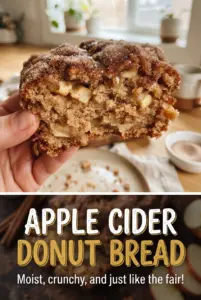
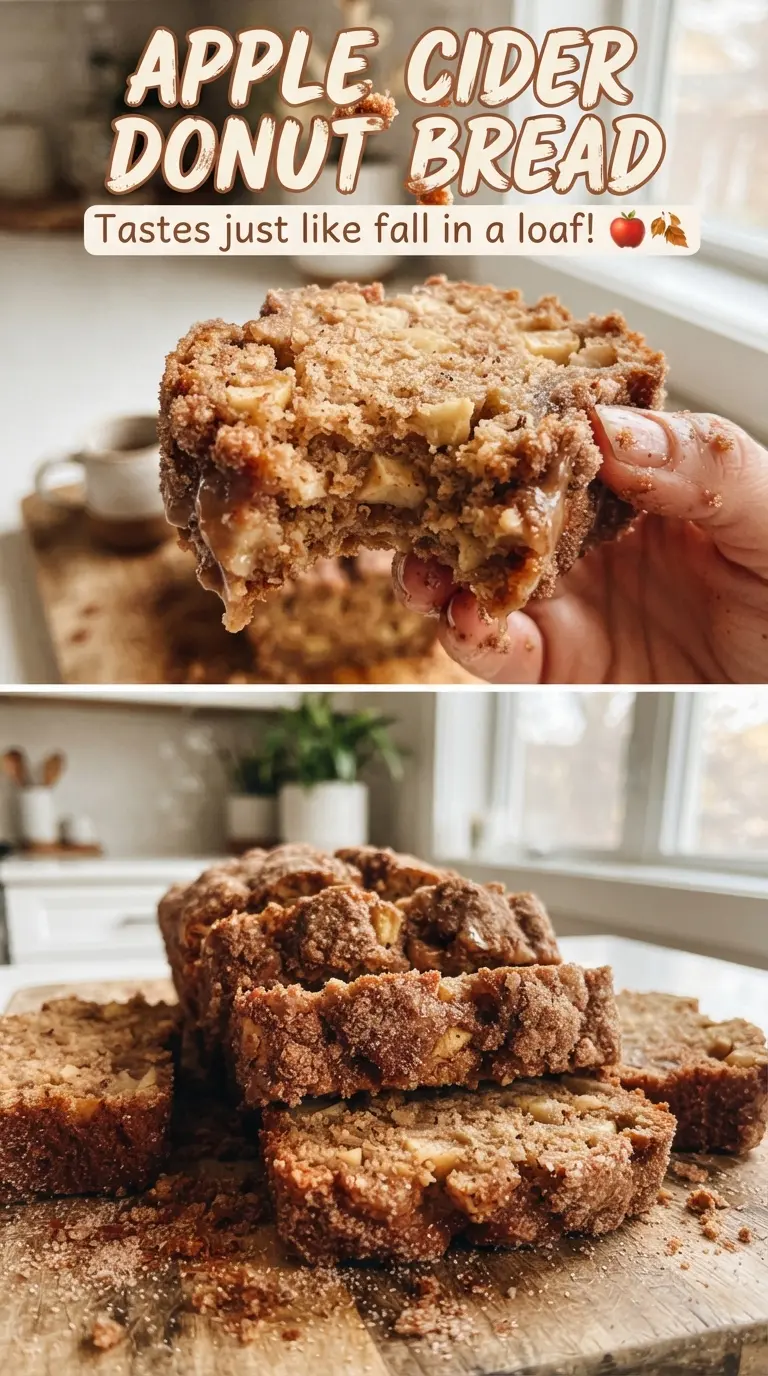
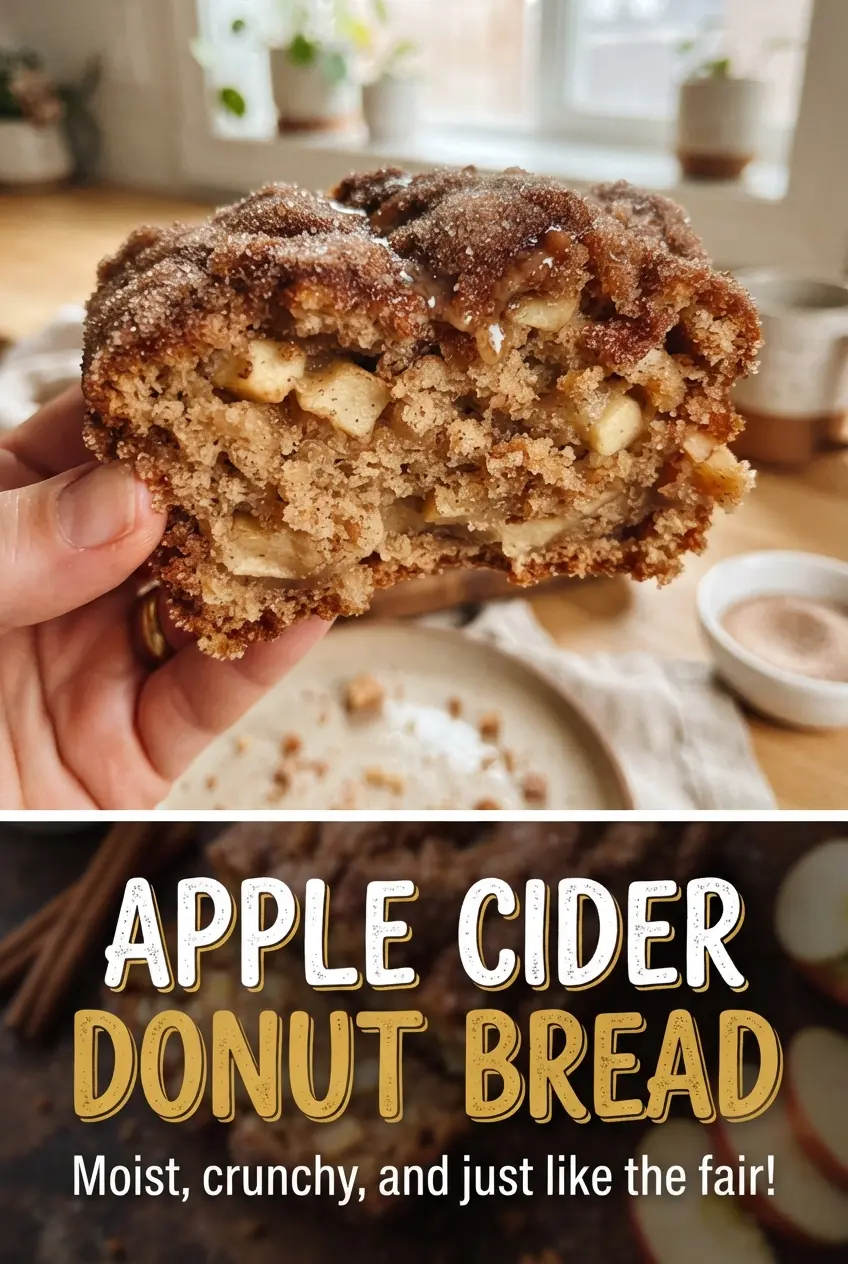
Apple cider donut bread bakes up with a soft, tender crumb and that unmistakable crunchy cinnamon-sugar shell that makes you want a second slice before the first one’s gone. It has the cozy bakery feel of a cider donut, but in loaf form, which means you get the same spiced sweetness without frying or standing over hot oil. The top turns crackly after a brush of melted butter, and the inside stays moist from the reduced cider and sour cream.
The step that gives this bread its real apple cider flavor is reducing the cider before it ever hits the batter. That concentrates the apple note instead of watering the loaf down, and it keeps the crumb from baking up bland. Sour cream adds body and keeps the texture plush, while brown sugar brings a deeper caramel note that plays well with cinnamon and nutmeg.
Below, I’ll show you exactly when to stop mixing so the loaf stays tender, plus the small finishing move that gives you that classic donut-style crust.
The cider flavor came through beautifully, and the cinnamon sugar crust stayed crunchy even the next morning. I loved that the loaf was moist without being dense.
Save this apple cider donut bread for the loaf with the crunchy cinnamon-sugar crust and real reduced cider flavor.
The Key to Real Apple Cider Flavor Is Reducing It First
The biggest mistake with cider breads is pouring in a full cup or more of liquid cider and hoping the flavor stays bold. It won’t. The loaf ends up tasting soft and pleasant, but not distinctly like apple cider donut bread. Reducing the cider down to half a cup concentrates the apple flavor and also removes extra water, which helps the crumb bake up tender instead of gummy.
This loaf also depends on the order of the wet ingredients. Butter and brown sugar need to be beaten until fluffy, because that step traps air and gives the bread lift. Once the eggs, sour cream, vanilla, and reduced cider go in, the batter should look smooth and creamy. If it looks curdled, the cider was still too warm or the butter was too cold; both can throw off the texture, so let the cider cool before mixing it in.
What Each Ingredient Is Actually Doing in This Loaf
- Apple cider — This is the flavor base, but only after it’s reduced. Fresh cider gives the best apple character; juice works in a pinch, but it tastes flatter and sweeter once baked.
- Sour cream — This keeps the loaf moist and gives it a soft, bakery-style crumb. Full-fat Greek yogurt can work if that’s what you have, but the texture comes out a little tighter and less rich.
- Brown sugar — Brown sugar deepens the flavor and helps the crust stay moist under the cinnamon sugar topping. White sugar will work, but you’ll lose some of that molasses note that makes the loaf taste like a donut.
- Butter topping — Brushing the warm loaf with melted butter is what makes the cinnamon sugar stick in a thick, crunchy layer. Skip this and the topping slides off instead of forming that classic donut-like crust.
How to Bake It So the Crumb Stays Tender and the Top Stays Crunchy
Reducing the Cider Down
Simmer the cider until it measures about half a cup and looks a little syrupy. You want steam to slow down and bubbles to get larger near the end; that’s your sign that enough water has cooked off. Don’t rush this on high heat, because a hard boil can scorch the sugars and leave you with a bitter edge. Cool it before mixing it into the batter so it doesn’t melt the butter mixture.
Building the Batter Without Toughening It
Beat the butter and brown sugar until light and fluffy, then add the eggs one at a time if you can. Once the dry ingredients go in, switch to a gentle hand and stop mixing as soon as the flour disappears. If you keep stirring, the loaf turns tight and bready instead of soft. A few streaks are fine right before it goes into the pan; they’ll finish blending in the oven.
Baking to a Clean Center
Scrape the batter into the loaf pan and smooth the top so it bakes evenly. The loaf is done when the top is deeply golden, the edges pull away slightly, and a toothpick comes out clean or with a few moist crumbs. If the top browns early before the center is set, tent it loosely with foil for the last 10 to 15 minutes. Let it rest for 10 minutes before topping so the crust sets without getting soggy.
Finishing It Like a Donut
Brush the warm loaf all over with melted butter while the surface is still warm enough to grab the sugar. Press the cinnamon sugar on instead of sprinkling it lightly; that pressure gives you the thick, crunchy coating people expect from an apple cider donut. Work quickly so the butter doesn’t set before the sugar goes on. Slice once the topping has settled enough to stay on the loaf.
How to Adapt This for Different Kitchens and Different Cravings
Dairy-Free Version
Use a plant-based butter for both the batter and topping, and swap the sour cream for an unsweetened dairy-free yogurt with some body. The loaf will still be tender, but the flavor gets a little less rich, so the reduced cider matters even more here.
Greek Yogurt Instead of Sour Cream
Plain full-fat Greek yogurt works well if that’s what’s in the fridge. The loaf will bake up a touch less rich and a little firmer, but the tang still supports the cider and spice nicely.
Gluten-Free Swap
Use a 1:1 gluten-free baking blend that already includes xanthan gum. The crumb will be a little more delicate, so let the loaf cool fully before slicing or it can crumble at the center.
Storage and Reheating
- Refrigerator: Store for up to 4 days wrapped tightly. The cinnamon sugar softens a bit, but the loaf stays moist.
- Freezer: Freeze the unsliced loaf or individual slices well wrapped for up to 2 months. Thaw at room temperature before reheating so the topping doesn’t turn sticky.
- Reheating: Warm slices in a 300F oven for 8 to 10 minutes. Microwaving makes the sugar topping wet and the crumb spongy, so the oven is worth the extra few minutes.
Answers to the Questions Worth Asking
Apple Cider Donut Bread
Ingredients
Equipment
Method
- Simmer the apple cider in a Dutch oven for 15-20 minutes, until reduced to 1/2 cup, then cool.
- Preheat the oven to 350F, then grease and line a 9x5-inch loaf pan.
- Whisk the all-purpose flour, baking powder, baking soda, salt, ground cinnamon, and nutmeg until evenly combined.
- Beat the softened butter and packed brown sugar until fluffy, then beat in the eggs, sour cream, vanilla, and the reduced cider.
- Fold the dry ingredients into the wet mixture just until combined, then spread the batter into the loaf pan.
- Bake at 350F for 50-55 minutes, until a toothpick comes out clean, then cool for 10 minutes.
- Brush the warm loaf all over with melted butter and press it into the cinnamon sugar topping mixture.