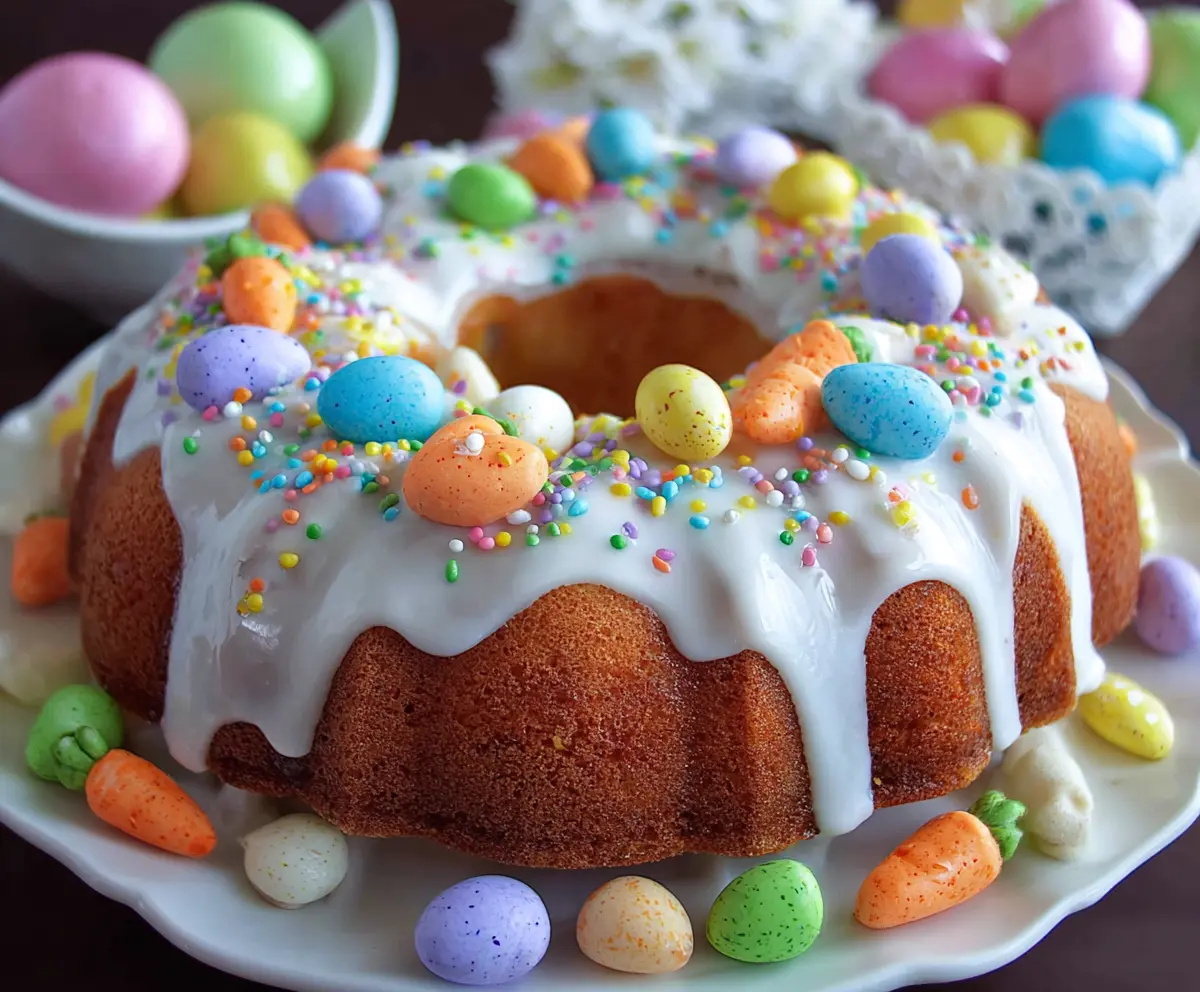
This Easter Bundt Cake is a festive treat that’s simple and sweet! With fluffy cake and a lovely glaze, it’s perfect for any spring celebration. Plus, the bundt shape makes it look fancy without the fuss!
Who wouldn’t love a cake that looks so pretty and tastes amazing? I like to add sprinkles on top for a pop of color. It’s like giving the cake a little party hat! 🎉
Making this cake is a breeze! Just mix, pour, and bake. It’s a delightful way to brighten up your table for Easter brunch or any gathering with friends and family.
Key Ingredients & Substitutions
All-Purpose Flour: This is the base for your cake. You can also use cake flour for a lighter texture. If gluten-free is your goal, a 1:1 gluten-free flour blend works well, but make sure it’s one that includes xanthan gum.
Unsalted Butter: Using unsalted lets you control the salt level. If you’re out, substitute with an equal amount of margarine, or even oil like canola or coconut. Keep in mind, this could alter the cake’s texture slightly.
Sour Cream: It adds moisture and richness, but can be omitted. If you don’t have any, Greek yogurt or buttermilk are great alternatives that provide a similar tangy flavor.
Powdered Sugar: This is essential for your glaze. If necessary, you can replace it with coconut flour for a healthier option, but the texture will change—more like an icing than a glaze.
How Do I Make Sure My Bundt Cake Comes Out Perfectly?
Getting your Bundt cake out of the pan beautifully is crucial. First, be generous when greasing and flouring the pan—use both butter and a bit of flour. This prevents sticking and ensures a smooth release.
- Preheat your oven properly; this helps the cake rise uniformly.
- Let the cake cool for about 15 minutes before inverting it. It allows the structure to firm up a bit, making it less likely to break.
- After inverting, don’t yank it out; gently shake it if needed to loosen. If it doesn’t want to budge, you can carefully run a knife around the edges.
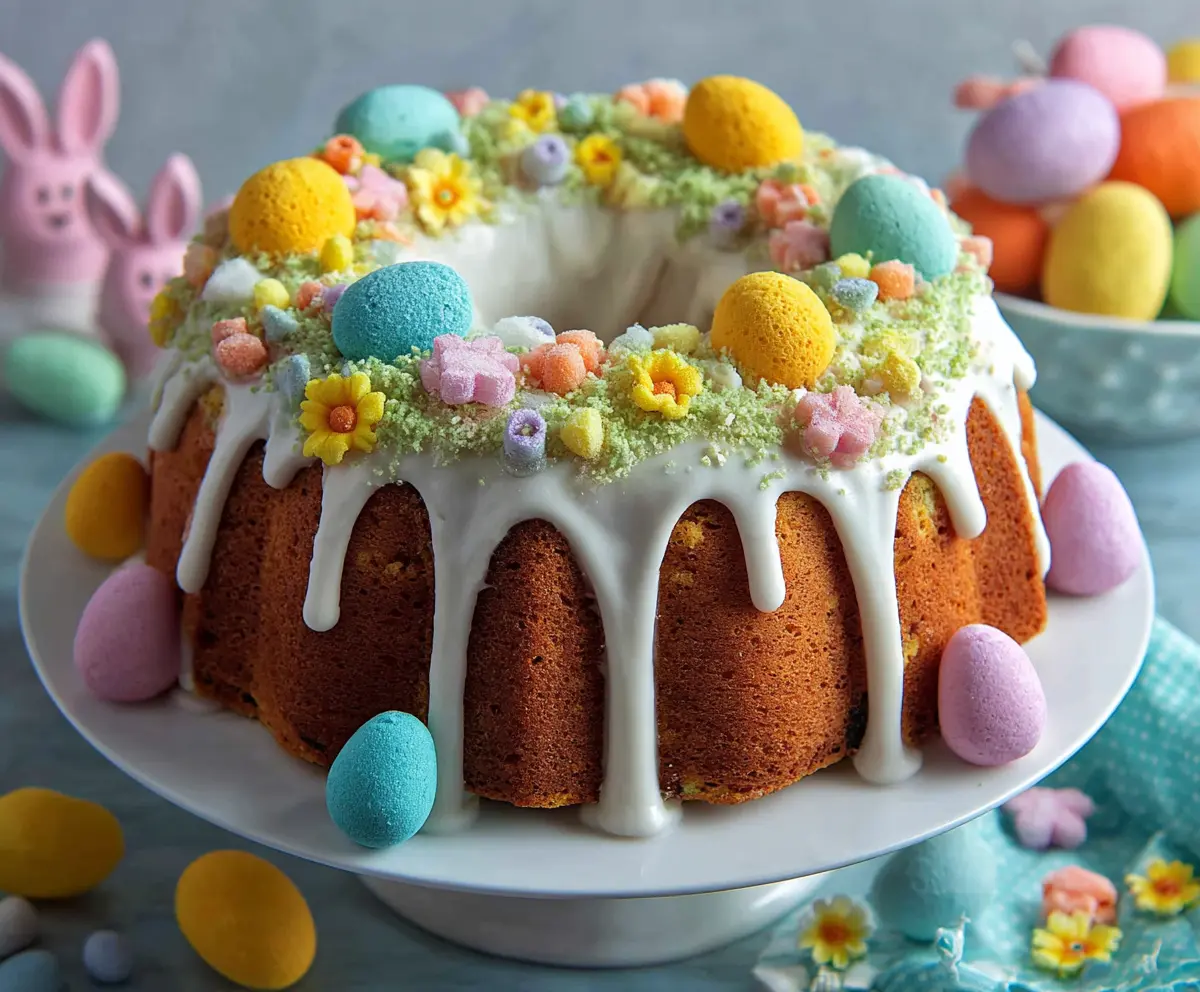
How to Make an Easter Bundt Cake
Ingredients You’ll Need:
For the Cake:
- 3 cups all-purpose flour
- 1 tablespoon baking powder
- 1/2 teaspoon salt
- 1 cup unsalted butter, softened
- 2 cups granulated sugar
- 4 large eggs
- 1 tablespoon vanilla extract
- 1 cup whole milk
- 1/2 cup sour cream (optional, for extra moisture)
For the Glaze:
- 2 cups powdered sugar
- 2-4 tablespoons milk or lemon juice
- 1/2 teaspoon vanilla extract
For Decoration:
- Assorted colorful Easter-themed candies (mini chocolate eggs, candy carrots, speckled candy eggs)
- Multicolored sprinkles
How Much Time Will You Need?
This delightful cake will take about 20 minutes to prepare and about 50-60 minutes to bake. Plus, don’t forget about 15 minutes for cooling in the pan and additional time for the glaze to set before serving. In total, you’re looking at around 1.5 to 2 hours before you can enjoy your tasty Easter Bundt Cake!
Step-by-Step Instructions:
1. Preheat and Prepare:
Begin by preheating your oven to 350°F (175°C). Take a Bundt pan and grease it thoroughly with butter, then sprinkle it with flour to prevent the cake from sticking when you flip it out later.
2. Combine Dry Ingredients:
In a medium-sized bowl, whisk together the flour, baking powder, and salt until well blended. Set this mixture aside; it will be added to the batter later.
3. Cream Butter and Sugar:
In a large mixing bowl, use a hand mixer to cream the softened butter and granulated sugar together. Mix for about 3-5 minutes until the mixture is light and fluffy. This step is key to a fluffy cake!
4. Add Eggs and Vanilla:
Now, add the eggs one at a time, mixing well after each addition. Then, stir in the vanilla extract until everything is nicely combined.
5. Mix Flour and Milk:
Next, it’s time to alternate adding the flour mixture and milk to the butter mixture. Start with some of the flour, then add a bit of milk, continuing to alternate until everything is combined. Be careful not to overmix! If you’re using sour cream, gently fold it in at this stage for extra moisture.
6. Pour the Batter:
Pour your batter evenly into the prepared Bundt pan and smooth the top with a spatula to make it nice and even.
7. Bake:
Place the Bundt pan in your preheated oven and bake for 50-60 minutes. Check for doneness by inserting a toothpick into the center; it should come out clean when the cake is ready.
8. Cool the Cake:
Once baked, take the cake out of the oven and let it cool in the pan for about 15 minutes. Then, carefully invert it onto a cooling rack to cool completely before frosting it.
9. Make the Glaze:
In a small bowl, whisk together the powdered sugar, vanilla extract, and enough milk or lemon juice to create a thick but pourable glaze.
10. Glaze the Cake:
After the cake has completely cooled, drizzle the glaze over the top, allowing it to drip down the sides for that beautiful look.
11. Decorate:
While the glaze is still a bit wet, decorate the cake with your colorful Easter-themed candies and multicolored sprinkles. This will help them stick nicely!
12. Serve and Enjoy:
Let the glaze set for a bit before slicing and serving your lovely Easter Bundt Cake. Enjoy your festive treat with friends and family!
Can I Use Low-Fat Milk Instead of Whole Milk?
Yes, you can! While whole milk adds richness, low-fat milk will work just fine. Your cake may be a bit less rich, but it will still be delicious.
How Should I Store Leftover Cake?
Store any leftover cake in an airtight container at room temperature for up to 3 days. If you want it to last longer, you can refrigerate it, but be aware that it may dry out slightly. For best results, enjoy it within a few days!
What Can I Substitute for Sour Cream?
If you don’t have sour cream, you can use plain Greek yogurt or buttermilk as a substitute. They both provide similar moisture and tang that enhance the cake’s flavor.
How Can I Avoid Sticking When Releasing the Cake?
Make sure to generously grease and flour your Bundt pan before adding the batter. After baking, let the cake cool in the pan for about 15 minutes before inverting it. If it seems stuck, gently run a knife around the edges to help it release.