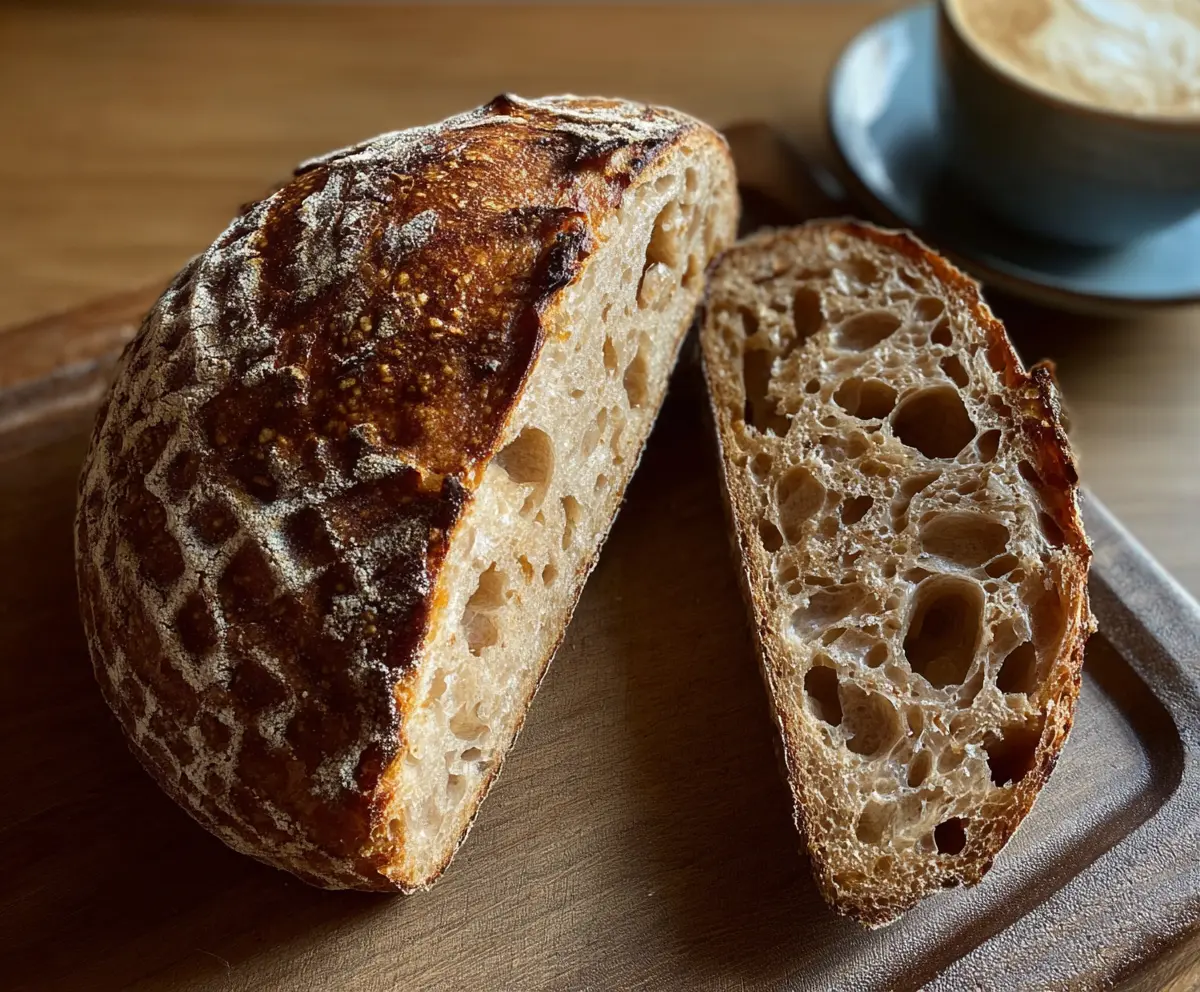
This crusty sourdough bread is perfect for breakfast or a snack with your favorite coffee. Its tangy flavor and crunchy crust make every bite enjoyable!
Who doesn’t love the smell of fresh bread? I often pair it with a warm cup of coffee, and it’s a match made in heaven. You’ll see what I mean!
Making it is easy, just mix, let it rise, and bake. You won’t want to skip the crust since it’s the best part for dipping in your coffee! Yum!
Key Ingredients & Substitutions
Bread Flour: Go for unbleached bread flour for the best texture. If you don’t have it, all-purpose flour can work too, but your bread might be a bit less chewy.
Sourdough Starter: Using an active starter is important. If you find it hard to get one, you can also buy dried starters online or at local bakeries.
Water: Room temperature water is perfect for mixing the dough. If you want to speed up fermentation slightly, you can use warm water, but it shouldn’t be hot.
Salt: Sea salt works wonderfully in sourdough. If you need a lower sodium option, replace regular salt with a salt substitute, but this might alter the flavor a tad.
How Do I Achieve the Perfect Crust?
Getting that crunchy, crusty exterior is all about baking properly with steam. Here’s how to nail it:
- Use a Dutch oven: By covering it while baking, it traps steam, helping create that beautiful crust.
- Preheat: Make sure your pot is hot before adding the dough; this helps give your bread an initial burst of steam right away.
- Score properly: This allows steam to escape in a controlled way, which creates lovely patterns on your crust as it bakes.
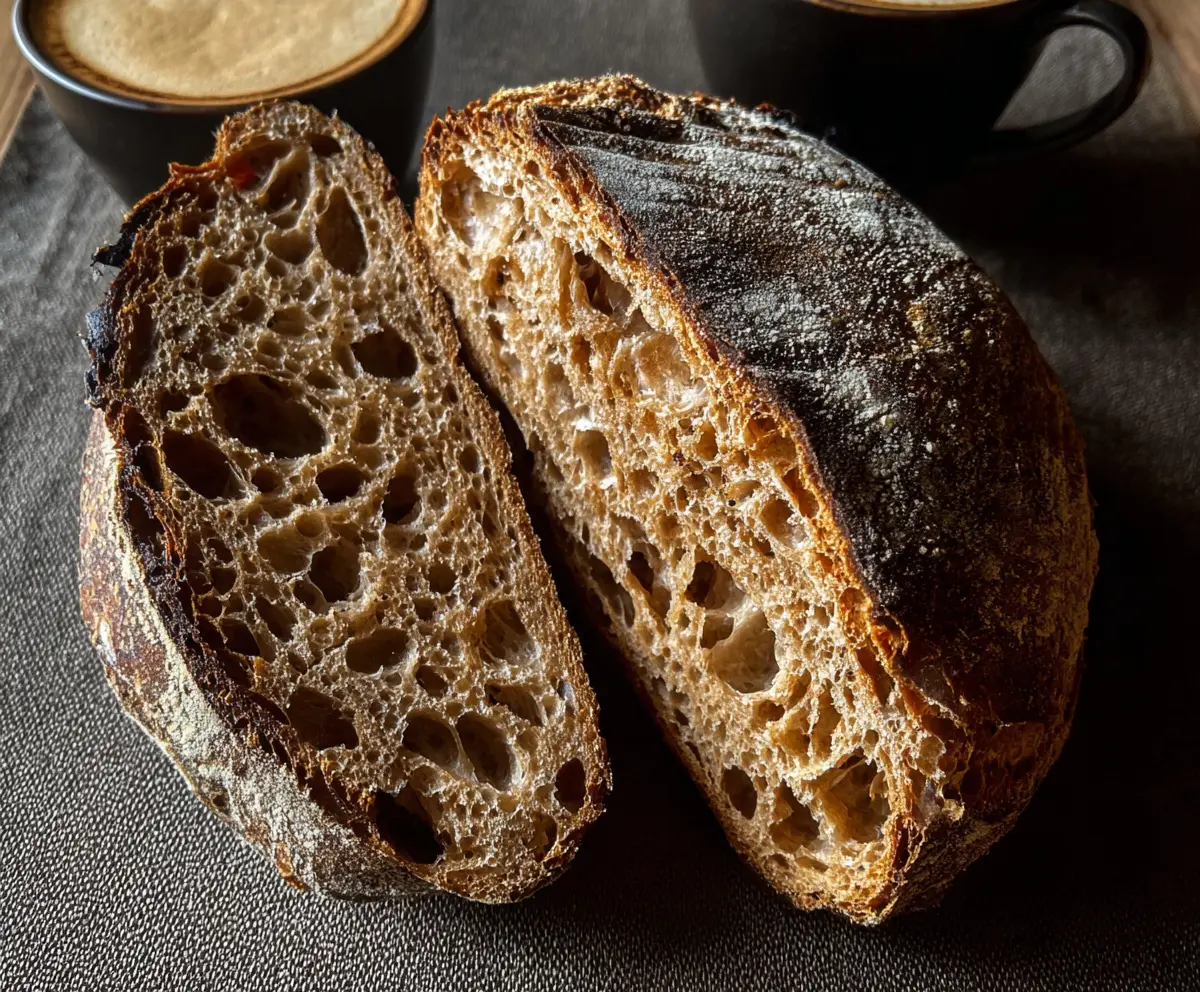
Following these steps will lead to an incredible loaf that you’ll be proud to serve with your coffee. Just remember to give it time to cool before slicing to keep that crust intact!
How to Make Crusty Sourdough Bread
Ingredients You’ll Need:
- 500g bread flour (preferably unbleached)
- 350ml water (at room temperature)
- 100g active sourdough starter (fed and bubbly)
- 10g salt
How Much Time Will You Need?
This recipe requires about 30 minutes for mixing and shaping, plus a total of 6 to 9 hours for fermentation, including resting and proofing times. It’s worth the wait for that delightful crusty bread!
Step-by-Step Instructions:
1. Mixing the Dough:
In a large bowl, add your bread flour and water. Use a spatula or your hand to mix everything together until you have a shaggy and sticky consistency. Don’t worry about it being perfectly smooth. Cover the bowl with a damp cloth and let it rest for about 30 minutes; this is called the autolyse process and helps develop the gluten.
2. Adding Starter and Salt:
After the rest period, it’s time to add the active sourdough starter and salt to the dough. Mix everything together thoroughly, either by hand or by folding the dough until it’s well combined. The dough will be sticky but should also start to feel elastic as you work with it.
3. Bulk Fermentation:
Cover your bowl and let the dough ferment at room temperature, ideally around 20–24°C (68–75°F), for about 4 to 6 hours. To enhance the gluten development, perform a series of stretch and folds every 30 minutes for the first 2 hours. This means gently pulling one side of the dough up and folding it over itself, rotating the bowl as you go.
4. Shaping the Dough:
Once the bulk fermentation is done, turn the dough out onto a lightly floured surface. Shape it into a round boule by folding the edges toward the center, creating tension on the surface. Rotate the dough gently against the surface to tighten the shape further.
5. Final Proofing:
Place the dough seam-side up into a floured banneton or a bowl lined with a floured kitchen towel. Cover it and allow it to proof for 2 to 3 hours at room temperature, or you can do an overnight proof in the refrigerator for a slower fermentation that adds flavor.
6. Preheating the Oven:
About 30 minutes before you’re ready to bake, place a Dutch oven (or heavy cast iron pot) with its lid into the oven and preheat to 230°C (450°F). This ensures your pot is hot and ready for baking.
7. Baking with Steam:
Carefully transfer the dough onto a piece of parchment paper. Score the top of the dough with a sharp blade or knife, allowing it to expand in the oven. Now carefully place the dough and parchment into the hot Dutch oven, cover with the lid, and bake for 20 minutes. After that, remove the lid and bake for an additional 20 to 25 minutes, until the crust is nicely golden brown and crisp.
8. Cooling:
Once baked, carefully remove the bread from the oven and transfer it to a wire rack. Let it cool for at least an hour before slicing. This cooling time is crucial as it allows the crumb to set properly.
Enjoy your crusty sourdough bread with a fresh cup of coffee for a delightful treat!
Can I Use All-Purpose Flour Instead of Bread Flour?
Yes, you can substitute all-purpose flour for bread flour, but be aware that the bread may be slightly less chewy. Bread flour has a higher protein content which helps develop gluten, so the texture might vary a bit.
How Do I Know If My Sourdough Starter Is Active?
Your sourdough starter is active if it has doubled in size within 4-6 hours after feeding and has a bubbly appearance with a pleasant, slightly sour smell. You can also do the “float test” by dropping a spoonful of the starter in water; if it floats, it’s ready to use!
What If My Dough Is Too Sticky to Handle?
If your dough feels too sticky, try wetting your hands before shaping. You can also dust the surface with a little more flour, but be careful not to add too much, as this can alter the dough’s hydration level.
Can I Store Leftover Sourdough Bread?
Absolutely! Store leftover bread in a paper bag at room temperature for up to 3 days. For longer storage, wrap it tightly in plastic wrap or foil and freeze it for up to 3 months. Just make sure to let it cool completely before wrapping!